10 Rarest Birds in the World –Discover the Rarest and Most Beautiful Birds Alive
Introduction
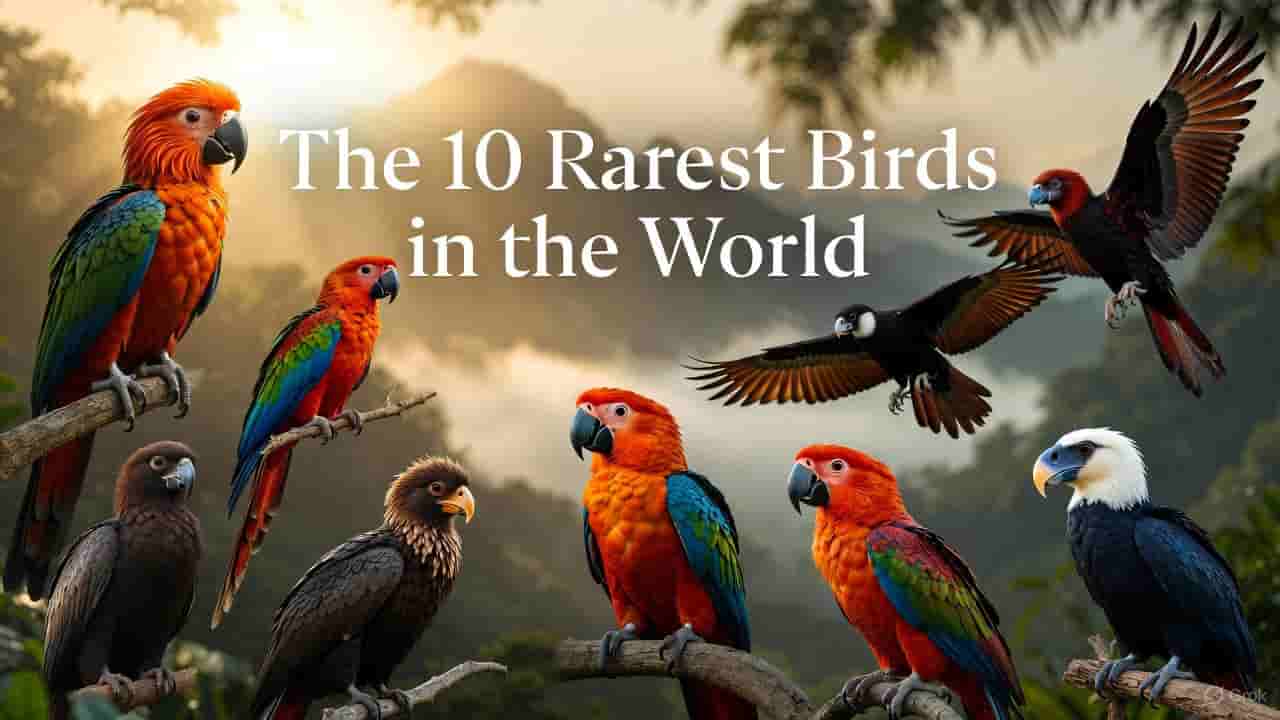
Birds have always fascinated us with their vibrant feathers, melodic songs, and graceful flights. However, some of the world’s most extraordinary birds are also the rarest — often unseen even by experienced birdwatchers. These rare bird species are scattered across isolated islands, deep forests, and remote mountains, each facing unique challenges threatening their survival.
In this article, we’ll explore the 10 rarest birds in the world, uncover their habitats, characteristics, and the urgent conservation efforts that aim to protect them.
So, grab your binoculars — let’s take flight into the world of these avian wonders.
1. Kakapo (Strigops habroptilus)
Also Known As: Owl Parrot
Habitat: New Zealand
Estimated Population: Fewer than 250 individuals
The Kakapo is one of the most unique and rarest birds on Earth. This large, flightless parrot is native to New Zealand and is known for its moss-green fe¹athers and owl-like face.
Unlike most parrots, Kakapos are nocturnal and prefer walking and climbing rather than flying. They were once widespread, but due to predators introduced by humans, their numbers drastically declined.
Today, thanks to dedicated conservation programs in New Zealand, the Kakapo population is slowly recovering under strict monitoring.
Fun Fact: The Kakapo is the world’s only flightless parrot and the heaviest parrot species.
2. Spix’s Macaw (Cyanopsitta spixii)
Habitat: Brazil
Estimated Population: Around 180 individuals (mostly in captivity)
The Spix’s Macaw gained worldwide fame as the inspiration for the animated movie Rio. This brilliant blue parrot, native to Brazil, went extinct in the wild due to habitat loss and illegal trapping for the pet trade.
Thankfully, international breeding programs have brought the species back from the brink of extinction. Reintroduction projects in Brazil’s Caatinga region are now helping these stunning birds return to their natural habitat.
Fun Fact: Spix’s Macaw was once considered completely extinct in the wild until reintroduction began in 2020.
3. Forest Owlet (Heteroglaux blewitti)
Habitat: Central India
Estimated Population: Fewer than 250 individuals
The Forest Owlet is one of India’s most elusive bird species. Once thought extinct for over a century, it was rediscovered in 1997. This small owl prefers dry forests and feeds mainly on insects and small mammals.
Deforestation and logging have greatly reduced its habitat, making conservation efforts vital. India’s local wildlife authorities have since increased protection for these fragile forest ecosystems.
Fun Fact: The Forest Owlet remained a mystery for 113 years before being rediscovered.
4. California Condor (Gymnogyps californianus)
Habitat: Western USA (California, Arizona, Utah)
Estimated Population: About 550 individuals
The California Condor is North America’s largest flying bird, with a wingspan stretching nearly 10 feet. Once critically endangered due to lead poisoning and hunting, it became extinct in the wild in the 1980s.
Through intensive breeding programs, condors have been reintroduced into the wild and continue to make a slow comeback.
Fun Fact: The California Condor can live up to 60 years, making it one of the longest-living birds in the world.
5. Northern Bald Ibis (Geronticus eremita)
Habitat: Morocco, Syria, Turkey
Estimated Population: Around 700 individuals
This striking bird, with its bald head and long curved beak, was once found throughout Europe and the Middle East. Now, it survives mainly in Morocco and parts of Syria.
The Northern Bald Ibis prefers semi-desert areas and cliffs for nesting. Thanks to ongoing conservation, its numbers are slowly increasing.
Fun Fact: Ancient Egyptians considered the Northern Bald Ibis a symbol of brilliance and afterlife.
6. Philippine Eagle (Pithecophaga jefferyi)
Habitat: Philippines
Estimated Population: Around 400 individuals
The Philippine Eagle, also known as the “Monkey-eating Eagle,” is one of the most powerful birds of prey in the world. It’s the national bird of the Philippines and an icon of wildlife conservation.
Habitat destruction and deforestation have been the main causes of its decline. Conservation centers across the Philippines now play a critical role in protecting breeding pairs.
Fun Fact: The Philippine Eagle can spot prey from more than 2 miles away!
Also Read:
world Best Bird Hunting Dog Breed
7. Stresemann’s Bristlefront (Merulaxis stresemanni)
Habitat: Brazil’s Atlantic Forest
Estimated Population: Fewer than 20 individuals
This bird might be the rarest in South America. It was thought extinct until one was rediscovered in 2014. The Stresemann’s Bristlefront is named for its unique bristle-like feathers above its beak.
Deforestation in Brazil’s Atlantic Forest has left the species teetering on the edge of extinction.
Fun Fact: It is considered one of the rarest songbirds on Earth.
8. Madagascar Pochard (Aythya innotata)
Habitat: Madagascar
Estimated Population: Around 80 individuals
Once believed extinct, the Madagascar Pochard — a diving duck — was rediscovered in 2006. It lives in remote freshwater lakes on the island and feeds on aquatic insects.
Conservationists have established artificial nesting sites to help the population grow.
Fun Fact: The Madagascar Pochard can dive for up to 20 seconds underwater.
9. Imperial Amazon (Amazona imperialis)
Habitat: Dominica (Caribbean)
Estimated Population: Around 50 individuals
The Imperial Amazon, also known as the “Sisserou Parrot,” is the national bird of Dominica. Its vibrant green and purple plumage makes it one of the most visually stunning parrots in the world.
Natural disasters like hurricanes and habitat loss have brought this bird to the brink of extinction.
Fun Fact: The Imperial Amazon appears on Dominica’s national flag.
10. Blue-eyed Ground Dove (Columbina cyanopis)
Habitat: Brazil
Estimated Population: Fewer than 20 individuals
This elusive dove was rediscovered in 2015 after being unseen for over 75 years. Its distinctive cobalt-blue eyes and wing spots make it one of the world’s most unique doves.
The species’ survival depends on Brazil’s Cerrado conservation projects.
Fun Fact: For decades, scientists knew the Blue-eyed Ground Dove only from museum specimens.
Also Read:
Most Parrot species in the world
Conservation Efforts and Hope for the Future
While these rare birds face numerous threats, global conservation organizations are making real progress. Captive breeding programs, habitat restoration, and community awareness campaigns are helping populations recover.
Every small effort — from planting trees to supporting wildlife charities — contributes to the survival of these magnificent creatures.
The next time you hear a bird singing, remember: some songs are fading, but with our help, they can continue to echo across generations.
Frequently Asked Questions (FAQ)
Q1. What is the rarest bird in the world?
The Kakapo of New Zealand is considered the rarest bird due to its tiny population and unique characteristics.
Q2. How many species of birds are endangered?
According to BirdLife International, over 1,400 bird species are currently threatened with extinction.
Q3. Why do birds become rare or endangered?
The main causes are habitat loss, illegal hunting, climate change, and introduced predators.
Q4. Can extinct birds be brought back?
In some cases, like the Spix’s Macaw, breeding and reintroduction programs can revive species once thought extinct.
Q5. How can we help protect rare birds?
You can support bird sanctuaries, wildlife charities, and sustainable eco-tourism that promotes conservation.
Conclusion
The rarest birds in the world are not just breathtaking — they’re symbols of resilience, hope, and the delicate balance of our ecosystems. Protecting them isn’t just about saving species; it’s about preserving nature’s beauty for generations to come.
If you’re passionate about wildlife, start small — support conservation efforts, avoid products that destroy habitats, and spread awareness. Together, we can ensure these incredible birds continue to soar.