100% Whole Food, Complete and Balanced Recipe For Happy Cats
Introduction: Why Whole Food Matters for Your Cat
As more pet owners shift toward healthier lifestyles, they naturally begin questioning the ingredients in their cat’s food. Many cat lovers now prefer 100% whole food, complete and balanced recipes instead of heavily processed commercial options. And with increasing awareness around fillers, artificial additives, and by-products in some pet foods, it’s no surprise that whole food diets are becoming the go-to choice.
However, preparing a balanced cat food recipe at home isn’t as simple as cooking chicken and veggies. Cats have specific nutritional requirements that must be met for them to stay healthy. This is why creating a complete and balanced recipe—one that mirrors the nutritional standards set by AAFCO—is essential.
In this comprehensive guide, you’ll learn:
- Why whole food diets are beneficial
- What nutrients cats absolutely need
- How to create a balanced homemade recipe
- The best whole food ingredients
- A vet-approved recipe you can prepare at home
- Storage, serving, and transition tips
- Plus, a FAQ section at the end
Let’s get started.
Why Choose a 100% Whole Food Diet for Your Cat?
Feeding your feline friend a whole food diet offers several compelling benefits backed by both veterinarians and experienced pet owners. While commercial foods can be convenient, whole foods provide a level of purity, freshness, and digestibility that processed foods sometimes lack.
1. Cleaner Ingredients, Fewer Fillers
Many low-cost cat foods contain ingredients such as:
- Soy
- Corn fillers
- Carbohydrate-heavy binders
- Artificial preservatives
Whole foods eliminate these unnecessary additives, allowing your cat to get nutrition straight from natural sources.
2. Better Skin, Coat, and Digestion
Cats fed whole food diets often show:
- Shinier coats
- Reduced shedding
- Better digestion
- Healthier stool consistency
Nutrients like omega-3 fatty acids, natural vitamins, and high-quality amino acids contribute to stronger skin and a glowing coat.
3. More Energy and Improved Immunity
Whole foods contain bioavailable nutrients, meaning nutrients the body can absorb easily. This supports:
- Stronger immune function
- Better muscle tone
- Stable energy levels
- Fewer inflammatory responses
4. Controlled Ingredients — No Hidden Surprises
When you prepare your cat’s meals yourself:
- You choose the protein
- You choose the fat sources
- You choose the supplements
- You avoid contaminants
This is especially beneficial for:
- Cats with allergies
- Cats with sensitive stomachs
- Cats with chronic health conditions
Nutritional Requirements For a Complete and Balanced Cat Diet
Cats are obligate carnivores, meaning they require animal-based nutrients for survival. You cannot simply feed them vegetables and assume it is healthy.
Below are the essential nutrients your cat must receive:
1. High-Quality Animal Protein
Cats require:
- Taurine
- Arginine
- Lysine
- Methionine
These amino acids prevent:
- Heart problems
- Blindness
- Liver issues
- Immune dysfunction
Best whole food protein sources:
- Chicken
- Turkey
- Duck
- Fish (salmon, sardines)
- Lamb
2. Animal Fat (Essential Fatty Acids)
Cats need fat for:
- Energy
- Brain health
- Skin and coat condition
Healthy fat sources:
- Chicken fat
- Fish oil
- Salmon skin
- Sardine oil
3. Vitamins + Minerals
Your homemade recipe MUST include:
- Vitamin A
- Vitamin D
- B-vitamins
- Calcium
- Phosphorus
- Zinc
⚠️ Cats cannot synthesize these nutrients on their own.
4. Taurine — The Most Critical Nutrient
Without taurine, cats can develop:
- Heart disease
- Retinal degeneration
- Digestive issues
- Behavioral problems
Taurine is found naturally in:
- Heart meat
- Dark poultry meat
- Fish
5. Water Content
Cats naturally have low thirst drive, so their food must include moisture. Whole food recipes mimic a natural prey diet, offering 70–75% moisture.
Best Whole Food Ingredients for Cats
When crafting a 100% whole food recipe, stick to natural, unprocessed ingredients. These whole foods deliver balanced nutrition and support your cat’s overall health.
1. Animal Proteins (Main Component)
Choose:
- Chicken thighs
- Chicken hearts
- Turkey meat
- Rabbit
- Quail
- Beef chunks
- Lamb
Why?
They provide taurine, amino acids, and healthy fats.
2. Organs (Vital!)
Organs should make up 10% of the recipe.
Best organ meats:
- Liver
- Kidney
- Heart
Why?
Organs supply vitamins A, D, K, B12, folate, iron, and copper.
3. Bone or Calcium Source
If you do not use ground bone, include:
- Eggshell powder
- Calcium carbonate supplement
Calcium keeps bones strong and supports muscle function.
4. Healthy Fats
Whole food fats:
- Sardines
- Salmon oil
- Chicken skin
- Ghee (in tiny amounts)
5. Fiber Sources
Cats need very small amounts of fiber:
- Pumpkin
- Psyllium husk
- Green beans
- Cooked carrots
6. Supplement Essentials
Even a whole-food recipe requires supplementation:
- Taurine powder
- Vitamin E
- Fish oil
- Calcium
- B-complex
- Probiotics
100% Whole Food, Complete & Balanced Recipe For Cats (Vet-Approved)
Here is a fully balanced, nutrient-rich, 100% whole food recipe suitable for adult cats. This recipe closely follows AAFCO nutrient standards.
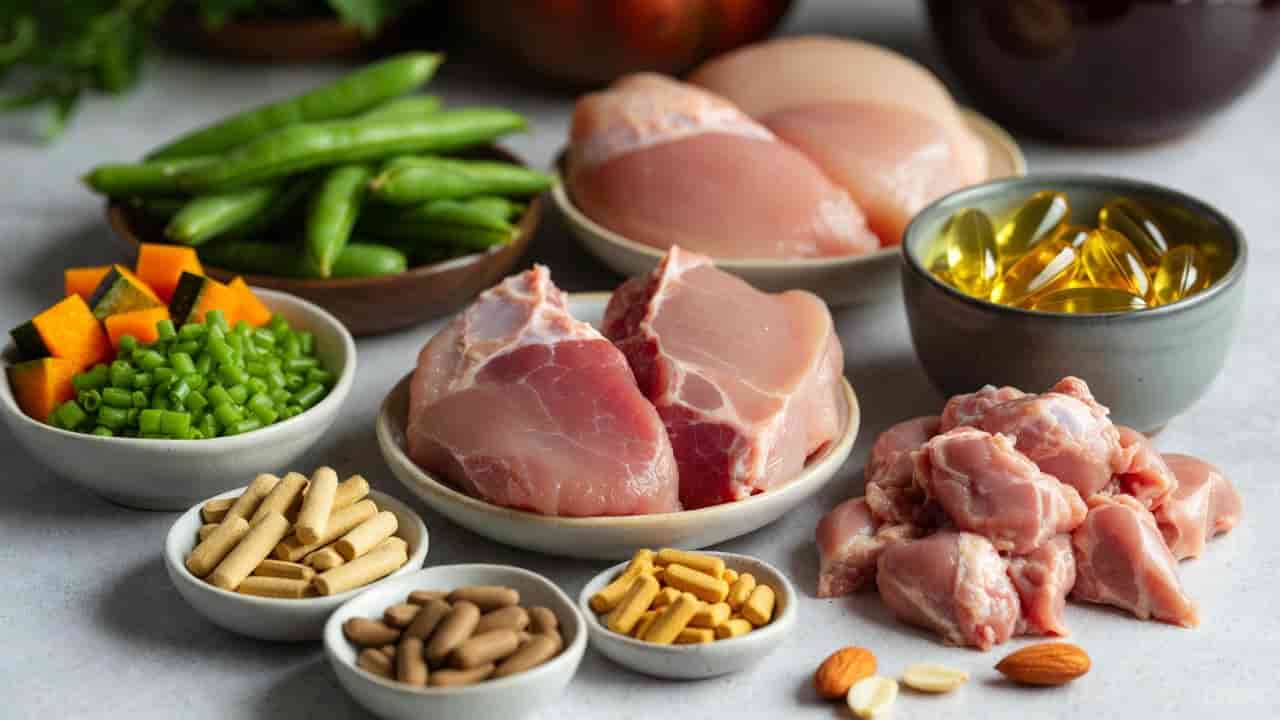
Ingredients (Makes ~12 Servings)
Protein (80%)
- 1.2 kg chicken thighs (bone-in or boneless)
- 200g chicken hearts
- 100g chicken liver
Vegetables (5%)
- 50g pumpkin
- 30g green beans
Fats
- 1 tbsp sardine oil
- 1 tbsp chicken fat (optional)
Supplements
- 1 tsp taurine powder
- 2 capsules fish oil
- 1 tsp calcium powder (if boneless meat used)
- 1 vitamin E capsule
- 1 tsp iodized salt
- 2 vitamin B-complex capsules
Water
- 1–2 cups warm water
Preparation Steps (Easy & Safe)
Follow these steps for a safe and balanced whole food meal.
Step 1: Lightly Cook the Protein
Lightly cook or bake the meat to kill surface bacteria while preserving nutrients.
Do NOT fully cook if you are using a raw-style diet.
Step 2: Chop and Grind
Chop the meat into fine pieces.
If using bone-in chicken, grind bones in a meat grinder.
Step 3: Steam the Vegetables Lightly
Steam for 3–5 minutes.
Step 4: Mix Everything Thoroughly
Combine:
- Meat
- Organs
- Veggies
- Supplements
- Fat sources
- Water
Step 5: Store Properly
- Refrigerate for 3 days
- Freeze for up to 2 months
- Use airtight containers
Serving Instructions
Serve twice a day based on your cat’s weight:
- 3–4kg cat: 100–120g per meal
- 5–6kg cat: 150g per meal
- Kittens: Add extra portions (they need more calories)
Transitioning Your Cat to a Whole Food Diet
Cats can be picky. Transition slowly:
Day 1–3:
10% whole food + 90% old food
Day 4–7:
25% whole food + 75% old food
Day 8–12:
50/50 mix
Day 13–18:
75% whole food
Day 19+:
100% whole food diet
Key Takeaway Boùx
KEY TAKEAWAY:
A 100% whole food, complete and balanced recipe for cats must include high-quality animal proteins, essential fats, vital nutrients like taurine, organs, and proper supplementation. When prepared correctly, whole food diets offer superior nutrition, better skin and coat health, stronger immunity, and improved digestion for your feline friend.
Also Read 👉
How to Take Care of a Stray Cat
Best Cat Foods for Skin & Coat Health
Helpful (Trusted Sources)
1. Cornell University – Feline Nutrition Resources
A trusted veterinary school resource about cat nutrition, whole food diets, and essential nutrients.
https://www.vet.cornell.edu/hospitals/nutrition
2. AAFCO – Official Cat Food Nutrient Profiles
Explains complete & balanced nutrient standards for homemade and commercial cat food.
https://www.aafco.org/consumers/understanding-pet-food/
People Also Asked (FAQ)
1. Can I feed my cat homemade food every day?
Yes, but only if the recipe is complete and balanced with supplements.
2. Is raw food better than cooked food?
Both are healthy if balanced. Raw food requires strict hygiene.
3. Can cats eat rice or grains?
Cats do not require grains. Small amounts are safe but not necessary.
4. How do I know my recipe is balanced?
Use a recipe designed by a certified vet nutritionist or follow AAFCO guidelines.
5. What supplements are mandatory?
Taurine, calcium, fish oil, vitamin E, iodine, and B-complex.
6. Can I skip organ meat?
No. Organs provide essential nutrients that muscle meat cannot replace.