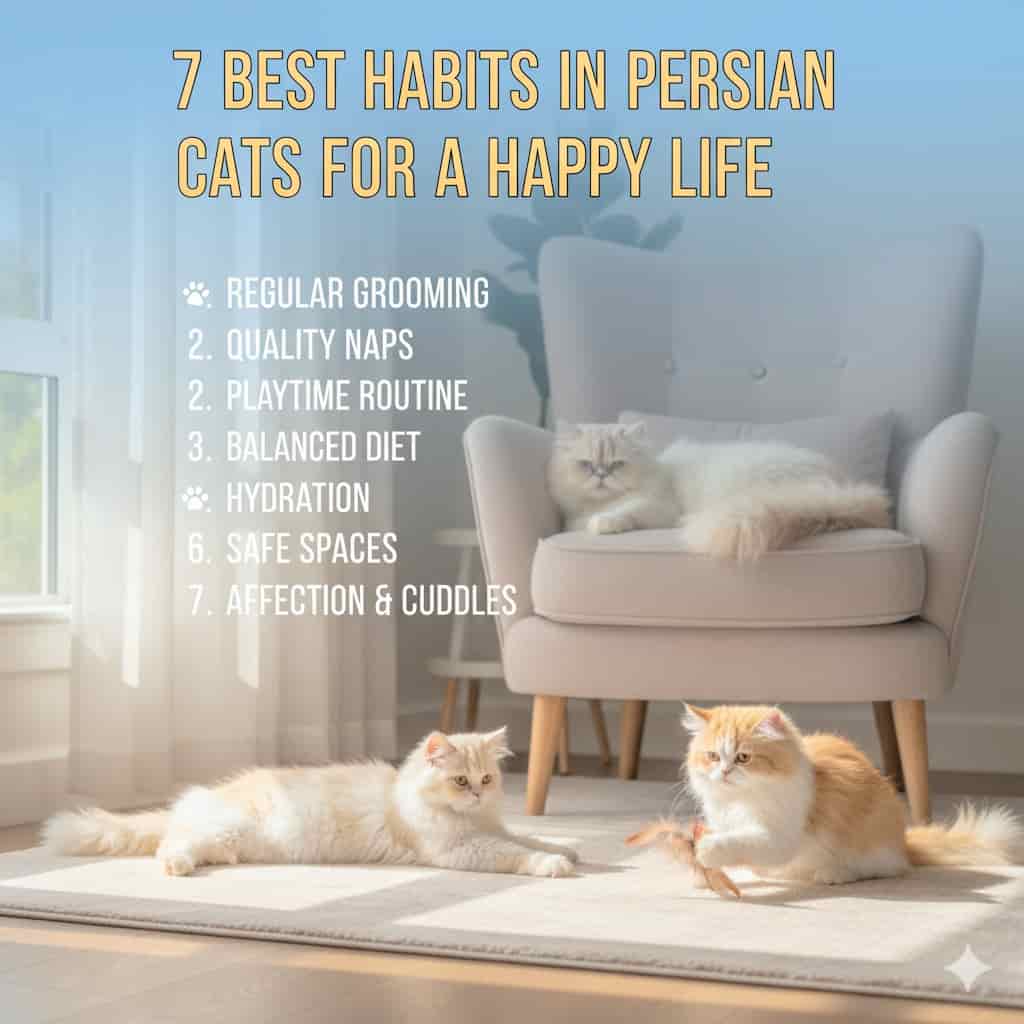
7 Best Habits in Persian Cats for a Happy Life
Persian cats are more than just beautiful creatures with royal looks—they are loving companions that bring calm and comfort to any home. But keeping a Persian cat happy and healthy requires attention to grooming, diet, playtime, and emotional care.
In this detailed guide, you’ll discover the 7 best habits that help your Persian cat live a stress-free, joyful, and long life.
1. Regular Grooming and Coat Care
Persian cats have one of the most luxurious coats in the feline world—but it needs daily maintenance.
Daily Grooming Checklist
- Brush daily using a soft-bristle brush.
- Check for mats behind ears and legs.
- Trim nails every 10–15 days.
- Clean eyes gently using a damp cloth.
- Bathe monthly using cat-safe shampoo.
Why it matters:
Regular grooming keeps your Persian cat’s fur silky and mat-free. It also prevents hairballs and skin infections.
Searching Keywords: Persian cat grooming, Persian coat care tips, Persian cat maintenance
2. Provide a Nutritious and Balanced Diet
Persians have slower metabolism and require high-quality food.
Ideal Diet for Persian Cats
- Protein: Chicken, turkey, or salmon.
- Fat: Healthy oils for a shiny coat.
- Fiber: Aids digestion and reduces hairballs.
- Water: Always keep fresh water available.
Avoid overfeeding and sugary treats. Stick to a feeding schedule—twice or thrice a day with measured portions.
Searching Keywords: Persian cat diet plan, best food for Persian cats, Persian cat nutrition
3. Daily Playtime and Exercise
Even though Persians are calm by nature, they still need mental and physical activity.
Best Playtime Ideas
- Use interactive toys like feather wands.
- Laser light sessions for energy release.
- Puzzle feeders to challenge their brains.
- Cat trees for climbing and scratching.
Playtime Tip:
Spend at least 20 minutes daily playing. It keeps them fit and emotionally content.
Searching Keywords: Persian cat playtime, keeping Persian cats active, cat enrichment
4. Keep Their Environment Calm and Clean
Persian cats prefer peaceful surroundings. Loud noises and sudden changes can stress them.
Ways to Create a Calm Home
- Clean litter box daily.
- Soft bedding in quiet areas.
- Gentle background sounds (soft music).
- Avoid moving furniture often.
Searching Keywords: Persian cat home setup, calm cat environment, happy Persian cat
5. Routine Health Checkups
Persians are prone to certain health problems like PKD (Polycystic Kidney Disease) and eye issues.
Vet Routine
- Vet visit every 6–12 months.
- Vaccinations and parasite control.
- Regular dental cleaning.
- Monitor for breathing problems.
Pro Tip:
If your Persian cat has watery eyes or nasal congestion, consult a vet immediately—these are common flat-faced cat issues.
6. Emotional Bonding and Affection
Persians are affectionate but subtle. They love calm interactions and gentle affection.
How to Build a Strong Bond
- Talk softly to your cat daily.
- Give treats during petting time.
- Allow lap time and cuddles.
- Respect their alone moments.
A cat that feels emotionally safe will eat better, sleep better, and live longer.
7. Consistent Routine and Quality Sleep
Cats are creatures of habit—Persians even more so.
Build a Routine
- Feed at fixed times daily.
- Schedule play and grooming time.
- Keep sleeping space undisturbed.
Sleep Tips
Persians sleep around 14–16 hours a day. Ensure their bed is:
- Soft and cozy.
- Away from drafts.
- In a quiet corner.
Searching Keywords: Persian cat daily routine, cat sleeping habits, healthy cat lifestyle
Conclusion
A happy Persian cat is not a coincidence—it’s the result of daily habits, love, and care.
Follow these 7 essential habits to create a beautiful bond with your Persian cat while ensuring they live a healthy, comfortable, and joyful life.
Remember: consistency is key. Small, caring actions each day lead to a lifetime of purrs and affection.
- Also Read: 7 Gentle and Laid Back Dog Breeds
- Also Read: Purina Persian Cat Care Guide
FAQ Section
Q1. What makes Persian cats special?
Their luxurious coats, calm personality, and loving nature make them one of the most adored breeds.
Q2. How often should I groom a Persian cat?
Brush daily and bathe once a month for best results.
Q3. What food is best for Persian cats?
High-protein, grain-free food with healthy fats and taurine is ideal.
Q4. Do Persian cats like to play?
Yes, but they prefer calm, short sessions with toys or gentle chasing games.
Q5. Are Persian cats good indoor pets?
Absolutely. They thrive in calm, indoor environments with stable routines.
Q6. How can I make my Persian cat’s coat shiny?
Feed food rich in omega-3 and brush regularly to distribute natural oils.
Q7. What signs show my Persian cat is happy?
Purring, soft blinking, kneading paws, and following you around are all signs of happiness.