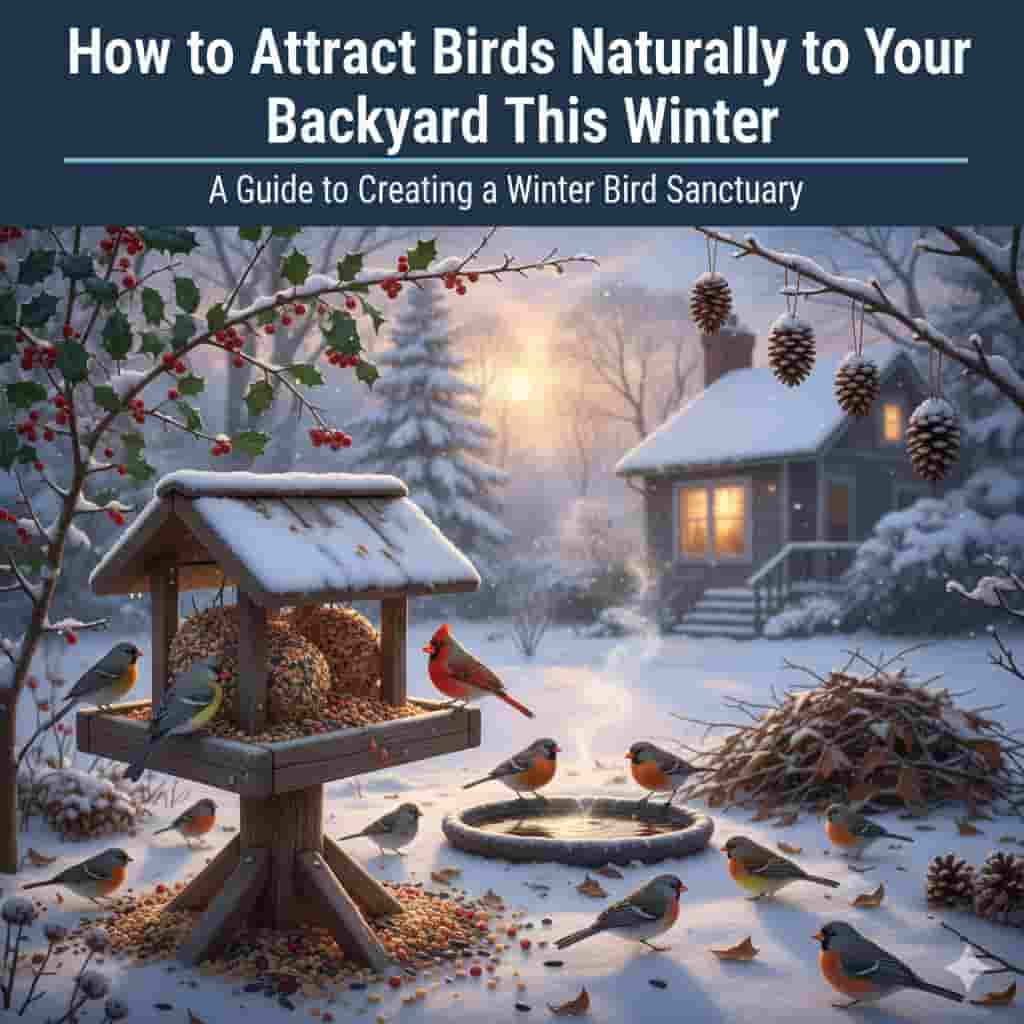
How to Attract Birds Naturally to Your Backyard This Winter
Winter might look calm and quiet, but your garden can still be full of life! With a few simple changes, you can turn your outdoor space into a cozy haven for birds. They’ll not only brighten your days but also benefit from the warmth, food, and shelter you provide during the cold months.
In this guide, you’ll discover 8 easy and effective ways to attract birds to your garden and help them thrive all winter long. Let’s get started!
Why It’s Important to Help Birds in Winter
When temperatures drop, food sources disappear, and clean water becomes scarce. Birds struggle to find enough to eat and drink, and many don’t survive harsh winters.
But the good news is — your garden can make a big difference!
By offering food, water, and shelter, you can create a safe space that helps local birds stay healthy and active until spring returns.
1. Provide Energy-Rich Food
Winter birds need high-energy foods to stay warm and survive the night. Simple seeds or scraps often aren’t enough.
What to Offer:
- Suet cakes or fat balls: Great energy boosters!
- Black-oil sunflower seeds: Packed with healthy oils that birds love.
- Mixed seed blends: Include sunflower hearts, cracked corn, and millet.
- Mealworms: A tasty treat for insect-eating birds like robins and wrens.
Pro Tip: Place feeders near trees or bushes so birds can quickly hide if a predator shows up.
2. Keep Fresh Water Available
Even when there’s plenty of snow, birds still need clean water to drink and bathe. Unfortunately, most natural water sources freeze over in winter.
Here’s how to help:
- Use a bird bath or shallow dish for water.
- Float a small ball in it to stop freezing.
- Replace water daily so it stays fresh and safe.
- If possible, use a heated bird bath in very cold regions.
Clean water helps birds maintain their feathers — which is essential for warmth!
3. Create Shelter and Safe Spots
Birds need more than just food and water. They also need places to rest, sleep, and hide from cold winds or predators.
Try these ideas:
- Keep evergreen shrubs like holly or juniper in your garden.
- Put up nest boxes or roosting boxes — birds will use them for warmth even in winter.
- Stack logs or branches in a corner to create natural hiding spots.
Tip: Avoid cutting back all your plants before winter. A bit of wild growth gives birds the cover they need.
4. Grow Plants That Feed Birds Naturally
Feeders are great, but natural food sources are even better! Native plants that produce berries or seeds are like a free buffet for birds.
Bird-friendly plants to grow:
- Holly, viburnum, or dogwood (for winter berries).
- Coneflowers, sunflowers, and teasels (for seed heads).
Don’t rush to tidy up after fall — those dried flowers and seed heads are valuable food for hungry birds!
Also Read:Best Breed Dogs For Family
5. Use Different Types of Feeders
Not all birds eat the same way. Some prefer hanging feeders, while others like to eat from the ground.
Mix it up with:
- Tube feeders for small birds.
- Platform or tray feeders for ground-feeders.
- Suet cages for woodpeckers and starlings.
Offering a variety of feeders makes your garden welcoming to many different species — from sparrows to finches to robins.
6. Leave a Little “Mess” in Your Garden
A perfectly tidy garden isn’t always the best for wildlife. Leaving some leaves, branches, and seed heads gives birds and insects a place to hide and feed.
Try this:
- Keep leaf piles under trees or hedges.
- Leave dead flower stalks standing — birds will eat the seeds.
- Build a small brush pile for natural shelter.
A little wild corner can make your garden come alive with activity!
7. Keep Everything Clean and Safe
Hygiene is key to keeping your bird visitors healthy. Dirty feeders or stale water can spread diseases, so regular cleaning is essential.
Maintenance checklist:
- Wash feeders weekly with warm, soapy water.
- Scrub bird baths and refill daily.
- Clean birdhouses once a year before nesting season.
- Remove spoiled or wet food right away.
Doing this keeps your garden safe and attractive for returning visitors.
8. Be Patient and Observe
Sometimes, attracting birds takes a little time. Don’t worry if your feeders aren’t busy right away — word spreads quickly in the bird world!
What you can do:
- Keep notes on which foods and feeders birds prefer.
- Adjust placement for safety and sunlight.
- Enjoy watching and learning — it’s relaxing and rewarding.
Before you know it, you’ll have a bustling, chirping garden full of feathered guests!
Winter Bird Garden Quick Checklist
Here’s a simple list you can follow:
- [ ] Hang suet cakes and sunflower seeds
- [ ] Keep clean, unfrozen water available
- [ ] Provide shrubs, nest boxes, and roost spots
- [ ] Grow berry-bearing plants and leave seed heads
- [ ] Use different feeders for different birds
- [ ] Leave leaf litter and brush piles
- [ ] Clean feeders and baths regularly
- [ ] Watch, learn, and enjoy the company!
FAQ – Helping Birds in Winter
Q1. When should I start feeding birds?
Start early in the season, as soon as temperatures drop. This helps birds find your garden before food becomes scarce.
Q2. What foods should I avoid?
Skip bread, salted nuts, and dairy. Stick with seeds, suet, fruit, and mealworms instead.
Q3. My garden is small — can I still help?
Absolutely! Even one feeder and a bowl of water on a balcony can make a big difference.
Q4. How often should I clean feeders?
Once a week is perfect. It keeps food fresh and prevents bacteria build-up.
Q5. What if squirrels or crows take all the food?
Use squirrel-proof feeders or small feeding ports. You can also scatter extra food in several spots.
Q6. Do birds become dependent on my food?
No — they still forage naturally. You’re just helping them through the toughest months.
Q7. Will my garden look messy if I leave leaves and seed heads?
Maybe a little — but that “mess” is actually a wildlife haven full of life!
Q8. How long before I see more birds?
Usually within a week or two. Keep feeding regularly, and soon your garden will be buzzing with life.
Also Read:Best Breed Dogs For Family
Final Thoughts
Winter doesn’t have to be dull or lifeless. By following these 8 simple steps, you’ll create a warm, welcoming space that keeps birds happy, safe, and well-fed all season long.
So grab your feeder, hang up those suet cakes, and enjoy the cheerful company of your feathered friends — right in your own garden.