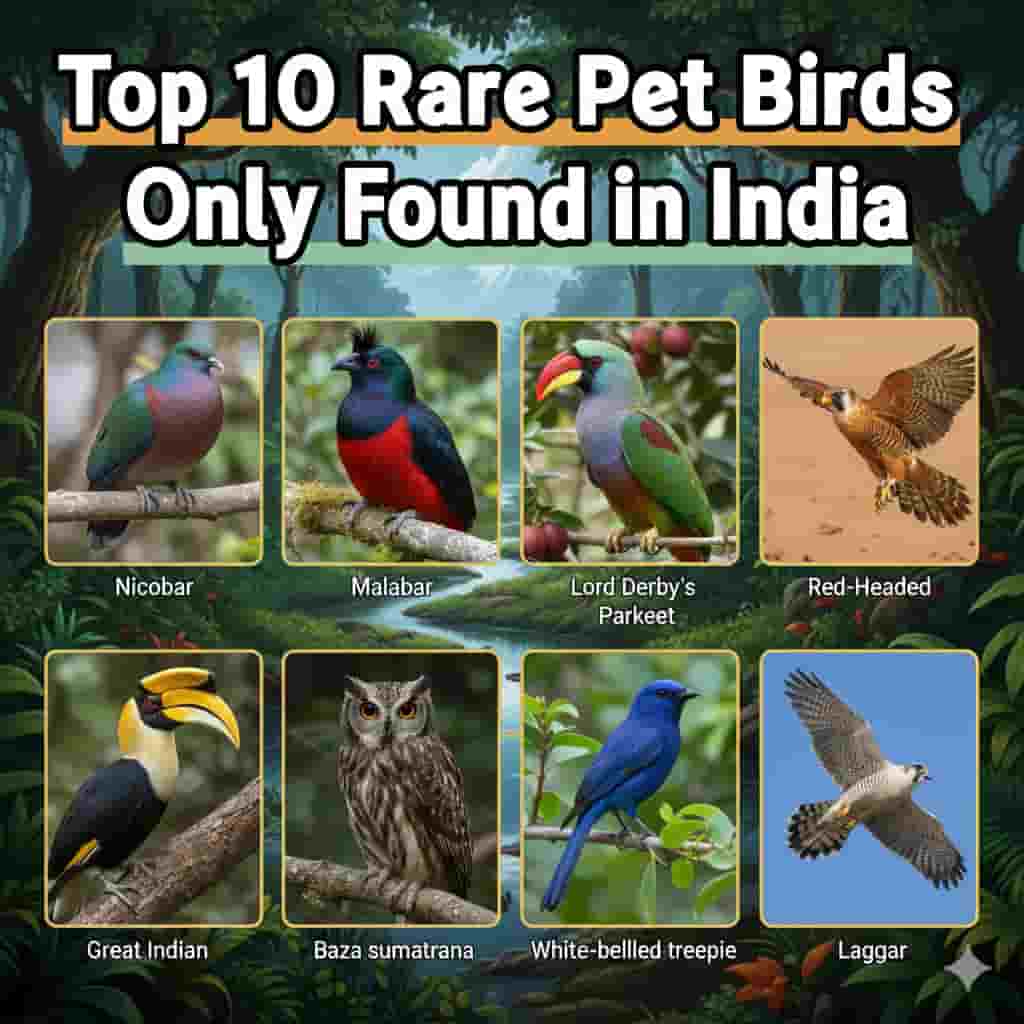
Top 10 Rare Pet Birds Only Found in India
India is known for its incredible biodiversity — from majestic tigers to colorful birds that paint the skies. But did you know that India is also home to some rare and exotic pet birds found nowhere else in the world? These birds, with their vibrant feathers and unique personalities, have captured the hearts of bird lovers globally.
In this detailed guide, we’ll explore the Top 10 Rare Pet Birds Only Found in India, their habitats, characteristics, diet, and how you can care for them responsibly.
1. Indian Ringneck Parakeet (Psittacula krameri manillensis)
The Indian Ringneck Parakeet is one of the most beautiful and intelligent birds you can find in India. Known for its bright green plumage and signature neck ring, this bird is both charming and talkative.
Key Features
- Color: Green body with a rose-colored neck ring (males)
- Native Region: Indian subcontinent
- Lifespan: 20–30 years
- Temperament: Playful, intelligent, and social
Why It’s Rare
The wild populations are decreasing due to illegal pet trade and habitat loss, making the Indian Ringneck a prized pet among bird enthusiasts.
Care Tips
Provide a spacious cage, daily interaction, and a diet rich in fruits, seeds, and vegetables.
2. Alexandrine Parakeet (Psittacula eupatria)
This parakeet is the largest among the ringneck species and is native to India and Sri Lanka. Known for its long tail feathers and majestic green body, it’s a sight to behold.
Key Features
- Color: Emerald green with a blue sheen
- Native Region: Central and Southern India
- Lifespan: 25–40 years
- Temperament: Loyal, gentle, and intelligent
Why It’s Rare
Due to habitat destruction and trapping for trade, the Alexandrine Parakeet’s population is now protected under the Indian Wildlife Act.
Care Tips
They need mental stimulation — provide puzzle toys and human interaction regularly.
3. Nicobar Pigeon (Caloenas nicobarica)
The Nicobar Pigeon is one of the most stunning birds in India, found mainly in the Andaman and Nicobar Islands. Its metallic sheen and vibrant hues make it look like a living rainbow.
Key Features
- Color: Metallic green, copper, and blue
- Native Region: Nicobar Islands
- Lifespan: Around 10–15 years
- Temperament: Calm and curious
Why It’s Rare
They are endemic to the Nicobar Islands and are threatened by habitat loss and hunting.
Care Tips
They thrive in open aviaries and need a balanced diet of seeds, grains, and tropical fruits.
4. Malabar Parakeet (Psittacula columboides)
Also known as the Blue-winged Parakeet, this stunning bird is native to the Western Ghats. Its sky-blue wings and silver-grey body make it a visual delight.
Key Features
- Color: Blue and silver-grey
- Native Region: Western Ghats, Kerala, Karnataka
- Lifespan: 20–25 years
- Temperament: Friendly but shy
Why It’s Rare
The Malabar Parakeet is found only in India and is considered near-threatened due to forest clearance.
Care Tips
Keep them in large aviaries, with fresh fruits and plenty of perches for flight.
5. Himalayan Monal (Lophophorus impejanus)
The national bird of Nepal, the Himalayan Monal, is also found in parts of Northern India. Its iridescent plumage makes it one of the most beautiful birds in the Himalayas.
Key Features
- Color: Multicolored metallic feathers
- Native Region: Himachal Pradesh, Uttarakhand
- Lifespan: 10–15 years
- Temperament: Gentle and hardy
Why It’s Rare
Their population is declining due to poaching and habitat destruction.
Care Tips
These birds prefer cool climates and a natural, open environment to thrive.
6. Plum-headed Parakeet (Psittacula cyanocephala)
This charming bird has a unique color gradient on its head — males have a red and blue mix, while females sport a bluish-grey tone.
Key Features
- Color: Green with plum-colored head
- Native Region: Indian forests and open woodlands
- Lifespan: 20 years
- Temperament: Cheerful, social, and active
Why It’s Rare
They are becoming rare in urban areas due to deforestation and trapping.
Care Tips
Provide company (pairs), flight space, and a balanced diet of grains and fruits.
7. Grey-headed Canary Flycatcher (Culicicapa ceylonensis)
A small bird with a melodious voice, found in the forests of India’s Western Ghats and Himalayan foothills.
Key Features
- Color: Grey head and yellow belly
- Native Region: South and Northeast India
- Lifespan: 8–10 years
- Temperament: Active, curious, and social
Why It’s Rare
They are hard to spot due to their small size and limited range.
Care Tips
Keep them in quiet spaces, away from stress and noise. Feed them insects, berries, and soft fruits.
8. Jerdon’s Courser (Rhinoptilus bitorquatus)
One of the rarest birds in India, rediscovered after being thought extinct for over 80 years! It’s found only in Andhra Pradesh.
Key Features
- Color: Brown and black with white bands
- Native Region: Eastern Ghats
- Lifespan: 10–12 years
- Temperament: Shy and nocturnal
Why It’s Rare
It’s a critically endangered species, with fewer than 250 left in the wild.
Care Tips
This bird should not be kept as a pet — it is fully protected by Indian wildlife law.
9. Painted Stork (Mycteria leucocephala)
A majestic wading bird with pink feathers and a long yellow beak, the Painted Stork can often be seen in Indian wetlands.
Key Features
- Color: Pink, white, and black
- Native Region: North and Central India
- Lifespan: 28–30 years
- Temperament: Calm and elegant
Why It’s Rare
Their wetlands are shrinking, making them vulnerable in some states.
Care Tips
If kept in captivity, they need large ponds and open enclosures to remain healthy.
10. Rose-ringed Parakeet (Psittacula krameri)
Although commonly seen, the pure Indian subspecies of Rose-ringed Parakeet is quite rare in captivity. Known for mimicking human speech, this parakeet is a true delight.
Key Features
- Color: Green with a pink neck ring
- Native Region: Northern India
- Lifespan: 25–30 years
- Temperament: Talkative, friendly, and intelligent
Why It’s Rare
Due to crossbreeding and illegal trade, the pure Indian species is now less common.
Care Tips
Provide interactive playtime, clean perches, and fresh fruits daily.
Conservation and Legal Protection
Many of these rare birds are protected under the Wildlife Protection Act of 1972. It’s illegal to capture or trade them without proper authorization. Always ensure that your pet birds are captive-bred and legally obtained.
If you’re passionate about birds, consider supporting bird sanctuaries and rescue centers in India. They play a crucial role in protecting these rare species.
- 10 Signs Your Dog Thinks You’re the Best Person in the World
- Common Bird Behaviors and How to Train Your Bird
Frequently Asked Questions (FAQ)
1. Can I legally keep rare Indian birds as pets?
Only captive-bred and non-protected species can be legally kept. Always verify permits before purchase.
2. Which is the best rare bird for beginners in India?
The Indian Ringneck Parakeet is a great choice due to its intelligence and adaptability.
3. What is the most expensive bird in India?
The Alexandrine Parakeet and Nicobar Pigeon are among the costliest due to their rarity and beauty.
4. Are these birds easy to train?
Yes, many Indian parakeets are highly trainable and can even mimic speech with regular interaction.
5. How can I support bird conservation in India?
You can volunteer at bird sanctuaries, donate to conservation NGOs, and raise awareness about wildlife protection laws.
Final Thoughts
India’s rare pet birds are more than just companions — they are symbols of the country’s rich natural heritage. Owning one responsibly is both a privilege and a responsibility. Always remember: the best way to love these birds is to protect them and their natural habitats.
Would you like me to include meta title, meta description, and keyword list (for Yoast SEO or Rank Math plugin) optimized for this post too?