Why This Mother Cat Prefers One Kitten: A Beautiful Feline Rescue Tale
Introduction
Every mother—whether human or animal—shares a special bond with her children. Yet, fascinatingly, many animal mothers show a slightly stronger attachment to one baby in the litter. This behavior often surprises pet owners, especially when it comes to cats. Today’s heartwarming story revolves around a mother cat who found a safe place for her newborn kittens. Though she adored each of them deeply, one tiny kitten clearly won an extra-soft spot in her heart.
This story not only melts hearts but also reveals important insights into feline instincts, emotional bonds, and maternal behavior. Moreover, it highlights how mother cats choose safe environments, how they communicate with their young, and what pet owners can learn about caring for cats, kittens, and rescue animals.
In this article, we dive deep into:
- Why mother cats choose specific safe places
- How they care for their litters
- Why one kitten sometimes becomes their “favorite”
- What this means for human caregivers
- How to support a mama cat and her babies responsibly
The Beginning: A Cat Searching for Safety
Before giving birth, a pregnant cat—also called a queen—starts looking for a safe place. This behavior, known as “nesting,” is driven by instinct. In the wild, cats choose hidden, warm, and secure places to protect their newborn kittens from predators, harsh weather, and noise.
In this particular story, the mother cat lived near a residential neighborhood where people often fed stray animals. She trusted humans but still preferred to give birth in a quiet, hidden area. Eventually, she discovered an old wooden shed behind a house—a place that felt warm, safe, and secure enough for her coming babies.
Why Do Cats Choose Certain Places to Give Birth?
Some factors include:
✔ Warmth
✔ Shelter from rain & wind
✔ Lack of predators or disturbance
✔ Soft materials nearby
✔ Privacy
Even domesticated cats carry these instincts. Which is why, even indoors, they often choose places like cupboards, under beds, behind couches, or inside laundry baskets.
The Birth of the Kittens
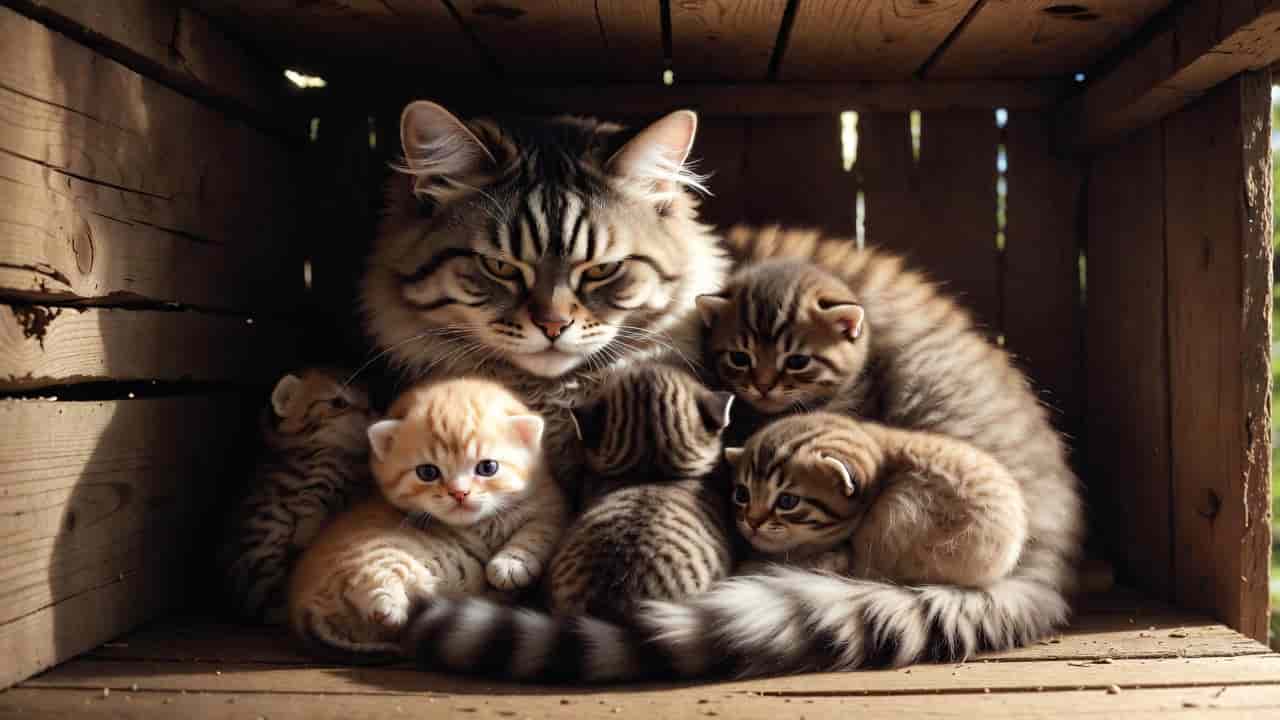
On a cool morning, the cat gave birth to four kittens. Each one was tiny, fragile, and trembling. The mother cat instantly began cleaning them—licking them to stimulate breathing, warmth, and bonding.
All four kittens were healthy and noisy, meowing softly as they tried to find their mother’s belly for milk. The queen curled her body around them protectively.
As days passed, people occasionally saw her sneaking out for food, then rushing back to check on her babies. Her devotion was clear.
A Special Bond: The One Kitten Who Stole Her Heart
While the mother cat cared for each kitten equally, one stood out to her. This little one often stayed closer, followed her scent, and showed early signs of being emotionally attached. Interestingly, the mother cat seemed to respond more sweetly to this kitten—giving gentle licks and pulling it closer with her paws more often.
Scientists say this behavior occurs due to:
- Scent recognition
- Health signals
- Compatibility of temperament
- Nursing patterns
Sometimes, the strongest or the weakest kitten becomes the mother’s “favorite.” In this case, the chosen kitten was the calmest and most observant of the bunch.
Why Do Mother Cats Prefer One Kitten Over Others?
Many people assume cat mothers treat all kittens equally, but research shows otherwise. Although cats show unconditional love to their litters, a few reasons explain why they might prefer a specific kitten:
1. Scent Bonding
Cats recognize their babies by scent. One kitten might share a scent profile closer to the mother’s comfort range.
2. Nursing Compatibility
Some kittens latch better, making feeding easier for both mother and child.
3. Health and Development Cues
If a kitten is particularly strong or calm, the mother might focus more on it.
4. Personality Match
Cats have personalities. Sometimes a mother simply feels safer with a calmer kitten.
5. Emotional Response
Yes, cats feel emotions. They can form deeper attachments.
How Humans Found the Hidden Family
One day, a resident cleaning their backyard noticed soft meows coming from the shed. They quietly peeked inside and saw the mother cat curled around her four babies. Instead of disturbing them, the family decided to help.
They placed:
- A bowl of fresh water
- High-quality cat food
- A small box with soft fabric
All outside the shed so the mother cat could freely choose what she needed without stress.
This is the correct way to assist a nursing stray cat—support without interference.
The Mother Cat Reveals Her Favorite
When volunteers visited to monitor the cat family, they noticed something sweet.
Whenever the mom returned from eating, the first kitten she checked was always the same one. She would nose-boop it, groom it, and lay it gently against her belly before tending to others.
But she never neglected any kitten. Her love was balanced. Yet, her softer behavior toward the chosen one was unmistakable.
This adorable preference became a favorite moment for everyone watching over the cat family.
Caring for a Mother Cat and Her Kittens: What You Should Know
If you ever encounter a mother cat with kittens, here’s how you can help responsibly:
1. Avoid touching newborn kittens
Your scent can confuse or alarm the mother.
2. Provide food and water nearby
Protein-rich wet cat food is ideal.
3. Offer shelter (optional)
A cardboard box with towels works well.
4. Never separate the kittens prematurely
They need their mother until at least 8 weeks.
5. Monitor without interfering
Only intervene if there’s medical danger.
How the Kittens Grew Stronger
Over the next few weeks, the kittens began opening their eyes, crawling, and eventually playing with each other. Their personalities became clearer:
- The adventurous kitten loved exploring.
- The shy kitten stayed close to the nest.
- The playful one pounced on everything.
- The mother’s favorite kitten stayed calm and affectionate.
As they grew older, rescue volunteers planned for vaccinations and adoption opportunities.
What This Story Teaches Us
This beautiful moment between a mother cat and one chosen kitten teaches us:
- Animals experience emotions deeply.
- Maternal love is universal and powerful.
- Cats are more socially and emotionally complex than many believe.
- Rescue stories highlight the importance of kindness.
Additionally, observing the maternal instincts of cats helps humans understand how to support stray animals in cities and neighborhoods safely.
Some key Facts:
- mother cat bonding
- cat maternal instinct
- stray cat rescue story
- kitten bonding behavior
- new kittens safe place
- cat family care guide
- favorite kitten behavior
- how cats choose nesting places
Read Also:
- Related 👉7 Heart melting Signs of your Dog
- Related 👉 Dogs vs Cat maintenance
- Related 👉 7 Most Intelligent dogs Breeds
Related Important links:
- https://www.aspca.org
- https://www.petmd.com
- https://www.humanesociety.org
- https://www.vet.cornell.edu
KEY TAKEAWAYS
Key Takeaways:
- Mother cats instinctively choose safe, warm, hidden places to give birth.
- Even though they love all their kittens, a mother cat may form a slightly stronger bond with one.
- Understanding feline maternal behavior helps humans care for stray or domestic cats more responsibly.
- Providing food, shelter, and quiet support is the best way to help a mother cat and her newborn babies.
FAQ SECTION..
1. Do cats really have a favorite kitten?
Yes. While mother cats love all their babies, many show extra affection toward one kitten based on scent, temperament, or nursing compatibility.
2. Should I touch newborn kittens?
Not in the first few days. Touching them too early can stress the mother or confuse her.
3. How long should kittens stay with their mother?
At least 8–10 weeks. This ensures healthy development and socialization.
4. Why do cats hide when giving birth?
It’s instinct. They want a safe, warm, private place to protect their kittens from danger.
5. What should I feed a nursing mother cat?
High-protein wet food, kitten food, or veterinary-recommended diets.