Best Nutrition Tips for Indoor Birds:A Complete Guide line’s
Introduction
Indoor birds bring endless joy, companionship, and a sense of calm to any home. Whether you own a parrot, budgie, cockatiel, finch, lovebird, or any other pet bird species, one thing is certain: their diet plays the biggest role in their overall health and lifespan.
Unfortunately, many bird owners still rely on seeds alone. While seeds are beneficial, they are not enough. A bird diet lacking in variety can lead to vitamin deficiencies, feather loss, obesity, weakened immune function, and behavioral problems.
This guide is here to fix that.
In this long-form, expert-approved, bird-friendly article, you’ll learn:
- The best diet tips for indoor birds
- What foods to feed and avoid
- Natural supplements birds actually need
- How to build a weekly meal plan
- Hydration essentials
- Expert feeding strategies
- Healthy treat ideas
- Common mistakes bird owners must avoid
- And finally, a helpful FAQ section for quick solutions
Plus, this article includes internal links and external references to provide useful resources for your bird-care website readers.
Why Indoor Birds Need a Special Diet
Outdoor birds get access to fresh plants, insects, seeds, nuts, tree bark, and mineral-rich soil. Indoor birds do not. This means you must recreate a natural diet using safe, scientifically recommended foods.
Indoor birds require:
- A balance of proteins, essential fats, vitamins, and minerals
- Variety to keep them mentally engaged
- Foods that support feather growth, strong bones, and immune health
- Safe meal rotation to prevent nutritional gaps
Best Diet Tips for Indoor Birds (Complete, Detailed & Practical Guide)
Below are the best evidence-based diet tips every indoor bird owner needs. These tips apply to parrots, budgies, cockatiels, macaws, African greys, finches, lovebirds, parrotlets, conures, and more.
1. Never Rely on Seeds Alone
Seeds are tasty, but they are high in fat and low in vital nutrients.
Excess seed consumption can lead to:
- Obesity
- Fatty liver disease
- Vitamin A deficiency
- Poor feather quality
- Behavioral issues
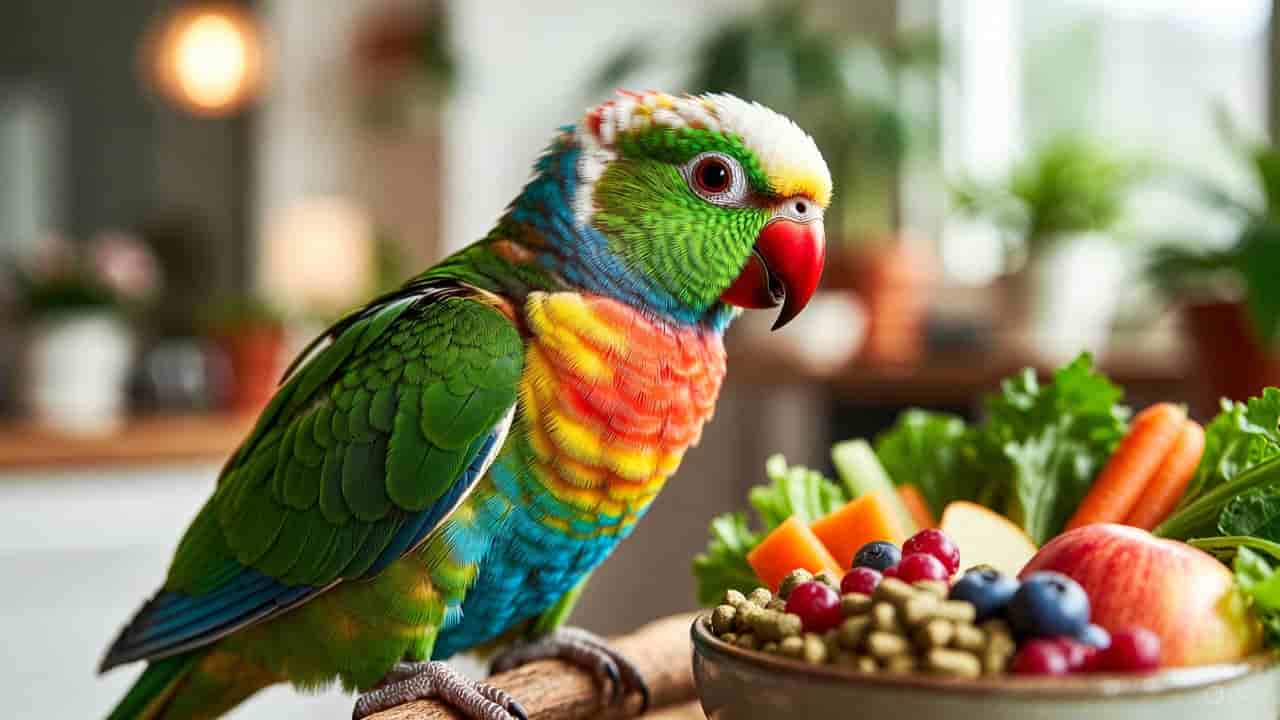
Better Alternative → Pellet-Based Diet (High-Quality Pellets)
Pellets are specifically formulated to support balanced nutrition.
Look for:
- Natural ingredients
- No artificial dyes
- Organic blends when possible
Recommended Brands (External Resources):
- Harrison’s Bird Foods (https://example)
- ZuPreem Natural Pellets
2. Include Fresh Vegetables Daily
Vegetables are essential for indoor birds because they provide:
- Vitamin A (critical for immunity)
- Fiber
- Antioxidants
- Hydration
- Natural minerals
Best Vegetables for Indoor Birds:
- Carrots
- Spinach
- Broccoli
- Sweet potato (cooked only)
- Green beans
- Bell peppers
- Kale
- Zucchini
Avoid:
- Avocado
- Onions
- Garlic
- Mushrooms
Pro tip: Chop veggies into small pieces and mix them with pellets for picky birds.
3. Add Fresh Fruits (But Not Too Much)
Fruits are healthy but high in natural sugar. Provide fruits 3–4 times a week.
Healthy Fruits Birds Love:
- Apples (without seeds)
- Mango
- Papaya
- Blueberries
- Strawberries
- Kiwi
- Pomegranate seeds
Avoid citrus fruits for sensitive species.
4. Provide Clean, Filtered Water Daily
Water is life—especially for indoor birds that live in dry indoor environments.
Rules for Hydration:
- Replace water twice a day
- Avoid metal rusting bowls
- Use stainless steel or ceramic
- Never use water with medications unless instructed by a vet
Signs of dehydration:
- Dry beak
- Fluffed feathers
- Lethargy
Indoor birds, especially parrots, may refuse dirty water—keep it spotless.
5. Offer Protein-Rich Foods Weekly
In the wild, birds naturally eat insects and protein-rich plants.
Indoor birds may safely consume:
- Cooked lentils
- Boiled eggs (small amount)
- Cooked beans
- Small insects (for finches & canaries)
- Tofu (rare treat)
Protein supports:
- Feather growth
- Muscle strength
- Breeding health
6. Nuts and Seeds Should Be Treats, Not Staples
Seeds and nuts are high-calorie energy boosters, not daily meals.
Safe Nuts (Unsalted, raw):
- Almonds
- Walnuts
- Pistachios
- Cashews
Feed 2–3 times a week in tiny portions.
7. Provide Calcium and Mineral Supplements
Indoor birds often miss out on natural sunlight and minerals found outdoors.
Provide:
- Cuttlebone
- Mineral block
- Calcium powder (as advised by vet)
- Sunlight or full-spectrum UV lamp
Calcium supports:
- Egg-laying health
- Bone strength
- Beak structure
8. Avoid Toxic Foods at All Costs
Some foods can be deadly to birds.
Never feed:
- Chocolate
- Avocado
- Caffeine
- Alcohol
- Onion
- Garlic
- Salted snacks
- Fried foods
- Apple seeds
- Mushroom
Keep your bird safe by following strict feeding rules.
9. Use Meal Rotation to Prevent Boredom
Just like humans, birds get bored.
Rotation increases:
- Nutrition
- Mental stimulation
- Appetite
- Healthy weight
Example rotation:
- Monday: Pellets + veggies
- Tuesday: Pellets + fruits
- Wednesday: Pellets + grains
- Thursday: Mixed veggie bowl
- Friday: Protein treat + pellets
- Weekend: Fruit + leafy greens
10. Encourage Foraging to Support Natural Behavior
Birds love foraging—it keeps them mentally healthy.
Try:
- Hiding food in paper cups
- Stuffing veggies into toys
- Using foraging boxes
This reduces:
- Anxiety
- Boredom biting
- Screaming
- Overeating seeds
11. Avoid Sudden Diet Changes
Birds can panic or stop eating if you change food too quickly.
Transition slowly over 2–4 weeks.
12. Healthy Homemade Bird Treats
You can make safe treats such as:
- Oatmeal bites
- Fruit mash
- Veggie muffins
- Seed bars (minimal seeds)
- Sprouted grain mix
13. Use Sprouted Seeds Instead of Dry Seeds
Sprouted seeds are:
- Low fat
- High protein
- Rich in enzymes
- Easier to digest
They are perfect for parrots, budgies, and finches.
14. Create a Weekly Meal Plan
Below is a sample meal plan for indoor birds:
Monday
- Pellets
- Chopped carrot, spinach
- Blueberries
Tuesday
- Pellets
- Broccoli + sweet potato mash
Wednesday
- Sprouted seeds
- Green beans
- Mango slices
Thursday
- Lentils
- Mixed veggie bowl
Friday
- Boiled egg (tiny amount)
- Pellets
Saturday
- Fruit salad
- Cuttlebone access
Sunday
- Light seed mix
- Pellets
- Zucchini & peppers
Also Read 👉
- Read also: Stress free ways to bond a new Cat
- Related post: simple ways to recognize cat happiness & good health
External Helpful Resources
- The American Federation of Aviculture (av.org)
- BirdChannel Feeding Guide
- RSPB Bird Care Tips
KEY TAKEAWAY BOX
Best Diet Tips for Indoor Birds (Quick Summary):
- Prioritize pellets over seeds
- Add daily fresh vegetables
- Use fruits moderately
- Provide clean water daily
- Offer protein weekly
- Provide calcium supplements
- Rotate meals to avoid boredom
- Avoid all toxic foods
- Encourage natural foraging
- Never make sudden diet changes
A healthy diet = a long, happy life for your indoor bird.
Frequently Asked Questions (FAQ)
1. What is the best daily food for indoor birds?
A high-quality pellet diet mixed with fresh vegetables is the best daily routine.
2. Can indoor birds eat rice?
Yes, cooked rice is safe in moderation.
3. Are seeds harmful for birds?
Not harmful, but unhealthy as a full diet due to high fat.
4. How often should I give fruits?
2–3 times a week is enough.
5. What is the healthiest treat for birds?
Fresh veggies, sprouted seeds, and small fruit portions.
6. Should I give vitamins to my bird?
Only if recommended by a vet.
7. Can birds drink tap water?
If your tap water is clean and safe; otherwise use filtered water.
8. Are nuts good for parrots?
Yes, but only raw, unsalted, and in small quantities.
9. Can indoor birds eat bread?
A small bite occasionally is okay, but not recommended as regular food.
10. How do I switch my bird from seeds to pellets?
Slowly over 3–4 weeks by mixing pellets with seeds and reducing the seeds gradually.