Africa’s Golden Cat Is So Rare, No One Knows How Many Are Left — A Deep Dive Into the Most Mysterious Feline in the Wild
Introduction
Among the world’s wild cats, very few species remain as elusive and enigmatically beautiful as Africa’s golden cat. Despite living in some of the richest biodiversity hotspots on Earth, this mysterious feline continues to escape the spotlight. Researchers still don’t know how many survive in the wild, and even high-tech camera traps often struggle to capture clear evidence of the species.
In today’s digital age, where information spreads faster than ever, one might assume that every species has already been researched thoroughly. Yet, Africa’s golden cat remains a ghost of the rainforest—rarely photographed, almost never seen in person, and extremely difficult to study.
In this comprehensive, SEO-friendly article, we will explore:
- Why Africa’s golden cat is so rare
- What makes this species scientifically fascinating
- Its habitat, diet, behavior, and threats
- The complicated challenges of estimating its population
- Ongoing conservation efforts
- What you can do to help protect this critically important species
This is your ultimate guide, structured for readability, human-tone engagement, and maximum search visibility.
What Is Africa’s Golden Cat? A Quick Overview
Africa’s golden cat (Caracal aurata) is a medium-sized wild feline native to the rainforests of Central and West Africa. At first glance, it looks like a blend of a caracal, a clouded leopard, and a domestic tabby. Yet it is neither related to caracals nor house cats.
Basic Facts at a Glance
| Feature | Details |
|---|---|
| Scientific name | Caracal aurata |
| Size | 60–80 cm long |
| Weight | 5–16 kg |
| Habitat | Tropical rainforests of West & Central Africa |
| Conservation Status | Near Threatened (IUCN) |
| Rarity | Extremely rare & difficult to study |
Its rarity, secretive nature, and dense habitats have made it one of the least understood wild cats on the planet.
Why Is Africa’s Golden Cat So Rare?
1. Dense Rainforest Makes Sightings Nearly Impossible
Unlike cheetahs or lions, this cat doesn’t roam open savannas. Instead, it thrives in:
- Thick rainforests
- Foggy mountain forests
- Remote jungles with almost no human presence
These dense terrains act like natural camouflage.
2. Nocturnal & Crepuscular Lifestyle
Africa’s golden cat avoids daytime activity. It hunts and travels mostly:
- At night (nocturnal)
- During early morning & late evening (crepuscular)
This dramatically reduces chances of spotting the animal in the wild.
3. Naturally Low Population Density
Even where the species exists, it doesn’t occur in large numbers. Researchers often record:
- 1 cat per 100+ square miles
- Sometimes zero sightings for years
4. Avoidance of Human Contact
Unlike leopards or servals, Africa’s golden cat rarely interacts with human settlements. It prefers deep, untouched forests, many of which are now threatened.
Appearance: Why This Cat Is Unlike Any Other
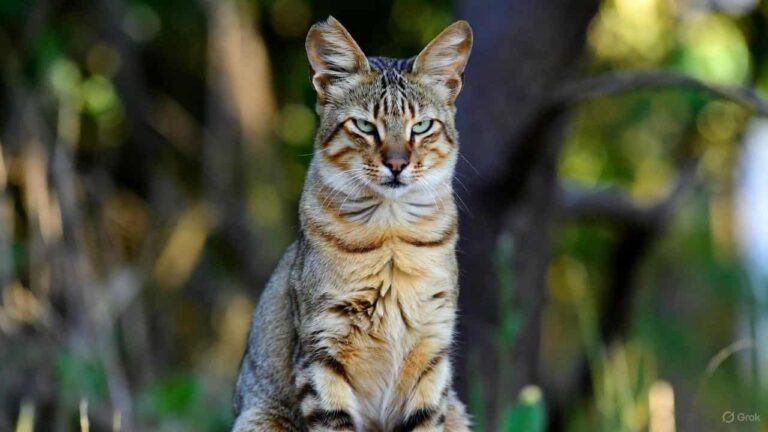
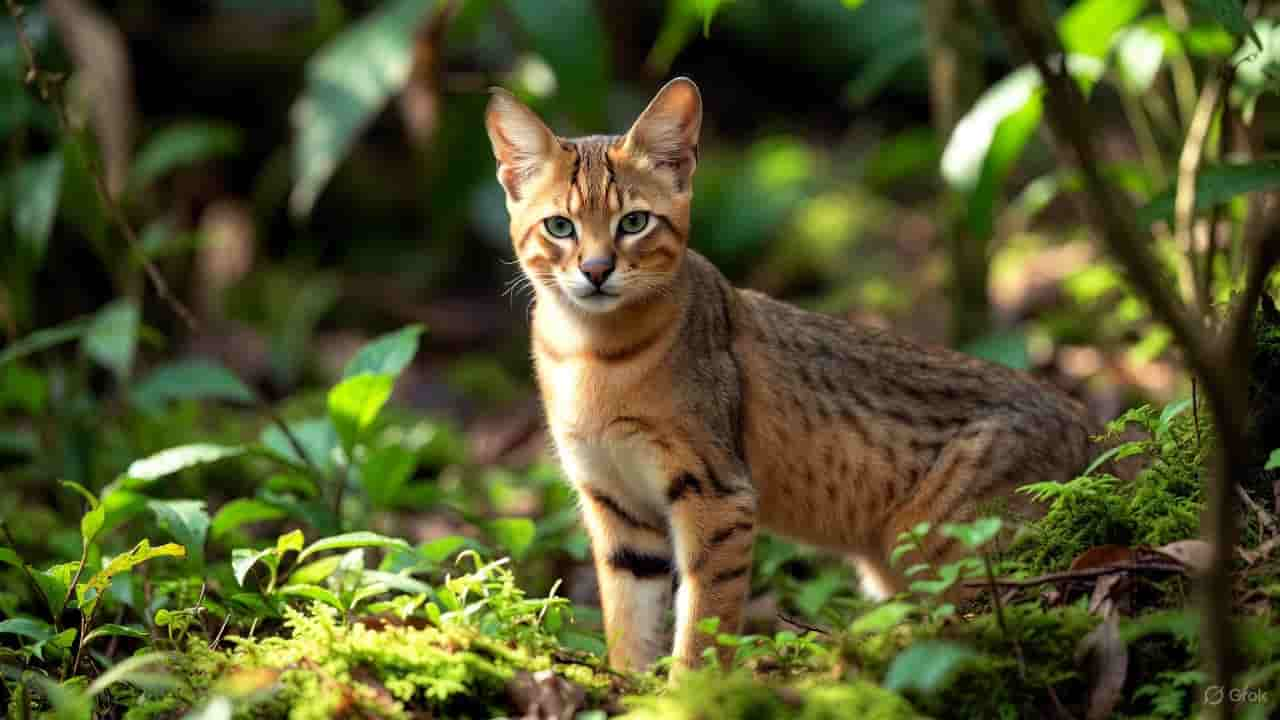
Africa’s golden cat comes in two stunning color variations:
1. Golden / Reddish Coat
- Rich copper or sunset-orange fur
- Often seen in drier or higher forest areas
- Earned the species its global name
2. Grey / Silvery Coat
- Misty grey with subtle rosettes or spots
- Common in wetter, darker rainforest environments
Other Distinctive Features
- Short, rounded ears (unlike the long ears of the caracal)
- Muscular, stocky body
- Thick, plush coat
- Large paws adapted for climbing and stalking
Its beauty is undeniable, but its subtle features make it blend perfectly into jungle shadows.
Habitat: The Last Rainforest Strongholds
Africa’s golden cat lives exclusively in the Equatorial rainforest belt, stretching across:
- Gabon
- Cameroon
- Equatorial Guinea
- Democratic Republic of Congo
- Uganda
- Rwanda
These forests are home to elephants, gorillas, and bongos—but even among such majestic wildlife, the golden cat remains exceptionally hard to document.
Behavior: What Scientists Know (And Don’t Know)
1. Solitary Lifestyle
The golden cat is highly solitary. Males and females only meet briefly for mating.
2. Hunting Skills
Its diet includes:
- Rodents (main prey)
- Birds
- Small antelopes
- Duikers
- Monkeys (rarely)
It uses stealth, speed, and tactical ambushes.
3. Communication
Because sightings are rare, scientists rely on camera traps. Recordings suggest:
- Low growls
- Soft calls during mating season
- Tail movements for communication
4. Territory Marking
Like many wild felines, it marks territory using:
- Scent spraying
- Scratching
- Leaving droppings at strategic points
How Many Africa’s Golden Cats Are Left in the Wild?
The Honest Answer: No One Knows.
This is what makes the golden cat uniquely mysterious.
Even today:
- There is no reliable global population estimate.
- No large-scale survey has ever succeeded.
- Different forests give different results.
Why Is Counting Them So Difficult?
1. Extremely Low Sightings
Even motion-triggered cameras struggle to capture them. Many forests report zero images after months of monitoring.
2. Fragmented Habitats
The species is scattered across many countries, making unified research nearly impossible.
3. Government Restrictions & Political Instability
Some regions restrict foreign researchers; others face war or conflict, making fieldwork unsafe.
4. Unpredictable Movement Patterns
The golden cat travels widely and unpredictably, avoiding well-trodden paths.
Because of all these reasons, the global population remains unknown — a rare fact for a modern-day wild cat.
Threats Facing Africa’s Golden Cat
Despite its elusive nature, the golden cat faces several severe threats:
1. Deforestation
Logging and agriculture are destroying rainforests rapidly.
2. Bushmeat Hunting
Golden cats are not usually targeted, but many are caught in snares set for other animals.
3. Retaliatory Killing
In rural areas, the species may be killed when it preys on poultry.
3. Mining & Oil Exploration
Industrial activities are fragmenting habitats across Central Africa.
4. Climate Change
Rainforest patterns are shifting, and food sources are declining.
Conservation Status: Near Threatened
According to the IUCN Red List, Africa’s golden cat is currently classified as Near Threatened—but many experts believe it may actually be Endangered or Critically Endangered, given the lack of population data.
Why Africa’s Golden Cat Matters
Even though it is rarely seen, its role in the ecosystem is crucial:
- Controls rodent populations
- Maintains ecological balance
- Indicates the health of African rainforests
- Adds genetic diversity to Africa’s wild cat species
Losing this species would create a domino effect across rainforest ecosystems.
Efforts to Protect the Golden Cat
1. Camera Trap Studies
Projects in Uganda, Gabon, and Cameroon are improving understanding of the species.
2. Protected Forest Reserves
National parks such as:
- Bwindi Impenetrable Forest (Uganda)
- Odzala-Kokoua National Park (Congo)
- Lopé National Park (Gabon)
provide important safe zones.
3. Anti-Poaching Patrols
These reduce snare traps—one of the biggest dangers to golden cats.
4. Local Awareness Campaigns
Teaching communities about the species helps reduce retaliatory killings.
How You Can Help
Even if you live far from Africa, you can still make a difference.
✔ Support conservation NGOs
Such as:
Panthera : https://panthera.org
✔ Share awareness posts
Most people don’t even know this cat exists. Awareness creates support.
✔ Donate to reforestation programs
Planting trees helps rebuild forest habitats.
✔ Use your platform
Whether it’s a blog, YouTube channel, or social media, every share counts.
Also Read 👉
Key Takeaway Box
Key Takeaways: Africa’s Golden Cat
- One of the rarest wild cats on Earth
- Extremely difficult to study due to dense habitat
- Global population remains unknown
- Threatened by deforestation, hunting, and habitat loss
FAQ Section
1. Why is Africa’s golden cat so rare?
Because it lives in dense rainforests, avoids humans, and has naturally low population density.
2. How many Africa’s golden cats are left?
There is no confirmed number. Researchers cannot estimate the population.
3. What does the golden cat eat?
Small mammals, birds, rodents, and occasionally small antelope.
4. Is Africa’s golden cat dangerous?
It avoids humans and is not considered a threat unless provoked.
5. Where can you find Africa’s golden cat?
In the tropical rainforests of West and Central Africa, especially Gabon and Congo.
6. What is the conservation status?
Near Threatened, though it may be rarer than currently documented.
7. How can I help protect the species?
Support conservation groups, share awareness, and contribute to rainforest restoration.