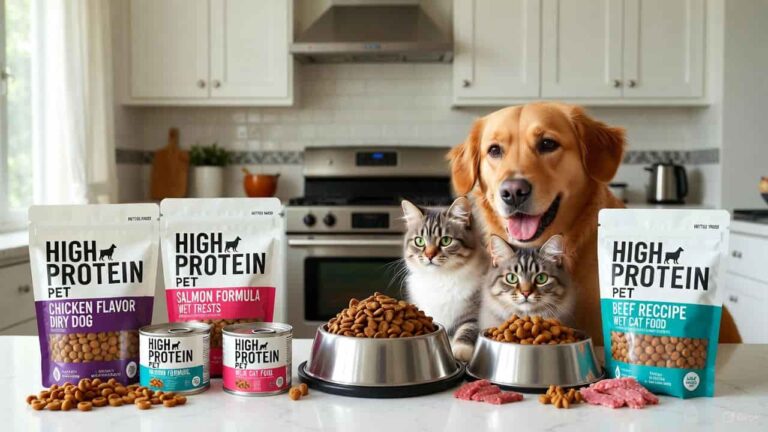

Ultimate Guide to Dog and Cat Foods
Introduction:(Ultimate Guide to Dog and Cat Foods )
Proper nutrition is the foundation of your pet’s long-term health. However, with thousands of brands and endless marketing claims, choosing the right food often feels overwhelming. Many pet owners want the best for their furry companions but struggle to understand food labels, ingredients, and nutritional claims.
This 2025 updated guide Dog and cat foods breaks down everything you need to know about selecting safe, healthy, and balanced dog and cat foods. Written in a friendly and natural tone, this article makes pet nutrition simple—even if you’re new to pet parenting.
You’ll learn:
- How to read pet food labels correctly
- How guaranteed analysis works
- What misleading marketing terms really mean
- The pros and cons of raw, dry, canned, and home-cooked diets
- Why not all dog foods are safe for cats
- Essential nutrients your pet needs at every life stage
Let’s start with the most important part: understanding what’s actually printed on pet food bags and cans.
Key Takeaways (Quick Summary)
- Pet food labels must include product name, ingredient list, guaranteed analysis, and nutritional adequacy statement.
- Terms like “beef,” “with beef,” and “beef flavor” represent dramatically different meat percentages.
- Guaranteed analysis reflects nutrient minimums and maximums—not the exact amount in the food.
- Ingredients appear by weight, including moisture, which can make some ingredients look more important than they are.
- Cats have unique nutritional needs (taurine, vitamin A, arachidonic acid) and cannot safely eat dog food long-term.
- Raw diets carry risks from pathogens, parasites, and nutrient imbalances.
- Complete and balanced commercial diets remain the safest and most reliable choice for most pets.
Understanding Pet Food Labels
Every label on dog and cat foods is heavily regulated. Whether the food is premium, budget-friendly, or prescription-only, it must include:
- Product name
- Brand name
- Species indicator (dog or cat)
- Net weight
- Ingredient list
- Guaranteed analysis
- Nutritional adequacy statement
- Feeding guidelines
- Caloric content
These elements help pet parents understand the makeup of the food, but only if you know how to interpret the information correctly.
How Product Names Mislead You (The Truth Behind Pet Food Marketing)
Pet food manufacturers understand marketing psychology. A single word can influence a buyer’s decision, which is why product names are carefully structured.
Here’s what common label terms legally mean:
| Label Term | Meaning | Actual Beef % |
|---|---|---|
| “Beef” | Contains ≥70% beef as fed (or ≥95% dry matter) | 70–95% |
| “Beef Dinner / Entrée / Platter” | Contains less meat than “beef” | 10–25% |
| “With Beef” | Very small amount | ≥3% |
| “Beef Flavor” | Flavoring only, almost no meat | <3% |
👉 A “Beef Entrée” is not a meat-rich food. It may contain mostly fillers with minimal beef.
Manufacturers rely on these terms because they understand most owners won’t know the legal differences. Being aware of them helps you avoid being misled.
Guaranteed Analysis: What It REALLY Means
Every pet food label includes a “Guaranteed Analysis” section showing:
- Minimum crude protein
- Minimum crude fat
- Maximum moisture
- Maximum crude fiber
However, this may surprise you:
These numbers are not actual nutrient values.(Dog and cat foods)
They represent only the minimum or maximum required by law.
For example:
- A food labeled 25% protein may contain much more.
- A food labeled 7% fat might be significantly higher.
Guaranteed analysis exists for regulatory compliance—not to give consumers exact nutritional information.
How to Compare Two Pet Foods Correctly (Dry Matter Basis)
To truly compare foods, you must convert them to Dry Matter Basis (DMB). This removes moisture from calculations.
Dry Matter Formula:
(Nutrient % as fed ÷ % dry matter) × 100
Example:
Dry food:
- 12% moisture → 88% dry matter
- 24% protein as fed
- 24 ÷ 88 = 27.3% protein DMB
Canned food:
- 82% moisture → 18% dry matter
- 8% protein as fed
- 8 ÷ 18 = 44.4% protein DMB
👉 The canned food actually contains more protein—even though the label number seems lower.
This is why comparing labels without DMB calculations is misleading.
Ingredient Lists: What Actually Matters
Ingredients are listed by weight, including moisture.
That means:
- Fresh chicken (75% water) might appear first
- But dehydrated chicken meal further down may contribute more protein
Ingredient Splitting
Some brands break a single ingredient into multiple forms to make it seem less dominant.
For example:
- Wheat
- Wheat flour
- Cracked wheat
All three are still wheat.
👉 Focus on nutrient analysis, not just ingredient lists. Pets need nutrients—not fancy-sounding ingredients.
Nutritional Adequacy (AAFCO Standards Explained)
AAFCO categorizes foods into four life stages:
- Growth (puppies & kittens)
- Maintenance (adult dogs & cats)
- Gestation/Lactation
- All Life Stages
Foods labeled for all life stages meet the nutritional needs of growing puppies/kittens, which means:
- Higher calories
- Higher nutrients
- Not ideal for overweight adult pets
Labels like:
“Formulated to meet AAFCO Dog Food Nutrient Profiles for Maintenance”
are usually best for healthy adult dogs and cats.
Foods labeled:
“For intermittent or supplemental feeding only”
are NOT nutritionally complete.
Feeding Guidelines: Helpful but Not Perfect
Feeding guidelines offer a starting point, but they don’t consider individual differences.
Daily calorie needs vary based on:
- Age
- Breed
- Body condition
- Activity level
- Health issues
- Metabolism
👉 Always adjust food amounts based on your pet’s weight, not strictly the label.
Types of Dog and Cat Foods (Pros & Cons)
1. Dry Food (Kibble)
Pros:
- Affordable
- Long shelf life
- Convenient to store
- Some dental benefits
Cons:
- Less palatable
- Higher carbohydrates
- Nutrient degradation after opening
2. Canned Food
Pros:
- Highly palatable
- Rich in fresh meats
- Excellent hydration
Cons:
- More expensive
- Heavier to store
3. Semi-Moist Foods
Pros:
- Tasty
- Convenient
- Easy digestion
Cons:
- Often high in sugar
- Contains humectants
- Not ideal for diabetic pets
4. Home-Cooked Diets (Be Careful)
While appealing, most home-cooked diets are:
- Nutritionally incomplete
- Deficient in key vitamins
- Risky if not properly balanced
If you choose this route, work with a veterinary nutritionist.
Raw Diets: What Pet Owners MUST Know
Raw feeding remains controversial. Major health organizations strongly warn against it:
- AAHA
- AVMA
- CDC
- FDA
Risks Include:
- Pathogens
Raw meat commonly contains:
- Salmonella
- E. coli O157:H7
- Listeria
- Parasites
- Human transmission
Pets can shed bacteria through feces even without symptoms. - Nutrient imbalance
Unbalanced calcium/phosphorus ratios are especially dangerous. - Bone hazards
Raw bones can fracture teeth or cause GI perforation.
Even freeze-dried raw diets are not fully safe:
- Freezing doesn’t eliminate pathogens
- Freeze-drying doesn’t kill spores
Why Dog Food Is NOT Safe for Cats
Cats have unique dietary needs, including:
- Taurine
- Preformed Vitamin A
- Arachidonic acid
- Higher protein
- Specific urinary tract pH control
Dog food lacks these nutrients.
Long-term feeding can cause:
- Blindness
- Heart disease (DCM)
- Liver issues
- Reproductive disorders
- Skin problems
👉 Dog food is never a safe replacement for cat food.
Also Read 👉
- Best small dog breeds under 25lbs
- 10 best Dog breed for night vision Security
- All types of cats and Indoor cat toys
Helpful Resources
- AAFCO: https://aafco.org
- FDA Pet Food Safety: https://www.fda.gov/animal-veterinary
- MSD Veterinary Manual: https://msdvetmanual.com
FAQ Section
1. What is the healthiest type of pet food?
Both dry and canned foods can be healthy if they meet AAFCO standards and are complete and balanced.
2. Is grain-free food better?
Not necessarily. Some grain-free diets may be linked to heart disease in dogs.
3. Should I mix dry and wet food?
Yes, mixing improves hydration, flavor, and nutrient variety.
4. Are homemade diets healthy?
Only if formulated by a certified veterinary nutritionist.
5. Can cats eat dog food in emergencies?
A single small serving is okay, but long-term use is unsafe and nutritionally inadequate.
Final Thoughts
Understanding dog and cat foods is one of the most important responsibilities of a pet parent. When you learn how to read labels, interpret guaranteed analysis, and recognize misleading marketing, you gain the confidence to choose diets that truly support your pet’s health.
Complete and balanced commercial diets remain the most reliable option for most pets, but always consult your veterinarian for personalized feeding advice.