Largest Bird Eggs: 7 Birds That Lay Massive Eggs
Introduction:( A Complete Guide to Nature’s Most Impressive Egg-Layers)
Eggs have always fascinated humans. They symbolize life, survival, and the incredible diversity of nature. But when it comes to the largest bird eggs in the world, some species take this natural wonder to a whole new level. These birds don’t just lay eggs — they produce massive, record-breaking shells that play a key role in their survival and evolution.
In this in-depth guide, we will explore 7 birds that lay the largest eggs, how their eggs compare in size, the purpose behind their massive structure, and why these species evolved such remarkable reproductive strategies.
Let’s dive into the fascinating world of giant bird eggs!
Why Do Some Birds Lay Such Large Eggs?
Before we explore “largest bird eggs” the list, it’s important to understand why certain birds lay unusually large eggs.
Large eggs usually mean:
- Bigger, more developed chicks at hatching
- Higher chances of survival
- Protection from predators
- Better nutrition stored inside the yolk
While small birds cannot afford to lay massive eggs, larger species like ostriches, emus, and cassowaries benefit greatly from increasing egg size. After all, these chicks often need to walk, feed, or escape threats shortly after hatching.
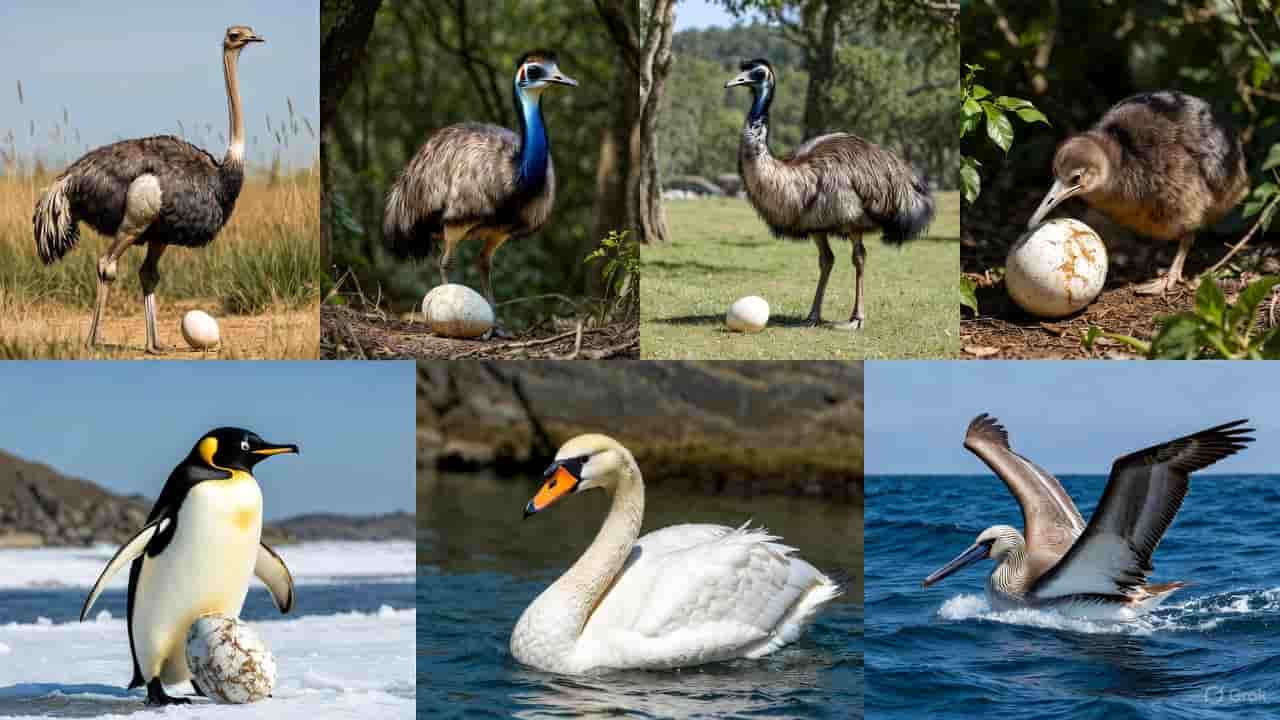
1. Ostrich — The Largest Egg in the World
Focus keyword mention: The ostrich lays the largest bird egg on the planet.
Scientific Name: Struthio camelus
Egg Size:
- Weight: 1.3–2.3 kg
- Length: 6–7 inches
- Volume: Equivalent to 24 chicken eggs
Ostriches are famous for laying the biggest eggs known to birds. Even though their eggs are enormous, they’re actually small relative to the bird’s own size. An ostrich egg is extremely strong, with a thick shell that can withstand 100 kg of pressure.
Why They Lay Such Giant Eggs
Ostrich chicks hatch fully developed and ready to run. Because predators like lions and hyenas pose serious threats, a strong and nutrient-rich egg is essential for producing capable chicks.
Fun Fact
Ostrich eggs take around 42 days to hatch, and both males and females share incubation duties.
2. Southern Cassowary — Deep Blue, Dinosaur-Like Eggs
Scientific Name: Casuarius casuarius
Egg Size:
- Weight: 500–600 grams
- Length: 5 inches
Southern Cassowary eggs are known for their stunning emerald-green or deep blue color. Not only are they huge, but they also look prehistoric — which fits perfectly since cassowaries are often called “living dinosaurs.”
Why Cassowary Eggs Are Large
Cassowary chicks require a lot of stored nutrients to survive the demanding forest environment. Their eggs contain thick layers of yolk and albumin, making them incredibly nutrient-rich.
Unique Parenting Behavior
Interestingly, male cassowaries do all the incubating and rearing, guarding the eggs fiercely against predators.
3. Emu — The Second-Largest Bird Produces Enormous Eggs
Scientific Name: Dromaius novaehollandiae
Egg Size:
- Weight: 450–650 grams
- Color: Dark green, almost black
Emu eggs are oval, glossy, and beautifully dark green. They rank among the heaviest eggs laid by any bird other than the ostrich.
Why Emus Lay Large Eggs
Since emus live in harsh Australian environments, their chicks must be ready to walk long distances soon after hatching.
Who Guards the Eggs?
Like cassowaries, male emus sit on the eggs for 8 weeks without eating. They rely entirely on stored body fat, showing extreme dedication.
4. Kiwi — The Largest Egg Compared to Body Size
Scientific Name: Apteryx spp.
Egg Size:
- Weight: Up to 450 grams
- Percentage of Body Weight: 20% of the mother’s entire body
Even though the kiwi is a small bird (about the size of a chicken), it lays one of the largest eggs proportionally of any bird on Earth.
Why Kiwi Eggs Are Massive
Kiwis evolved to hatch chicks that are fully feathered and independent. To achieve this, mothers must produce gigantic eggs with a huge yolk supply.
A Surprising Feature
Kiwis have no tail, but they make up for it with an oversized egg that takes up nearly all of the mother’s internal cavity before laying.
5. Mute Swan — A Giant Egg for a Graceful Bird
Scientific Name: Cygnus olor
Egg Size:
- Weight: 300–400 grams
- Color: Creamy white
Though not as enormous as ostrich or emu eggs, swan eggs are still among the largest laid by flying birds.
Why Swans Lay Large Eggs
Swans live in lakes and wetlands, where chicks must swim immediately after hatching. Their eggs provide enough nutrients to equip cygnets with advanced muscle development.
Swans’ Protective Nature
Swans are famously aggressive during nesting season. Their territorial behavior ensures the safety of their large eggs.
6. Emperor Penguin — The Largest Egg Laid in Antarctica
Scientific Name: Aptenodytes forsteri
Egg Size:
- Weight: 400–450 grams
- Shape: Oval and pointed
Penguin eggs may not be the biggest on Earth, but they are remarkable because they must survive the coldest temperatures on the planet.
How They Survive Extreme Cold
Male emperor penguins balance the egg on their feet under a flap called the brood pouch for two months. During this time, they eat nothing and stand together in huddles to survive blizzards.
Why Their Eggs Are Large
Penguin chicks are born during freezing temperatures and require added insulation and nutrition.
7. Albatross — Large Eggs for Long-Lived Seabirds
Scientific Name: Diomedeidae family
Egg Size:
- Weight: 450–500 grams
Albatrosses are known for having the longest wingspan in the world and for laying large, well-protected eggs.
Slow Reproduction Means Larger Eggs
Albatrosses breed slowly — sometimes only once every two years. Therefore, each egg must produce a strong chick that can survive a long and demanding life at sea.
Comparison Table — Birds With the Largest Eggs
| Bird | Egg Weight | Egg Color | Special Feature |
|---|---|---|---|
| Ostrich | 1.3–2.3 kg | Creamy white | Largest egg in the world |
| Southern Cassowary | 500–600 g | Blue/green | Dinosaur-like appearance |
| Emu | 450–650 g | Dark green | Male incubation |
| Kiwi | Up to 450 g | Off-white | Largest egg-to-body ratio |
| Mute Swan | 300–400 g | White | Fiercely guarded |
| Emperor Penguin | 400–450 g | White | Survives Antarctic cold |
| Albatross | 450–500 g | White | Very slow reproduction |
Evolution Behind Large Eggs
The evolution of massive eggs is usually tied to:
- Predator-rich environments
- Demanding climates
- Need for advanced hatchlings
- Body size of the adult bird
- Long incubation periods
Each species developed unique strategies to protect and nurture these eggs, from deep forests to icy polar regions.
Human Use & Cultural Significance
Ostrich Eggs in Cooking
Ostrich eggs are edible and often used for decorative carving.
Emu & Cassowary Eggs as Art
Their naturally vibrant colors make them popular for engraving and display.
Indigenous Connections
Native cultures across Australia and the Pacific have traditional uses for large eggs, ranging from symbolic art to mythology.
Also Read 👉
- Recommended Post: Top 10 Cat Breeds Worldwide
- Read Next: 10 Most Beautiful Birds in the World
- Explore: Best Natural Guard Dogs
Helpful Resources
- National Geographic Bird Encyclopedia: https://www.nationalgeographic.com/animals
- Audubon Bird Guide: https://www.audubon.org/bird-guide
Key Takeaway Box — Largest Bird Eggs (Quick Summary)
✔ Ostrich lays the world’s largest egg
✔ Cassowary & emu eggs are huge and stunningly colorful
✔ Kiwi lays the largest egg relative to its body size
✔ Emperor penguin eggs survive extreme Antarctic cold
✔ Large eggs create strong, fully developed chicks
FAQ — Birds With the Largest Eggs
1. Which bird lays the biggest egg in the world?
The ostrich holds the record with eggs weighing between 1.3 and 2.3 kg.
2. Which egg is biggest compared to the mother’s size?
The kiwi lays an egg that can reach 20% of its body weight.
3. Are cassowary eggs dangerous to handle?
They’re not dangerous, but the parent cassowary is extremely dangerous and can attack if disturbed.
4. Can humans eat emu or ostrich eggs?
Yes, both are edible and commonly consumed in some regions.
5. How long does an emperor penguin incubate its egg?
About 64 days, entirely by the male.
6. What bird lays colorful giant eggs?
Cassowaries and emus are known for their striking blue or green eggs.
7. Why are some bird eggs huge?
Large eggs help produce strong, mature chicks that can survive harsh environments.