The Hidden Power of Food in Sick Dog Recovery
When your dog is sick, even the simplest things—like getting them to eat—can feel overwhelming. The tail that usually never stops wagging slows down, their eyes lose a bit of sparkle, and suddenly their favorite food sits untouched in the bowl. In moments like these, most dog parents ask the same urgent question: what should I feed my sick dog to help them heal faster?
The truth is, food plays a much bigger role in recovery than many people realize. The right nutrition can strengthen your dog’s immune system, calm digestive issues, reduce inflammation, and speed up healing—while the wrong foods can make things worse. From bland diets for upset stomachs to homemade recovery meals and immune-boosting ingredients, what you put in your dog’s bowl truly matters.
In this article, we’ll uncover the hidden power of food in sick dog recovery. You’ll learn which foods are safe, which ones to avoid, and how to prepare simple, vet-approved meals that support healing. Whether your dog is dealing with vomiting, diarrhea, low appetite, or recovering from illness or surgery, this guide will help you make informed, compassionate feeding choices—always with your dog’s comfort and health first.
The Hidden Power of Food in Sick Dog Recovery: What to Feed and What to Avoid
Hey there, fellow dog lovers. If you’ve ever watched your furry best friend battle through an illness—whether it’s a pesky stomach bug, a bout of the flu, or something more serious like recovering from surgery—you know how heartbreaking it can be. Their usual wagging tail goes limp, those bright eyes dull a bit, and suddenly, mealtime becomes a battleground. But here’s the thing I’ve learned over years of caring for my own pups and chatting with vets: food isn’t just fuel; it’s a secret weapon in your dog’s recovery arsenal. The right nutrition can speed up healing, boost their immune system, and get them back to zooming around the yard faster than you might think.
In this deep dive, we’re going to unpack the hidden power of food in sick dog recovery. We’ll cover everything from the basics of why diet matters so much when your pooch is under the weather, to specific foods, homemade recipes, and even tips for tricky eaters.
Think about it this way: when we’re sick, we crave comfort foods like chicken soup or ginger tea that soothe and nourish. Dogs are no different. The key is choosing options that are easy on their system while packing a nutritional punch. However, always remember, this isn’t a substitute for vet advice. If your dog’s symptoms persist, get them checked out pronto. Now, let’s jump in.
Why Food Plays a Crucial Role in Your Dog’s Recovery
First off, let’s talk about the science behind it. When a dog is sick, their body is working overtime—fighting infections, repairing tissues, or dealing with inflammation. This ramps up their energy needs, but illness often zaps their appetite. That’s where strategic feeding comes in. Nutrition supports the immune system, helps maintain muscle mass, and even aids in gut health, which is huge since many illnesses start or worsen there.
For instance, during recovery, dogs need higher levels of certain nutrients to rebuild strength. Proteins help repair cells, while antioxidants combat oxidative stress from illness. Moreover, hydration through food can prevent dehydration, a common complication. Studies show that proper nutritional support can shorten hospital stays and lower mortality rates in critically ill pets. It’s fascinating how something as simple as switching to a bland diet can make all the difference.
I’ve seen this firsthand with my rescue mutt, Max. A few years back, he came down with a nasty case of gastroenteritis after scavenging something sketchy at the park. He wouldn’t touch his kibble, and I was panicking. But after consulting our vet and shifting to homemade bone broth and boiled chicken, he perked up within days. It wasn’t magic—it was the hidden power of tailored food. Additionally, incorporating probiotics from plain yogurt helped restore his gut flora, turning the tide on his recovery.
But not all foods are created equal. You have to consider your dog’s specific condition. For example, if it’s an upset stomach, bland and digestible is key. If it’s arthritis flaring up, anti-inflammatory ingredients shine. We’ll break this down more later. In the meantime, transition smoothly to these diets by mixing them with their regular food over a few days to avoid further tummy troubles.
Speaking of transitions, let’s move on to the nutrients that matter most.
Also Read
Top 7 Ways to Ensure Your Dog is Always Happy
Dog’s Life: 10 Simple, Science-Proven Ways to Improve It
Essential Nutrients for Boosting Sick Dog Recovery
Nutrition isn’t about just filling the bowl; it’s about targeted support. When pondering what to feed a sick dog, focus on these key players:
- Protein: This is the building block for tissue repair. Lean sources like chicken or turkey provide high-quality protein without excess fat, which can burden a weak digestive system. Aim for easily digestible options to help your dog maintain muscle during downtime.
- Carbohydrates: Simple carbs like white rice or sweet potatoes offer quick energy and help firm up stools if diarrhea is an issue. They’re gentle and binding, making them staples in a bland diet for dogs.
- Fats: In moderation, healthy fats from fish or omega-3 supplements reduce inflammation. Especially useful for conditions like arthritis or skin issues during recovery.
- Vitamins and Minerals: Antioxidants from blueberries or kale fight free radicals, while potassium in bone broth supports electrolyte balance. Fiber from pumpkin regulates digestion, preventing constipation or loose stools.
- Probiotics: Found in yogurt, these good bacteria restore gut health, crucial after antibiotics or GI upset.
Don’t overlook hydration—wet foods or broths encourage fluid intake. According to experts, enteral feeding (through the digestive tract) is ideal for sick dogs, as it preserves gut function better than IV nutrition. However, if your dog won’t eat, appetite stimulants from the vet might be needed.
In my experience, balancing these nutrients turned Max’s recovery around. But always check with a professional, as overdoing certain elements (like fat) can worsen symptoms. Furthermore, for dogs recovering from surgery, a high-protein, moderate-fat diet can promote lean muscle and reduce inflammation.
Now, let’s get practical with specific foods.
Top Foods for Sick Dogs: What Works and Why
When your dog is down, the question “what to feed a sick dog” pops up immediately. Based on vet recommendations and real-world success stories, here are 10 standout foods that harness the hidden power of nutrition. These are low-fat, easy-to-digest options that provide comfort and healing.
- Boiled White Meat (Chicken or Turkey): Lean protein that’s gentle on the stomach. It’s low in fat, easy to digest, and helps rebuild strength. Boil without skin or bones to avoid choking hazards. This is a go-to in many recovery food for dogs plans.
- White Rice: Bland and binding, it soothes diarrhea and provides quick carbs for energy. Mix it with protein for a complete meal—think classic chicken and rice for upset stomachs.
- Sweet Potatoes: Packed with vitamins A, C, and B6, plus fiber for digestion. Cook and mash them plain; they’re great for regulating bowels and boosting immunity.
- Pumpkin: A superstar for GI issues. High in fiber and low in calories, it firms stools and eases constipation. Use plain canned pumpkin (not pie filling) for best results.
- Homemade Bone Broth: Nutrient-dense with minerals like sodium and potassium. It’s hydrating, low-carb, and appealing to picky eaters. Simmer bones for hours, strain, and serve warm.
- Baby Food (Meat-Based): Stage 2 varieties like chicken or turkey are soft, digestible, and free of fillers. Perfect for dogs with no appetite—avoid any with onions or garlic.
- Fish (Poached): Omega-3 rich for anti-inflammatory benefits. The strong smell entices eating, and it’s easy on the gut when deboned and unseasoned.
- Oatmeal: High-fiber for soothing inflammation and aiding constipation. Cook plain and serve in small amounts to avoid overload.
- Plain Yogurt: Probiotic powerhouse for gut health. Choose low-fat, unsweetened types to regulate digestion without added sugars.
- Eggs: Protein boost that’s gentle and energizing. Scramble or boil them plain; great for lethargic pups but skip if vomiting is present.
These foods come straight from reliable sources and have helped countless dogs bounce back. For example, in cases of tummy troubles, starting with boiled chicken and rice is a vet favorite. Just remember to introduce them gradually.
Helpful Resources
For more on these, check out this helpful guide from Wilsons Pet Food: https://www.wilsonspetfood.co.uk/blogs/blog/10-foods-to-feed-your-dog-when-they-are-sick.
Homemade Recipes: DIY Recovery Food for Dogs
Nothing beats homemade when tailoring foods for sick dogs. These recipes are simple, using everyday ingredients, and focused on “homemade dog food for upset stomach” needs. Always consult your vet first, and portion based on your dog’s size (e.g., 1/2 cup per 20 lbs body weight, divided into small meals).
Recipe 1: Classic Bland Chicken and Rice
- Ingredients: 1 lb boneless chicken breast, 2 cups white rice, 4 cups water.
- Instructions: Boil chicken until cooked, shred it. Cook rice in water until soft. Mix 3 parts rice to 1 part chicken. Serve warm.
This is ideal for diarrhea or vomiting recovery—easy digestion and binding properties help stabilize the gut. My Max devoured it when he was sick, and it got him eating again.
Recipe 2: Pumpkin Power Mash for Digestion
- Ingredients: 1 cup plain canned pumpkin, 1/2 lb ground turkey, 1 cup cooked sweet potato.
- Instructions: Brown turkey (drain fat), mash sweet potato, mix all together. Add a splash of bone broth for moisture.
Perfect for constipation or loose stools; the fiber duo of pumpkin and sweet potato regulates things naturally.
Recipe 3: Bone Broth Booster
- Ingredients: Beef or chicken bones, carrots, celery (optional), water.
- Instructions: Simmer bones in water for 12-24 hours. Strain and cool. Use as a topper or standalone for hydration.
Great for flu-like symptoms; it entices appetite and provides electrolytes.
Recipe 4: Egg and Oatmeal Scramble
- Ingredients: 2 eggs, 1 cup cooked oatmeal, a dollop of plain yogurt.
- Instructions: Scramble eggs without oil, mix with oatmeal and yogurt.
Energizing for lethargic dogs, with probiotics for gut support.
Recipe 5: Fish and Veggie Blend
- Ingredients: 1/2 lb white fish, 1 cup white rice, 1/2 cup kale or blueberries.
- Instructions: Poach fish, cook rice, steam veggies, combine.
Anti-inflammatory for arthritis flares; omega-3s from fish reduce pain.
These recipes are vet-approved staples and can be frozen for convenience.
For more ideas, see this collection from Red Dog Blue Kat: https://www.reddogbluekat.com/post/vet-recommended-meals-for-your-dogs-upset-stomach.
Tailored Diets for Specific Illnesses
Not all sicknesses are the same, so customize accordingly. For upset stomach or vomiting, stick to bland diets like chicken and rice after a short fast (12-24 hours). Avoid feeding right after vomiting to prevent more episodes.
For arthritis or joint issues, incorporate anti-inflammatory foods like turmeric, ginger, and omega-3-rich fish. Blueberries add antioxidants to ease pain.
If it’s the flu or respiratory woes, strong-smelling foods like fish or broth entice eating, while liquids keep them hydrated.
Post-surgery or injury? High-protein options like lean meats support healing, with moderate fats for energy without overload.
For allergies, avoid common triggers like beef or wheat; opt for novel proteins like fish.
In each case, transition words like “additionally” or “however” help when explaining: Additionally, monitor for allergies, however mild they seem.
Helpful Resouces
Dive deeper into post-vomit feeding with PetMD: https://www.petmd.com/dog/nutrition/what-feed-dogs-after-theyve-vomited.
Practical Tips for Feeding and Monitoring
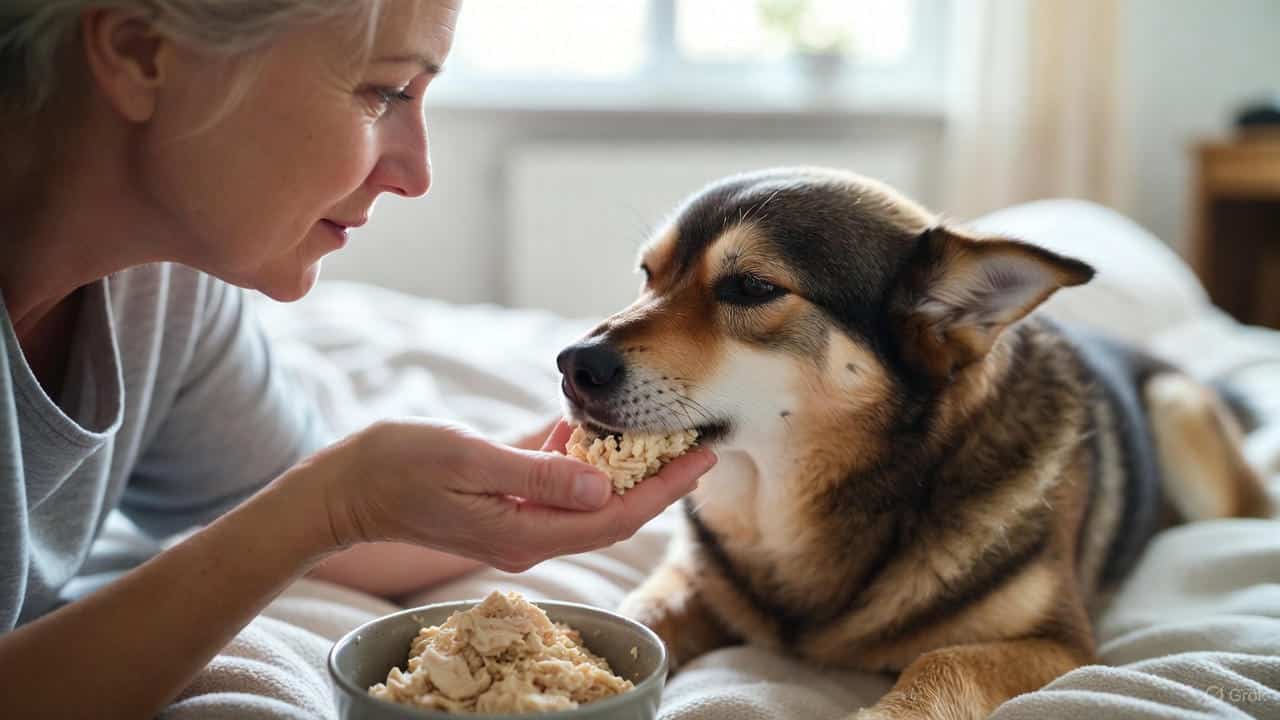
Getting a sick dog to eat can be tricky. Warm food to enhance aroma, hand-feed if needed, or add broth for appeal. Feed small, frequent meals—4-6 times a day—to avoid overwhelming their system.
Watch for signs like continued refusal to eat, which might need vet intervention. Transition back to normal food slowly: mix 25% regular kibble into recovery meals on day 1, increasing gradually over a week.
Stock up on essentials like rice, chicken, and pumpkin for emergencies. And don’t forget mental stimulation—food puzzles can encourage eating.
From my chats with other pet owners, consistency is key. Moreover, pairing food with love and quiet space speeds recovery.
Real-Life Stories and Expert Insights
Take Sarah’s story: Her Lab, Buddy, recovered from parvo thanks to bone broth and probiotics. Or vet Dr. Coates’ advice: Oral feeding is best for maintaining gut health.
Functional foods like those with beta-glucans boost immunity in recovering dogs. These anecdotes show food’s transformative power.
Wrapping It Up: Empower Your Dog’s Healing Journey
In the end, the hidden power of food in sick dog recovery boils down to thoughtful, nutrient-rich choices that support their body’s natural healing. Whether it’s a simple bland diet for dogs or a homemade concoction, the right approach can turn things around. Remember keywords like “foods for sick dogs” and “recovery food for dogs” to help others find this info.
Always prioritize vet guidance, and here’s to healthier, happier pups. If you’ve got stories or tips, share in the comments!
Related
The Hidden Social Benefits of Pets You Didn’t Know About
Frequently Asked Questions (FAQs)
1. What is the best food to feed a sick dog?
The best food for a sick dog depends on the illness, but generally a bland, easily digestible diet works best. Vet-recommended options include boiled chicken or turkey (skinless), white rice, pumpkin, and bone broth. These foods are gentle on the stomach and help support recovery.
2. What should I feed my dog if they have an upset stomach?
For an upset stomach, a bland diet for dogs is ideal. Start with boiled chicken and white rice in small portions. Pumpkin can also help regulate digestion. Avoid fatty, spicy, or processed foods until your dog fully recovers.
3. How long should a dog stay on a bland diet?
Most dogs stay on a bland diet for 3 to 5 days, depending on symptom improvement. Once stools normalize and appetite returns, slowly transition back to regular food over 5–7 days to avoid digestive relapse.
4. Can homemade dog food help a sick dog recover faster?
Yes, homemade dog food for upset stomach or illness recovery can be highly effective when prepared correctly. Simple recipes using lean protein, easy carbohydrates, and low fat can improve appetite, hydration, and nutrient absorption. Always consult your veterinarian before long-term homemade feeding.
5. What foods should I avoid feeding a sick dog?
Avoid foods that are fatty, spicy, salty, or highly processed, as well as toxic items like onions, garlic, chocolate, grapes, and dairy with lactose. These can worsen symptoms and delay recovery.
6. Is wet food better than dry food for sick dogs?
In many cases, yes. Wet food or moist homemade meals are easier to digest and help keep sick dogs hydrated. Warm food also releases aroma, which can encourage dogs with low appetite to eat.
7. Can I give my sick dog bone broth?
Plain, homemade bone broth is excellent for sick dogs. It provides hydration, electrolytes, and minerals while being gentle on the digestive system. Ensure it contains no onions, garlic, salt, or seasonings.
8. What can I do if my sick dog refuses to eat?
If your dog refuses food, try warming meals, hand-feeding, adding bone broth, or offering strong-smelling foods like fish. Feed small amounts frequently. If refusal lasts more than 24 hours, consult your vet immediately.
9. Are probiotics safe for sick dogs?
Yes, probiotics such as those found in plain, unsweetened yogurt or vet-approved supplements can help restore gut bacteria, especially after diarrhea or antibiotics. Introduce them gradually and monitor for tolerance.
10. Can food really speed up a dog’s recovery?
Absolutely. Proper recovery food for dogs supports immune function, tissue repair, and gut health. Strategic nutrition can significantly shorten recovery time and improve overall outcomes when combined with veterinary care.
11. When should I stop home feeding and see a vet?
You should see a vet immediately if your dog has persistent vomiting, diarrhea lasting more than 24–48 hours, lethargy, dehydration, blood in stool, or refuses to eat entirely. Food helps recovery, but it is not a substitute for medical treatment.
12. Is chicken and rice enough nutrition for sick dogs?
Chicken and rice are excellent short-term recovery foods, but they are not nutritionally complete for long-term feeding. Once your dog improves, transition back to a balanced commercial or vet-approved homemade diet.