Best Cage Setup for Small Pets (Complete Guide)
Learn how to create the best cage setup for small pets with proper space, bedding, accessories, and hygiene tips for a safe and happy habitat.
Read Also: Parrot Screaming All Day? Reasons, Triggers, and Training Advice
Welcome to our comprehensive guide on creating the best cage setup for small pets. If you’re a new pet owner or looking to upgrade your furry friend’s living space, you’ve come to the right place. Small pets like hamsters, guinea pigs, rabbits, gerbils, and even ferrets deserve environments that mimic their natural habitats while keeping them safe, healthy, and entertained. In this complete guide, we’ll dive deep into everything you need to know—from choosing the right cage to adding enriching accessories and maintaining hygiene. By the end, you’ll have all the tools to build a home that’s not just functional but truly exceptional for your little companion.
I’ve been a small pet enthusiast for over a decade, starting with my first hamster named Whiskers. Back then, I made all the rookie mistakes: too small a cage, boring layouts, and overlooked ventilation. But through trial and error, plus advice from vets and fellow owners, I’ve honed in on what makes the best cage setup for small pets. Whether you’re dealing with a Syrian hamster who loves burrowing or a pair of guinea pigs that need room to roam, this guide will help you avoid those pitfalls and create a setup that’s both practical and delightful.
Let’s start with the basics. Why is the cage setup so important? Small pets spend most of their lives in their enclosures, so it’s their world. A poor setup can lead to stress, health issues like obesity or respiratory problems, and even behavioral quirks like excessive chewing or lethargy. On the flip side, a well-thought-out habitat promotes exercise, mental stimulation, and longevity. According to animal welfare experts, the key is balancing space, safety, and species-specific needs. For instance, hamsters are solitary and nocturnal, while guinea pigs thrive in social groups and need open spaces.
Understanding Your Small Pet’s Needs
Before we jump into cage selection, it’s crucial to understand what your pet requires. Each species has unique preferences, and tailoring the setup accordingly is what separates a good cage from the best cage setup for small pets.
Take hamsters, for example. There are several types—Syrian, dwarf, Roborovski—and each has different space requirements. Syrians need larger cages to prevent territorial aggression, ideally at least 600 square inches of floor space. Dwarfs can manage in slightly smaller areas but still benefit from multi-level designs. Gerbils, on the other hand, are diggers at heart, so deep bedding is a must. Rabbits and guinea pigs, being larger, demand even more room—think hutches or pens that allow for hopping and grazing.
Moreover, consider their activity levels. Nocturnal pets like hamsters need quiet during the day, while diurnal ones like guinea pigs appreciate natural light cycles. Diet plays a role too; herbivores like rabbits require hay racks to keep food off the floor, reducing waste and contamination.
Transitioning to health considerations, ventilation is non-negotiable. Poor airflow can lead to ammonia buildup from urine, causing respiratory infections. Wire cages with solid bottoms are popular for this reason, but glass aquariums work for burrowers if topped with mesh. Always prioritize materials that are chew-proof and non-toxic—avoid painted woods or plastics that could splinter.
In addition, think about your lifestyle. If you’re in a small apartment, a modular cage might be ideal for easy cleaning. For families with kids, safety features like secure latches are essential to prevent escapes or accidents.
Choosing the Right Cage Type
Now that we’ve covered the fundamentals, let’s explore cage options. The market is flooded with choices, but finding the best cage setup for small pets starts with the enclosure itself.
First up: wire cages. These are versatile and provide excellent ventilation. Brands like Midwest offer guinea pig cages with expandable panels, perfect for growing herds. For hamsters, look for bar spacing no wider than 0.5 inches to prevent escapes. Pros include affordability and ease of attachment for accessories like wheels and tubes. However, they can be noisy if your pet chews the bars, and bedding might scatter through the wires.
Aquarium-style tanks are another favorite, especially for gerbils and hamsters who love tunneling. A 40-gallon breeder tank gives ample floor space without the height that could lead to falls. They’re escape-proof and retain heat well in cooler climates. The downside? Heavier to move and potentially poorer airflow, so add a mesh lid.
Then there are plastic bin cages—DIY favorites. Using storage bins like Christmas tree containers, you can create custom setups with drilled ventilation holes. This is budget-friendly and customizable, ideal for the best cage setup for small pets on a shoestring. Just ensure the plastic is durable and free from sharp edges after modifications.
For rabbits and larger small pets, hutches or playpens shine. Outdoor hutches should be weatherproof with predator-proof mesh, while indoor pens like C&C grids (cubes and coroplast) allow for flexible shapes. These promote exercise and can be sectioned for litter areas.
When selecting, measure twice. Minimum sizes: 24×12 inches for a single hamster, 7.5 square feet for one guinea pig (more for pairs), and 12 square feet for a rabbit. Bigger is always better—aim for at least double the minimum for happiness.
Additionally, consider multi-level designs. Ferrets and active rodents love ramps and platforms, but ensure they’re sturdy to avoid injuries. Avoid wire floors that can cause bumblefoot; opt for solid surfaces with bedding.
Essential Accessories for Enrichment
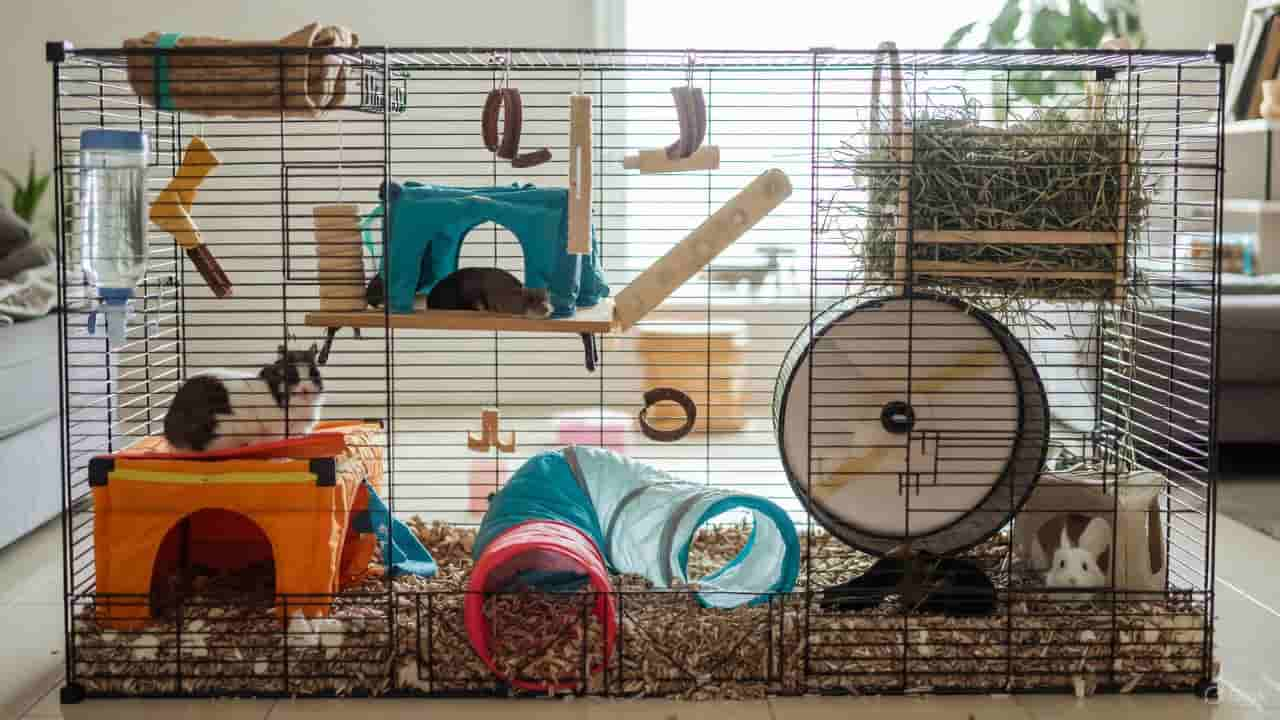
With the cage chosen, it’s time to furnish it. Accessories turn a basic enclosure into the best cage setup for small pets, fostering natural behaviors and preventing boredom.
Start with bedding. Aspen shavings or paper-based products like Carefresh are safe and absorbent. Avoid cedar or pine, which release harmful oils. For burrowers, provide at least 6-8 inches deep—gerbils will create elaborate tunnels, mimicking their desert homes.
Next, hiding spots. Small pets need security; think igloos, wooden houses, or even cardboard tubes. Rotate them to keep things fresh. For guinea pigs, fleece liners with absorbent layers underneath are cozy and reusable, cutting down on waste.
Exercise wheels are must-haves for wheel-loving species like hamsters. Silent spinners or Wodent wheels prevent back strain—size matters: 8-12 inches for Syrians, smaller for dwarfs. Place them securely to avoid tipping.
Tunnels and tubes add adventure. PVC pipes or flexible ferret tubes encourage exploration. For rabbits, willow balls or chew toys satisfy gnawing instincts, protecting cage bars from damage.
Food and water accessories: Gravity bottles prevent spills, while heavy ceramic bowls are tip-proof. Hay racks for herbivores keep forage clean and promote dental health.
Don’t forget climbing elements. Branches from safe woods like apple (pesticide-free) or hammocks provide vertical space. For social pets, add companion toys if they’re alone temporarily.
Enrichment isn’t just physical; mental stimulation counts. Puzzle feeders dispense treats slowly, encouraging foraging. Scatter food in bedding to simulate hunting.
Finally, temperature control. Heat mats for cold-sensitive pets, or frozen bottles in summer—monitor with thermometers to stay between 65-75°F for most species.
Setting Up the Layout
Layout is where creativity meets functionality in the best cage setup for small pets. A thoughtful arrangement maximizes space and minimizes stress.
Begin by zoning: sleeping area, feeding zone, litter spot, and play space. For hamsters, nest in a quiet corner with deep bedding. Guinea pigs prefer open layouts with hides scattered around.
Use levels wisely. Bottom for burrowing, middle for feeding, top for lounging. Ramps should be gentle—less than 30 degrees—to suit short legs.
Incorporate themes for fun. A “forest” setup with branches and leaves for rabbits, or “desert” with sand baths for gerbils. Natural elements like untreated cork bark add texture.
Lighting: Indirect natural light during day, dark at night for nocturnal pets. Avoid direct sun to prevent overheating.
Soundproofing: Place cages away from noisy areas; soft bedding absorbs vibrations.
Accessibility: Design for easy cleaning—removable trays or liners save time.
Test the setup: Observe your pet’s behavior. If they avoid areas, adjust. It might take tweaks to perfect.
Maintenance and Hygiene Tips
A sparkling clean cage is vital for health in the best cage setup for small pets. Neglect leads to odors, bacteria, and illnesses.
Daily: Spot clean soiled bedding, refresh water, remove uneaten food. Check for hazards like loose wires.
Weekly: Full clean—remove everything, wash with pet-safe soap (vinegar works wonders), dry thoroughly. Replace bedding.
For litter training: Rabbits and guinea pigs learn quickly with corner boxes filled with hay or pellets.
Odor control: Baking soda sprinkled under bedding, or enzymatic cleaners for accidents.
Health checks during cleaning: Look for signs of illness like wet tail in hamsters or mites.
Seasonal adjustments: More bedding in winter, better ventilation in summer.
Eco-friendly tip: Compost used hay from herbivores—great for gardens.
Common Mistakes to Avoid
Even seasoned owners slip up. Here’s what not to do in your best cage setup for small pets.
Overcrowding: Too many pets in small spaces causes fights and stress. Stick to species guidelines—one Syrian per cage.
Wrong bedding: Fluffy types can cause intestinal blockages if ingested.
Ignoring ventilation: Stale air breeds mold.
Cheap toys: They break easily, posing choking risks.
No variety: Boredom leads to destructive behavior.
Placing in drafty spots: Temperature fluctuations harm health.
Skipping quarantine: New pets might bring parasites—separate initially.
Advanced Tips for Expert Setups
For those wanting to elevate, consider bioactive enclosures. These self-sustaining setups with live plants and cleanup crews (like springtails) mimic nature, reducing maintenance.
Smart tech: Webcams for monitoring, automated feeders for vacations.
Custom builds: 3D-printed hides or laser-cut platforms for uniqueness.
Breeding considerations: If applicable, larger spaces with nesting boxes.
Travel setups: Portable carriers with familiar items for vet visits.
Community involvement: Join forums for ideas—sharing photos inspires.
Budgeting for Your Setup
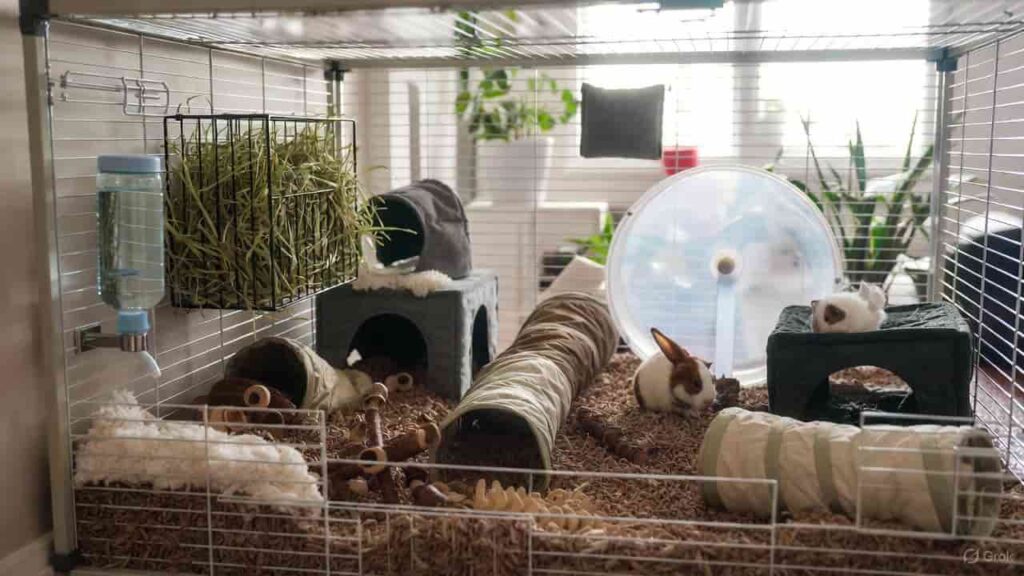
Cost shouldn’t deter the best cage setup for small pets. Entry-level: $50-100 for basic cage and essentials. Mid-range: $200 with upgrades. Luxury: $500+ for custom.
Save by DIY: Bin cages under $20.
Thrift: Secondhand cages, sanitized.
Prioritize: Space over gadgets initially.
Species-Specific Guides
Hamsters
For the best cage setup for small pets like hamsters, focus on burrowing. Tank with 10-inch bedding, silent wheel, scatter feeds.
Guinea Pigs
Social herbivores need pairs, large pens, hay unlimited, veggie hides.
Rabbits
Indoor hutches with litter boxes, chew toys galore, exercise pens.
Gerbils
Deep sand, clan groups, chewing branches.
Ferrets
Multi-level, hammocks, litter-trained, high energy.
In-Depth Bedding Choices
Bedding isn’t just filler; it’s the foundation. Aspen: Safe, low dust. Paper: Soft, absorbent. Hemp: Eco-friendly, odor-controlling. Depth varies—2 inches for guinea pigs, 8+ for burrowers.
Personal story: My gerbil duo turned a deep aspen bed into a maze—hours of entertainment.
Alternatives: Fleece for pigs, but wash weekly.
Avoid: Cat litter, scented products.
Wheel Selection Deep Dive
Wheels prevent obesity. Size: Matches back curve. Material: Solid plastic, not wire.
Brands: Kaytee for budget, Exotic Nutrition for premium.
Placement: Secure, level.
Maintenance: Clean weekly.
Toy Rotation Strategy
Keep interest high by swapping toys bi-weekly. DIY: Toilet rolls stuffed with treats.
Store-bought: Puzzle balls, chew blocks.
Safety: No small parts.
Feeding Station Designs
Elevated bowls for cleanliness. Hay mangers: Wire or wooden.
Forage mixes: Hide veggies in paper bags.
Supplements: Vitamin C for guinea pigs.
Ventilation Enhancements
Fans for circulation, but not direct. Mesh tops with clips.
Humidity control: 40-60% ideal.
Monitors: Digital hygrometers.
Lighting Schedules
LED strips on timers for day/night cycles.
Avoid UV unless for specific needs.
Sound Enrichment
Soft music for calming, but not loud.
Nature sounds via apps.
Temperature Zoning
Heat gradients: Warmer nest, cooler play area.
Cleaning Routines Expanded
Step-by-step: Empty, scrub, rinse, air dry, refill.
Products: Vet-approved disinfectants.
Frequency: Adjust by pet count.
Health Monitoring
Weigh weekly, check fur, eyes.
Vet visits: Annual checkups.
Behavioral Enrichment
Training: Clicker for tricks.
Social time: Supervised play outside cage.
Eco-Friendly Setups
Recycled materials, sustainable bedding.
Composting systems.
Cost-Saving Hacks
Bulk buys, sales alerts.
DIY tutorials online.
Upgrading Over Time
Start basic, add as budget allows.
Signs to upgrade: Pet outgrows, damages.
Community Resources
Local clubs, online groups.
Events: Pet expos.
Troubleshooting Issues
Escapes: Reinforce latches.
Chewing: More toys.
Odors: Better ventilation.
Allergies: Hypoallergenic bedding.
Future Trends
Smart cages with apps.
Sustainable materials.
VR for pets? Maybe not yet.
Personal Reflections
Over years, my setups evolved from basic to bioactive. The joy in seeing pets thrive is unmatched.
This guide, packed with tips, ensures your best cage setup for small pets is top-notch. Happy pet parenting!
Read: Week-by-Week Puppy Training Schedule by Age for New Owners
Frequently Asked Questions (FAQs)
1. What is the best cage setup for small pets?
The best cage setup for small pets provides ample space, proper ventilation, safe materials, species-appropriate bedding, and enrichment accessories like hides, toys, and exercise options. Bigger cages with thoughtful layouts always result in healthier and happier pets.
2. How big should a cage be for small pets?
Cage size depends on the species. A single hamster needs at least 600 square inches of floor space, guinea pigs require a minimum of 7.5 square feet (more for pairs), and rabbits need at least 12 square feet plus daily exercise time. Larger cages are always recommended.
3. Are wire cages or glass tanks better for small pets?
Both can work. Wire cages offer excellent ventilation and easy access, while glass tanks are ideal for burrowing pets like hamsters and gerbils. If using a tank, always add a mesh lid to ensure proper airflow.
4. What bedding is safest for small pets?
Safe bedding options include aspen shavings, paper-based bedding, and hemp bedding. Avoid pine, cedar, scented bedding, and cat litter, as these can cause respiratory or digestive issues.
5. How often should I clean my pet’s cage?
Spot clean daily by removing soiled bedding and uneaten food. Perform a full cage clean once a week using pet-safe cleaners. Regular cleaning prevents odors, bacteria buildup, and health problems.
6. What accessories are essential in a small pet cage?
Essential accessories include bedding, hideouts, food and water containers, chew toys, and species-appropriate enrichment such as wheels, tunnels, or hay racks. These items encourage natural behaviors and reduce stress.
7. Can small pets live together in one cage?
It depends on the species. Guinea pigs, gerbils, and some rabbits are social and benefit from companionship. Syrian hamsters must always be housed alone to prevent aggression and injury.
8. Where should I place my small pet’s cage?
Place the cage in a quiet, draft-free area away from direct sunlight, loud noises, and temperature extremes. A calm environment helps reduce stress and supports better sleep and health.
9. How can I prevent bad smells from the cage?
Regular cleaning, proper ventilation, absorbent bedding, and removing wet spots daily help control odors. Baking soda under bedding or enzyme-based cleaners can also be effective.
10. Is a DIY cage a good option?
Yes, DIY bin cages or C&C cages can be excellent, budget-friendly options if they are spacious, well-ventilated, secure, and made from pet-safe materials.
Conclusion
Creating the best cage setup for small pets is rewarding. It enhances their life and your bond. Start simple, observe, iterate. Your pet will thank you with playful antics and health.