7 Dog Breeds with Adorably Unique Noses
When people think about what makes a dog truly memorable, they often mention floppy ears or soulful eyes. However, one feature that often steals the spotlight is the nose. A dog’s nose can reveal personality, charm, and even a bit of mischief, making it one of their most endearing traits.
Have you ever stopped to admire a dog’s nose? It’s not just a cute feature—it’s a powerhouse of senses, helping our furry friends navigate the world through scents we can barely imagine. In the vast world of dog breeds, some stand out because of their truly unique dog noses. These noses aren’t just functional; they’re adorably distinctive, adding to the charm and personality of each breed. Whether it’s a wrinkly, oversized sniffer or a tiny button-like one, these features make certain dogs unforgettable.
In this article, we’ll dive into seven dog breeds with adorably unique noses. We’ll explore what makes their noses special, a bit about their history, personality traits, care tips, and why they might be the perfect addition to your family. If you’re a dog lover searching for inspiration or just curious about unique dog noses, you’re in the right place. Let’s sniff out these remarkable breeds one by one.
1. The Bloodhound: Master of the Massive, Wrinkled Nose
When it comes to unique dog noses, the Bloodhound takes the crown with its enormous, deeply wrinkled snout that’s built for ultimate scent detection. Picture this: a nose so powerful it can track scents over 300 hours old and across miles of terrain. That’s not exaggeration—Bloodhounds have been used in search and rescue operations for centuries, thanks to their unparalleled olfactory abilities.
Originating from Belgium in the Middle Ages, Bloodhounds were bred by monks for hunting deer and wild boar. Their name comes from “blooded hound,” meaning a dog of pure breeding. Over time, they became famous for tracking people, earning a spot in law enforcement history. But beyond their working roots, Bloodhounds are gentle giants with a laid-back personality. They’re affectionate with families, though their stubborn streak can make training a challenge.
What truly sets the Bloodhound’s nose apart is its size and structure. The long, floppy ears and deep facial folds help trap scents, directing them straight to the nose. This breed boasts over 230 million scent receptors—compared to our measly 5 million—making their unique dog noses a marvel of evolution. However, this comes with some care considerations. Those wrinkles need regular cleaning to prevent infections, and their droopy eyes can lead to issues like ectropion.
If you’re considering a Bloodhound, prepare for a dog that loves long walks where they can follow their nose. They’re not high-energy, but they do need mental stimulation through scent games. Fun fact: The longest recorded track by a Bloodhound was over 130 miles! Additionally, their soulful eyes and velvety ears complement that iconic nose, creating a look that’s both noble and endearing.
Transitioning to ownership, Bloodhounds thrive in homes with space to roam. They’re great with kids but might knock over toddlers with their size—averaging 80 to 110 pounds. Grooming is moderate; weekly brushing keeps their short coat shiny. Diet-wise, watch for bloat, a common issue in deep-chested breeds. Overall, if unique dog noses fascinate you, the Bloodhound’s is a sniffing superstar.
2. The Pug: Charmingly Compact with a Button-Like Nose
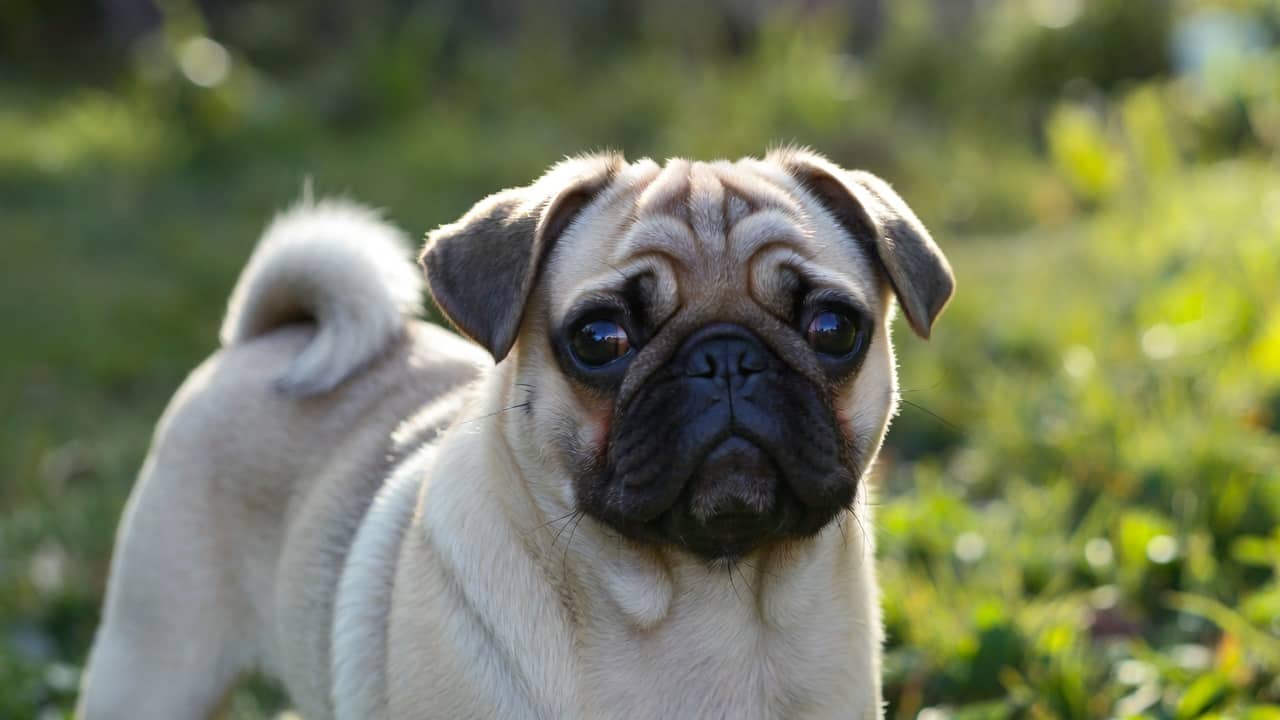
Moving on to a smaller scale, the Pug’s unique dog nose is all about that squished, button-like adorableness. Flat-faced and full of wrinkles, the Pug’s nose is part of its brachycephalic (short-muzzled) structure, which gives it a perpetual “smushed” expression that’s hard to resist. This breed’s nose isn’t just cute—it’s a key part of their expressive face, often twitching with curiosity.
Pugs hail from ancient China, where they were companions to emperors and Buddhist monks. They made their way to Europe in the 16th century, becoming favorites of royalty like Queen Victoria. Today, Pugs are beloved for their playful, clownish personalities. They’re affectionate lap dogs who crave human attention and get along well with other pets.
The Pug’s nose, while charming, requires special care due to its flat design. Brachycephalic breeds like this one can suffer from breathing difficulties, especially in hot weather. Their unique dog noses mean shorter nasal passages, which can lead to snoring, snorting, and overheating. Owners should avoid strenuous exercise in warm conditions and keep them in air-conditioned environments.
Despite these challenges, Pugs are low-maintenance in other ways. Their short coat sheds moderately, and a quick weekly brush suffices. They’re adaptable to apartment living, making them ideal for city dwellers. Moreover, their big eyes and wrinkled forehead add to the overall cuteness, but watch for eye issues like dry eye or ulcers.
In terms of training, Pugs are eager to please but can be food-motivated to a fault—obesity is a risk, so portion control is key. They excel in obedience with positive reinforcement. If you’re drawn to unique dog noses that pack personality into a tiny package, the Pug’s button nose will steal your heart. Just imagine those little snuffles as they greet you at the door!
RELATED
3. The Bull Terrier: The Distinctive Roman Nose on an Egg-Shaped Head
Now, let’s talk about the Bull Terrier, whose unique dog nose is accentuated by its famous egg-shaped head and down-turned “Roman” profile. This nose isn’t overly large or small—it’s perfectly proportioned to give the breed a mischievous, alert look that’s full of character. The slight downward curve adds to their quirky appeal, making them stand out in any crowd.
Bred in 19th-century England from Bulldogs and Terriers, Bull Terriers were originally for blood sports but evolved into companions. They’re known for their tenacity and courage, but modern Bull Terriers are playful goofballs with a strong bond to their families. However, they need firm, consistent training to channel their energy positively.
The unique dog nose of the Bull Terrier is functional for a breed that’s active and inquisitive. With a keen sense of smell, they love exploring, though not on the level of scent hounds. Their muscular build—ranging from 50 to 70 pounds—pairs with that distinctive nose for a look that’s both tough and tender.
Care for Bull Terriers includes regular exercise to prevent boredom-induced mischief. They’re prone to skin allergies, so a high-quality diet helps. Grooming is easy with their short coat, but those erect ears need checking for debris. Furthermore, their white variety can be deaf, so early testing is wise.
Bull Terriers thrive with owners who appreciate their clownish antics. They’re great with older kids but might be too boisterous for toddlers. In addition, socialization from puppyhood curbs any protective tendencies. If unique dog noses with a historical twist intrigue you, the Bull Terrier’s Roman nose embodies strength and whimsy.
4. The Borzoi: Elegance in a Long, Slender Nose
Shifting gears to grace and speed, the Borzoi’s unique dog nose is long and slender, perfectly suited for a sighthound built for chasing prey across vast Russian steppes. This aristocratic nose tapers elegantly, giving the breed a refined, almost ethereal appearance that’s as beautiful as it is functional.
Formerly known as Russian Wolfhounds, Borzois were bred by nobility for hunting wolves and hares. Their history dates back to the 17th century, and they nearly went extinct after the Russian Revolution. Today, they’re gentle, independent dogs who form deep bonds but aren’t overly demonstrative.
The Borzoi’s nose, with its keen scenting ability, complements their incredible sight. While primarily visual hunters, that long muzzle houses a sensitive sniffer for tracking. However, their independent nature means they might ignore commands if something catches their eye—or nose.
Owning a Borzoi requires a secure yard, as they can sprint up to 40 mph. Their silky coat needs regular brushing to prevent mats, especially the feathering on legs and tail. They’re sensitive to anesthesia due to low body fat, so vet choices matter. Additionally, they prefer calm environments and aren’t ideal for rowdy households.
In personality, Borzois are aloof with strangers but loyal to family. Training works best with patience and treats—they’re not eager pleasers like Labs. If you’re enchanted by unique dog noses that evoke royalty, the Borzoi’s slender one is a testament to elegance in motion.
5. The Chinese Shar-Pei: Wrinkles Galore Around a Meaty Nose
Next up is the Chinese Shar-Pei, famous for its deeply wrinkled skin that extends to a unique dog nose—broad, meaty, and often black or blue-tongued to match. This nose sits amid folds that give the breed a wise, ancient look, like a living artifact from China’s Han Dynasty.
Shar-Peis were multipurpose farm dogs, used for herding, guarding, and even fighting. Their numbers dwindled in the 20th century but were revived through American breeding. Modern Shar-Peis are calm, devoted guardians with a dignified demeanor, though they can be wary of strangers.
The unique dog nose here is prone to issues from those signature wrinkles—skin folds can trap moisture, leading to infections. Regular cleaning with vet-approved wipes is essential. Their short, harsh coat (meaning “sand skin” in Chinese) sheds minimally but needs occasional baths.
Health-wise, Shar-Peis face familial Shar-Pei fever and eye entropion. A balanced diet and moderate exercise keep them fit, as they’re not high-energy. Moreover, early socialization softens their protective instincts. Families love their loyalty, but they’re best with experienced owners.
Transitioning to fun aspects, Shar-Peis have a blue-black tongue shared with few breeds, adding mystery to their unique dog noses. If wrinkles and history appeal, this breed’s nose is a bundle of adorable folds.
6. The Dachshund: The Pointy, Persistent Wiener Nose
Who can resist the Dachshund’s unique dog nose—pointy and persistent, attached to that iconic sausage-shaped body? Bred for badger hunting in Germany (Dachshund means “badger dog”), their long, tapered nose is perfect for burrowing and scenting underground prey.
Dachshunds come in standard and miniature sizes, with smooth, wirehaired, or longhaired coats. They’re bold, curious, and vocal, making excellent watchdogs despite their size. However, their stubbornness calls for patient training.
The nose’s uniqueness lies in its elongation, aiding in digging and tracking. With a strong prey drive, they love games like hide-and-seek. Back issues are common due to their long spine, so no jumping on furniture.
Grooming varies by coat type—smooth needs little, while longhaired requires brushing. They’re adaptable to apartments but need daily walks. Furthermore, their expressive eyes and wagging tail complement that probing nose.
Dachshunds bond deeply, often becoming “velcro dogs.” If unique dog noses with a hunting heritage charm you, the Dachshund’s pointy one promises adventure in a small package.
7. The Brussels Griffon: Upturned and Utterly Expressive Nose
Finally, the Brussels Griffon rounds out our list with its upturned, expressive unique dog nose that gives it a perpetual “monkey face” look. Small and spirited, this nose is part of a domed head with large eyes, evoking a wise, impish character.
Originating in 19th-century Belgium as ratters, Griffons became companions to nobility. They’re affectionate, alert, and thrive on attention, but can be sensitive to harsh tones.
The upturned nose aids in their toy group status—cute and compact. However, like other small breeds, dental care is crucial to prevent issues. Their wiry or smooth coat needs regular grooming.
Griffons are indoor dogs, perfect for laps and play. Socialization prevents shyness, and they get along with cats. In addition, their beard and mustache add flair to that unique dog nose.
If you’re seeking a pint-sized pal with personality, the Griffon’s upturned nose is adorably unique.
Why Unique Dog Noses Matter: Beyond the Cuteness
As we’ve explored these seven breeds, it’s clear that unique dog noses are more than aesthetic quirks—they reflect each breed’s history, purpose, and needs. From the Bloodhound’s tracking prowess to the Pug’s compact charm, these features enhance our bond with dogs. Moreover, understanding them helps us provide better care, ensuring happy, healthy pets.
If you’re inspired, consider adopting from shelters where mixed breeds often sport unique dog noses too. For more on breed standards, check out the American Kennel Club.
In conclusion, celebrating unique dog noses reminds us of the diversity in the canine world. Whether you’re a first-time owner or seasoned enthusiast, these breeds offer endless joy. What’s your favorite unique dog nose? Share in the comments!
RELATED