
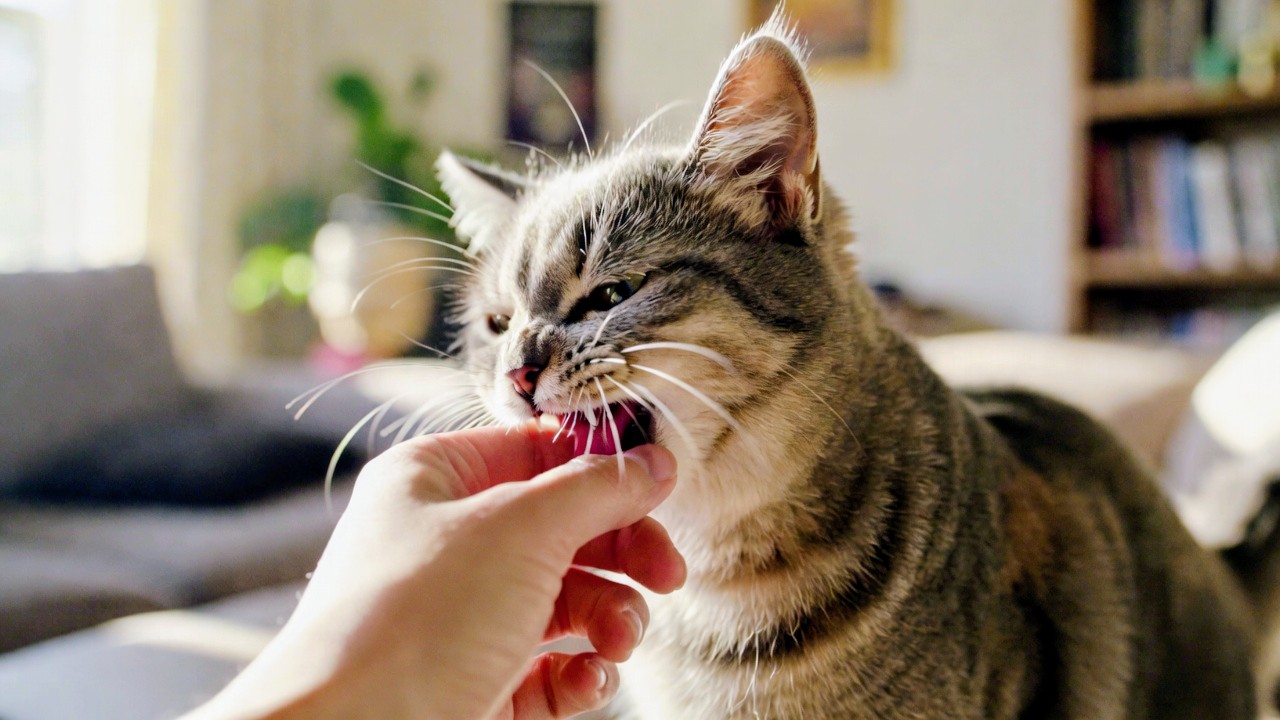
Why Do Cats Bite Suddenly? Vet-Approved Explanations
Spending more time with my loving doll cat is good but little tough.I’ve learned sudden cat bites are never random. Discover vet-approved reasons behind why cats bite and how to stop it safely.
Here am sharing my personal experience for educational purpose.As a cat owner who has lived with cats of different ages, temperaments, and backgrounds for years, I can confidently say this: few things confuse and hurt cat parents more than a sudden bite.
One moment your cat is purring, kneading your lap, or rubbing their head against your hand—and the next moment, chomp. No warning. No obvious reason. Just teeth.
If you have ever pulled your hand back thinking, “Why did my cat just bite me?” you are not alone.
Many cat parents notice this behavior at least once, whether their cat is a playful kitten, a calm adult, or even a senior who has never bitten before. The good news is that cats don’t bite “out of nowhere”—there is always a reason. The tricky part is that cats communicate differently than humans, and their signals are often subtle.
In this in-depth, vet-informed guide, I’ll walk you through why cats bite suddenly, using real-life observations, behavioral science, and practical advice you can actually apply at home.before talking about these points if you have also like these tips, care’s, safety guides please share with us.Now let’s start…
Understanding Why Cats Bite: It’s Communication, Not Aggression
Before diving into specific causes, it’s important to reframe how we see biting.
As a cat owner, I had to learn this the hard way: cats don’t bite to be “mean”. They bite to communicate discomfort, fear, overstimulation, or unmet needs.
Veterinary behaviorists often explain that cats rely on:
- Body language
- Facial expressions
- Tail movement
- Ear position
When those signals are missed or ignored, biting becomes their last-resort message.
In other words, biting is often a failure of communication—not a personality flaw.
Overstimulation: The Most Common Reason Cats Bite Suddenly
What overstimulation looks like in real life
In my experience, this is by far the most common reason behind sudden bites.
Picture this:
Your cat jumps onto your lap in the evening. They’re purring loudly. You start petting them, and everything seems perfect—until suddenly they whip around and bite your hand.
Many cat parents assume the cat “changed their mind.” In reality, their nervous system became overloaded.
Why cats get overstimulated
Cats have sensitive nerve endings, especially along:
- The lower back
- The base of the tail
- The belly
Long or repetitive petting can flood their sensory system.
Veterinary experts explain that cats enjoy petting in short sessions, not continuous stimulation like many dogs do.
Subtle warning signs you might be missing
Before a bite, cats often show tiny signals, such as:
- Tail flicking or thumping
- Ears turning sideways or flattening
- Skin rippling along the back
- Pupils suddenly dilating
As a cat owner, I missed these signs for years—until I learned what to watch for.
According to the ASPCA, sudden biting in cats is rarely random. It is often a response to overstimulation, fear, or a cat feeling trapped, especially during petting or unfamiliar situations. Understanding these triggers helps cat owners respond calmly instead of punishing the behavior.
Play Aggression: When Biting Is a Learned Habit
Why playful cats bite hands and ankles
If your cat bites during play, especially your hands or feet, this behavior often started in kittenhood.
Many cat parents unknowingly teach biting by:
- Using hands as toys
- Wrestling with kittens
- Letting kittens chase fingers
Kittens that grow up this way don’t learn proper bite inhibition.
A common household scenario
I once fostered a six-month-old kitten who would attack my ankles every evening. The behavior wasn’t anger—it was pent-up energy combined with poor play boundaries.
Veterinary guidance emphasizes that cats need appropriate outlets for hunting behavior, not human body parts.
Why this behavior continues into adulthood
If play aggression isn’t redirected early, cats:
- Associate hands with prey
- Use teeth during excitement
- Bite harder over time
This is why adult cats may suddenly bite during what seems like harmless play.
Fear-Based Biting: When Your Cat Feels Threatened
Fear doesn’t always look obvious
Many people assume fear biting only happens with hissing or growling. In reality, fear can be quiet.
As a cat owner, I’ve seen fear-based bites happen when:
- A new person enters the room
- Loud noises occur
- The cat is picked up unexpectedly
- A routine suddenly changes
Cats are creatures of predictability. When they feel cornered or unsafe, biting is a defensive tool.
Body language linked to fear
Fearful cats may show:
- Crouched posture
- Dilated pupils
- Ears flattened tightly back
- Rapid breathing
If escape feels impossible, a sudden bite becomes self-protection.
Redirected Aggression: The Bite That Wasn’t Meant for You
What redirected aggression really means
This is one of the most misunderstood reasons why cats bite suddenly.
Redirected aggression happens when a cat:
- Sees another animal through a window
- Hears unfamiliar sounds
- Smells another pet
But cannot reach the source of stress.
The built-up energy then gets redirected onto the nearest target—you.
A real-world example many cat owners experience
Many cat parents notice sudden biting after:
- A stray cat appears outside
- Construction noises start
- Fireworks or storms occur
Your cat isn’t angry at you. They are overwhelmed and discharging tension.
Veterinary professionals often recommend never touching a cat during high arousal moments.
Pain or Medical Issues: When Biting Is a Cry for Help
Why health problems cause sudden aggression
One of the most important lessons I learned as a cat owner is this: behavior changes can signal pain.
Cats are masters at hiding discomfort. When pain reaches a certain threshold, biting becomes a protective reflex.
Common medical causes linked to biting
Veterinary-approved explanations include:
- Dental disease
- Arthritis (especially in older cats)
- Skin infections
- Injuries
- Neurological issues
A cat that suddenly bites when touched may be saying, “That hurts.”
When to suspect a medical issue
You should consider a vet visit if:
- Biting is new or escalating
- The cat avoids being touched
- Appetite or litter habits change
- The cat becomes withdrawn
Behavioral changes are often the first visible symptom of illness.
Veterinary experts from Cornell University explain that cats experiencing pain or underlying medical issues may bite suddenly when touched. Conditions like dental disease, arthritis, or skin sensitivity can make even gentle handling uncomfortable, turning a calm cat defensive without obvious warning.
Territorial Stress: When Your Cat Feels Their Space Is Threatened
Cats and territory go hand in hand
Cats rely heavily on territory for emotional security. Changes to their environment can trigger defensive biting.
Situations that commonly cause territorial stress:
- New pets
- New furniture
- Moving homes
- Rearranging rooms
As a cat owner, I noticed tension increase even after something as simple as moving a couch.
Why territory-related biting seems “random”
Cats may tolerate stress for days or weeks before reacting. When their threshold is crossed, biting may appear sudden—though the stress has been building silently.
Hormonal Factors: Intact Cats Bite More Often
How hormones influence biting behavior
Unneutered male cats and unspayed females are more likely to:
- Bite during handling
- Show aggression toward humans
- React strongly to environmental stimuli
Hormones increase reactivity and frustration.
Veterinary consensus strongly supports spaying and neutering as a way to reduce hormonally driven aggression.
RELATED

Misreading Affection: When Love Turns Into a Bite
Cats don’t express affection like humans
Many cat parents assume purring equals unlimited petting. In reality, purring can also signal stress or self-soothing.
Cats often enjoy affection on their own terms:
- Short sessions
- Predictable touch
- Specific areas (head, cheeks, chin)
Ignoring these preferences can lead to sudden biting.
How to Prevent Sudden Biting (What Actually Works)
Learn your cat’s early warning signs
Observation is your most powerful tool. Every cat has a unique communication style.
Adjust how and where you pet
Most cats prefer:
- Head and cheek scratches
- Chin rubs
- Short interactions
Avoid overstimulating areas unless your cat clearly invites it.
Provide proper play outlets
Daily interactive play using:
- Wand toys
- Feather teasers
- Puzzle feeders
This reduces frustration and biting linked to excess energy.
Never punish biting
Punishment increases fear and mistrust. Veterinary behaviorists agree it worsens aggression over time.
When to Seek Professional Help
If biting:
- Becomes frequent
- Breaks skin
- Appears without clear triggers
Consult a veterinarian or certified animal behaviorist. Early intervention prevents long-term behavior problems.
Frequently Asked Questions About Why Cats Bite
Why does my cat bite me when I stop petting?
Some cats experience frustration when interaction ends suddenly. Gradually slow petting and watch for signals.
Is it normal for kittens to bite more than adult cats?
Yes. Kittens explore with their mouths and need guidance to learn bite inhibition.
Why does my cat bite only one person?
Cats form different associations with different people based on handling style and past experiences.
Can anxiety cause cats to bite suddenly?
Absolutely. Stress and anxiety lower a cat’s tolerance threshold.
Should I worry if my senior cat starts biting?
Yes. Sudden behavior changes in older cats often indicate pain or medical issues.
A Personal and Reassuring Conclusion
As a cat owner, I’ve been bitten, confused, and even hurt emotionally by sudden bites—but I’ve also learned that every bite tells a story.
Cats don’t speak our language. They rely on behavior to communicate needs, limits, and discomfort. When we slow down, observe carefully, and respect their boundaries, biting often decreases—or stops entirely.
Understanding why cats bite doesn’t just protect your hands. It strengthens your bond, builds trust, and helps your cat feel safe in your care.
With patience, empathy, and the right knowledge, sudden biting doesn’t have to be a mystery—it becomes a message you finally understand.