Easy Home Activities to Prevent Boredom in Indoor Cats
f you’re a cat parent, you’ve probably wondered how to activate your cat indoors—especially if your feline seems bored, lazy, or restless. Indoor cats rely on us for stimulation, enrichment, and physical activity. Without proper engagement, many cats start showing signs like excessive sleeping, destructive behavior, overeating, or even anxiety.
help your cat stay active, healthy, and mentally sharp—all within the comfort of your home.
- The science behind feline indoor activity
- Best indoor enrichment activities
- Mental stimulation ideas
- DIY puzzle feeders & toys
- Interactive play strategies
- Environmental upgrades
- How to prevent boredom in indoor cats
- How much activity indoor cats actually need
- A helpful FAQ section
- Key takeaway box
- Internal & external resources
So, let’s dive into how to make your indoor cat’s life happier, healthier, and more enriched!
Why Indoor Cats Need Activation
Indoor cats often live longer and safer lives, but they miss out on natural hunting, exploring, and climbing. As a result, many indoor cats develop:
- Boredom
- Lack of exercise
- Weight gain
- Stress or anxiety
- Destructive habits
- Over-grooming
- Night-time zoomies
Because cats are naturally predators, their bodies and brains are designed for:
- Stalking
- Chasing
- Jumping
- Climbing
- Problem-solving
When indoor cats don’t get to express these behaviors, they become frustrated. Therefore, activating cats indoors is essential for balanced behavior, better health, and emotional well-being.
How Much Activity Do Indoor Cats Need Daily?
Most experts recommend:
✔ 20–40 minutes of interactive activity daily
✔ Additional self-directed activities available 24/7
However, every cat is different.
- Young cats: High activity needs
- Adult cats: Moderate activity
- Senior cats: Still need daily enrichment, just at a gentler level
Signs Your Cat Needs More Indoor Activation
Your cat may be under-stimulated if they:
- Meow excessively
- Ambush your feet or hands
- Scratch furniture
- Overeat out of boredom
- Sleep excessively
- Seem stressed or irritable
- Have sudden bursts of energy at night
- Knock things off shelves
- Follow you constantly
If you notice these signs, it’s time to introduce more enrichment and activity.
Top Ways to Activate Indoor Cats (Complete Guide)
Below are the most effective, science-backed, and cat-approved ways to keep your feline active indoors.
1. Interactive Play Sessions (A Must!)
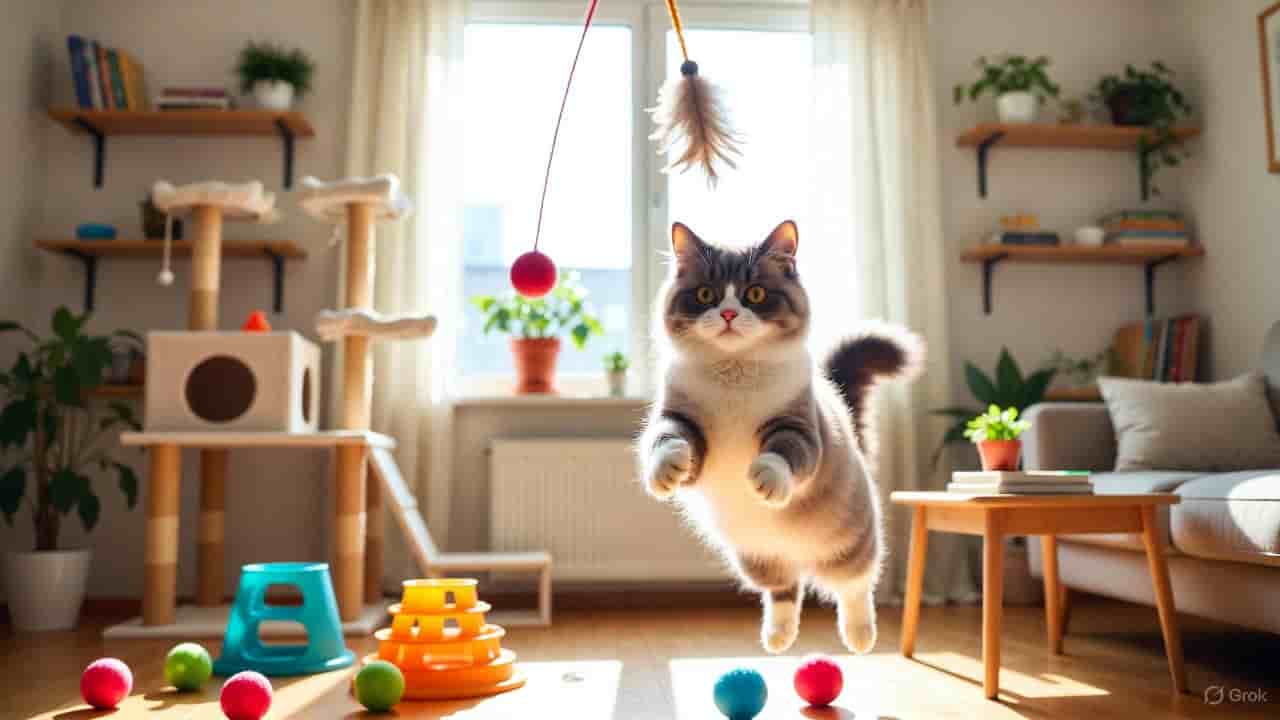
Interactive play is the #1 best way to activate indoor cats. It mimics natural hunting behavior and burns excess energy fast.
Best toys for interactive play:
- Wand toys (feathers, ribbons, strings)
- Laser pointers
- Cat-safe flutter toys
- Butterfly or bird mimic toys
- Rod toys with soft tails
How to play like a pro:
- Move the toy like real prey
- Alternate slow movements with fast bursts
- Let your cat “catch” it occasionally
- End with a treat to complete the hunting cycle
Duration:
- 10–15 minutes per session
- 2–3 sessions daily
Rotate Toys Regularly
Cats get bored quickly when toys stay in the same place.
Rotate toy categories:
- Week 1: Feather toys
- Week 2: Mice and plush toys
- Week 3: Puzzle toys
- Week 4: Electronic toys
Why rotation works:
It keeps toys exciting and encourages exploration.
3. Set Up Cat-Friendly Climbing Spaces
Cats love height because it gives them security and control.
Indoor height options:
- Cat trees
- Wall-mounted shelves
- Window perches
- Bookshelves (cleared on top)
- Hammocks
Even a small apartment can include vertical spaces!
4. Create Window Entertainment
Windows act as “Cat TV.”
Ideas:
- Place a comfy perch
- Add a bird feeder outside the window
- Keep blinds partly open
- Use a suction-cup bird watching seat
Watching birds, passing cars, and leaves keeps cats busy for hours.
5. Use Food Puzzle Toys & Slow Feeders
Cats naturally work for their food, so puzzle feeders activate both brain and body.
Puzzle ideas:
- Treat balls
- Snuffle mats
- Rolling treat dispensers
- DIY toilet paper roll puzzles
- Egg carton treat games
Try hiding treats around the house to encourage exploring.
6. Introduce Scent Enrichment
Because cats rely heavily on scent, smell-based enrichment activates their minds instantly.
Safe scents cats enjoy:
- Catnip
- Silvervine
- Valerian root
- Honeysuckle wood
Rotate scents weekly for maximum stimulation.
7. Schedule Daily Routine-Based Activities
Cats feel secure when they know what to expect.
Example daily routine:
- Morning: Interactive play
- Afternoon: Window time + puzzle feeder
- Evening: Training session + wand toy
- Night: Calming grooming or cuddle time
A structured day reduces destructive boredom.
8. Teach Cats Simple Training
Training doesn’t just activate the mind—it strengthens your bond.
Train your cat to:
- Sit
- High-five
- Spin
- Come when called
- Target touch
Use treats and short 3–5 minute sessions.
keywords: “training games for indoor cats”
Searching terms: “how to activate cats indoors”
9. Build a Safe Indoor Cat Garden
Cats love plants, and many safe plants stimulate natural instincts.
Safe indoor plants for cats:
- Cat grass
- Spider plant
- Boston fern
- Areca palm
Add pots on shelves or create a mini cat garden corner.
10. Provide Multiple Scratching Options
Scratching activates:
- Shoulder muscles
- Back muscles
- Natural scent-marking instincts
Offer:
- Vertical scratching posts
- Horizontal scratchers
- Cardboard scratch pads
- Sisal rope posts
Place scratchers near sleeping areas and windows.
11. Sound Enrichment
Cats respond deeply to auditory stimulation.
Try:
- Bird chirping videos
- Nature sounds
- Cat-calming music
- Soft background playlists
Avoid loud or sudden noises.
12. Create Hideouts & Exploration Zones
Cats love small spaces where they can hide, sneak, or rest.
Ideas:
- Cardboard box mazes
- Cat tunnels
- Blanket forts
- Cloth-covered chairs
- Multi-compartment cat condos
These spaces encourage natural seeking behavior.
13. Build DIY Obstacle Courses
You don’t need to spend money—use household items.
DIY course ideas:
- Pillows to jump over
- Chairs to weave through
- Boxes to climb
- Tunnels using blankets
Change the layout weekly to keep it interesting.
14. Offer Solo-Play Toys
These keep your cat entertained even when you’re busy.
Great solo toys:
- Springs
- Crinkle balls
- Cat track toys
- Automatic rolling balls
- Bird sound toys
- Plush kickers
Solo play is essential for independent stimulation.
15. Use Cat Treat Trails
Leave a trail of treats across a room or corridor.
This activates:
- Scent tracking
- Curiosity
- Low-impact physical activity
Especially useful for senior cats.
16. Night-Time Activity Management
If your cat gets hyper at night:
- Increase daytime activity
- Offer evening play sessions
- Provide puzzle feeders at bedtime
- Keep a warm sleeping spot near you
Night zoomies reduce when daytime stimulation increases.
17. Add New Textures Around the House
Textures stimulate touch and curiosity.
Examples:
- Carpet squares
- Bubble wrap under supervision
- Crinkly paper
- Soft fleece
- Woven mats
Textures activate sensory pathways.
18. Rotate Scents, Sounds & Objects Weekly
Weekly rotation prevents boredom and maintains novelty.
Rotation ideas:
- Toy sets
- Scratching posts
- Window seats
- Scents
- Puzzle toys
19. Encourage Social Play (If Cat-Friendly Household)
If you have more than one cat, encourage interactive play by:
- Providing enough toys
- Offering two scratching posts
- Avoiding resource conflicts
Play also reduces tension between cats.
20. Grooming as Activation
Brushing stimulates skin, boosts bonding, and keeps cats calm.
Try:
- Soft brushes
- Combs
- Grooming gloves
Use grooming sessions to strengthen your connection.
Also Read 👉
Use sparingly and naturally:
Avoid These three pet Dogs expert warnings
. Stree free ways to bond with a Cat
Key Takeaway Box
KEY TAKEAWAYS:
Indoor cats need daily physical activity, mental stimulation, and sensory enrichment to stay healthy and happy. You can activate your cat indoors using interactive play, food puzzles, climbing spaces, scent enrichment, training, and rotating toys. Even small changes—like window perches, DIY obstacle courses, or treat trails—make a huge difference in preventing boredom and promoting wellbeing.
Frequently Asked Questions (FAQ)
1. How do I keep my indoor cat active?
Use interactive toys, puzzle feeders, climbing shelves, scent enrichment, and routine play sessions.
2. How long should I play with my indoor cat?
Ideally 20–40 minutes daily, divided into 2–3 short sessions.
3. Do indoor cats get bored easily?
Yes. Without stimulation, indoor cats may become destructive, anxious, or overeating.
4. What toys are best for indoor cat activation?
Wand toys, puzzle feeders, climbing trees, catnip toys, and automatic moving toys.
5. Can older cats still be active?
Absolutely! Senior cats need gentler but consistent play to stay healthy.
6. How do I mentally stimulate my indoor cat?
Try training games, food puzzles, window watching, scent rotation, and DIY foraging toys.
Experts Recommend outdoor Research’s..
A trusted resource offering science-backed tips on keeping indoor cats mentally and physically stimulated.
https://www.aspca.org/pet-care/cat-care/common-cat-behavior-issues
A comprehensive guide with practical strategies to enrich indoor cats’ lives.
https://www.humanesociety.org/resources/enriching-your-cats-life