How to Care for Rescue Pet Birds: 7 Essential Tips for a Happy, Healthy Life
From fear to friendship—learn how to care for rescue pet birds with 7 simple, proven tips that support health, trust, and happiness.
Hey there, fellow bird lovers. If you’re reading this, you’re probably thinking about bringing a rescue bird into your home or already have one fluttering around, and you want to give them the best shot at a joyful life. As someone who’s rescued a few feathered friends over the years—starting with a scrappy cockatiel named Sunny who showed up at a shelter with clipped wings and a wary eye—I’ve learned that caring for these birds isn’t just about food and water. It’s about understanding their past traumas and building trust step by step. Rescue birds often come from tough backgrounds, like neglect or overcrowded homes, so they need extra patience. In this guide, I’ll share seven essential tips drawn from my own experiences and chats with vets, all aimed at helping your bird thrive.
Understanding Your Rescue Bird’s Background
Before diving into daily care, it’s crucial to get a handle on where your bird has been. Many rescues have histories of poor nutrition or limited socialization, which can lead to behaviors like excessive plucking or aggression. Why does this matter? Because ignoring their past can exacerbate health issues—feather plucking, for instance, often stems from stress hormones that build up without proper outlets.
Many rescue birds come from environments where their physical and emotional needs were overlooked. Resources from the World Parrot Trust highlight how past neglect, improper diets, and lack of enrichment can impact a bird’s behavior and health. Learning about a rescue bird’s background helps caregivers create a safer, more supportive home environment.
In my case, Sunny was about 5 years old when I adopted him, and he wouldn’t let anyone near his cage for weeks. A quick vet check revealed vitamin deficiencies from a seed-only diet in his previous home. Vets often recommend starting with a full health screening to catch things like respiratory infections early, which are common in stressed birds.
- Look for signs of past neglect: Dull feathers, overgrown beaks, or skittish reactions to hands.
- Chat with the shelter: They can provide insights into the bird’s age, species-specific needs, and any known quirks.
Creating a Safe and Stimulating Environment
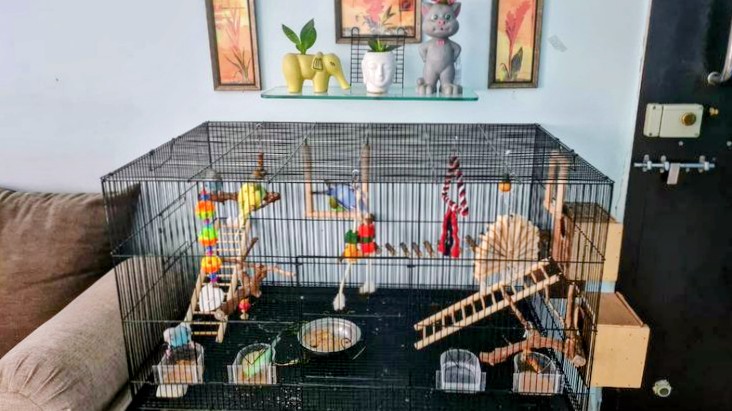
Your bird’s space is their sanctuary, especially for rescues who’ve known instability. A cage that’s too small or barren can trigger anxiety, mimicking the confinement they might have endured before. Think of it as setting up a cozy apartment after a rough move—birds need room to spread their wings and mental stimulation to prevent boredom-induced problems like screaming.
I once set up a play gym for my parakeet duo, rescued from a hoarding situation. At around 2 years old, they were hyperactive but fearful. Adding perches of varying textures helped with foot health and gave them places to explore, reducing their constant pacing.
RELATED

Choosing the Right Cage Setup
Opt for a cage at least twice the bird’s wingspan wide, with bar spacing suited to their size—too wide, and small birds like finches could escape or get stuck. Position it in a quiet corner away from drafts, but near family activity to encourage bonding.
- Include toys: Rotate chewable ones made from safe woods to mimic natural foraging.
- Lighting matters: Use full-spectrum bulbs to simulate daylight, helping regulate their sleep cycles and vitamin D absorption.
Nutrition: Building a Balanced Diet
Feeding a rescue bird right is like rehabbing their body from the inside out. Many arrive malnourished because cheap seed mixes lack variety, leading to fatty liver disease over time. The why here is simple: Birds in the wild eat diverse foods, so a monotonous diet disrupts their metabolism.
From my experience with a lovebird I named Kiwi, who was underweight at adoption (probably around 3 years old), switching to pellets supplemented with fresh veggies turned things around. She started gaining energy and even learned tricks faster.
Daily Feeding Routine
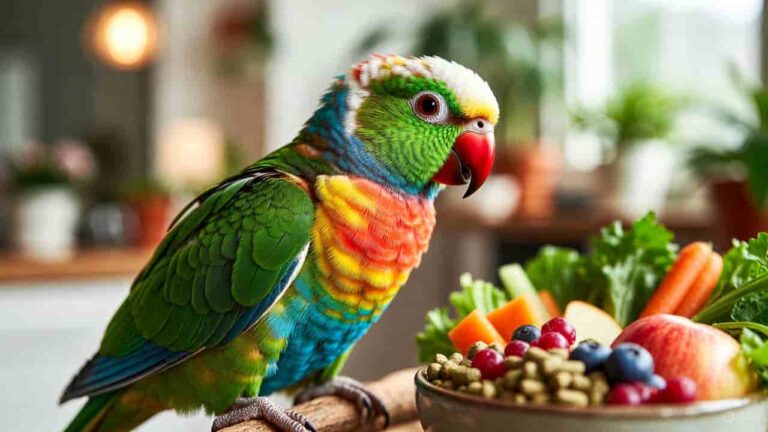
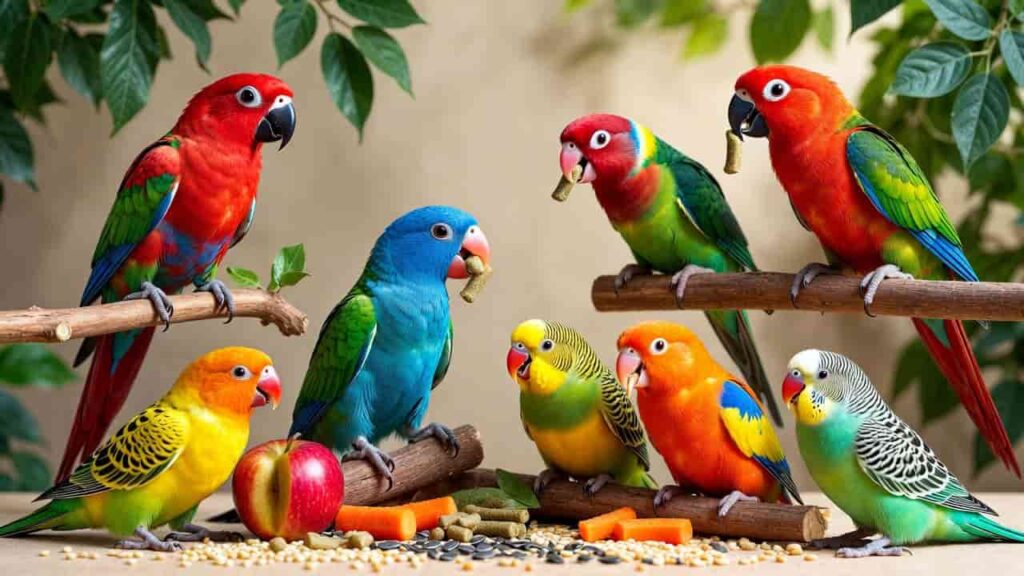
Aim for 70% pellets, 20% veggies like kale or carrots, and 10% fruits or nuts. Avoid avocados—they’re toxic due to persin, which affects their heart.
- Portion control: Overfeeding leads to obesity; watch for weight gain in sedentary rescues.
- Hydration: Fresh water daily, perhaps with a vet-approved electrolyte mix if they’re recovering.
Health Monitoring and Vet Visits
Regular check-ups are non-negotiable for rescues, as hidden issues like parasites can lurk from previous environments. Stress weakens their immune system, making them prone to infections that spread quickly in avian bodies.
For rescue birds, regular veterinary care plays a critical role in long-term health. According to the Association of Avian Veterinarians, early health screenings help identify hidden issues like nutritional deficiencies, parasites, and respiratory infections—problems commonly seen in rescued pet birds. Scheduling routine checkups ensures your bird gets a healthy second chance at life.
I’ve taken my birds for annual exams, and once caught an early mite infestation in a young conure (maybe 1 year old) that was itching constantly. Vets explained that mites thrive in unclean conditions, which many rescues have faced.
Spotting Warning Signs
Keep an eye on droppings—changes in color or consistency signal digestive woes. Also, monitor breathing; labored breaths could indicate respiratory distress from poor air quality.
- Quarantine new birds: For 30 days to prevent spreading illnesses to existing pets.
- Vaccinations: Discuss polyomavirus shots if your bird is at risk.
Socialization and Bonding Techniques
Rescue birds might shy away from human interaction due to past mistreatment, but gentle bonding rebuilds their confidence. This isn’t just feel-good stuff; social isolation raises cortisol levels, harming their overall health.
With Sunny, I started by sitting quietly near his cage, reading aloud softly. Over months, this 5-year-old cockatiel went from hiding to perching on my shoulder during movie nights.
Step-by-Step Bonding
Begin with short sessions: Offer treats through bars to associate you with positives. Gradually introduce handling, watching for body language like puffed feathers indicating discomfort.
- Respect their pace: Forcing contact can set back progress.
- Group dynamics: If adopting multiples, observe hierarchies to avoid fights.
Exercise and Mental Enrichment
Keeping a rescue bird active prevents the lethargy that comes from confined lives. Exercise boosts endorphins, countering depression-like states in birds who’ve been caged too long.
My parakeets loved supervised out-of-cage time, flying laps around the room. At 2 years old, they transformed from listless to playful after introducing puzzle toys.
Fun Activities
Set up safe flight zones: Cover windows to prevent crashes. Use foraging toys where they hunt for hidden seeds, simulating wild behaviors.
- Daily routine: At least 1-2 hours outside the cage for medium birds.
- Variety: Switch toys weekly to keep their curious minds engaged.
Grooming and Hygiene Basics
Proper grooming maintains their plumage and prevents issues like beak overgrowth, which happens when birds lack abrasive surfaces to file on naturally.
Kiwi, my lovebird, had ragged feathers from self-plucking when I got her at 3. Regular misting baths helped, as humidity soothes skin and encourages preening.
RELATED
Essential Grooming Practices
Trim nails and wings only with vet guidance—DIY can cause bleeding. Clean the cage daily to avoid bacterial buildup.
- Bathing options: Some prefer showers, others shallow dishes.
- Feather care: Provide cuttlebone for calcium, aiding beak health.
FAQ: Common Questions About Caring for Rescue Birds
Conclusion
Finally Thought about this, caring for a rescue bird has been one of the most fulfilling parts of my life—watching Sunny go from a timid soul to a chatty companion reminds me why patience pays off. If you’re just starting, remember: Every small effort builds toward a bond that’s truly special forever. You’ve got this; your feathered friend will thank you with chirps and cuddles in time. If things feel overwhelming, reach out to a local avian vet—they’re invaluable allies in this adventure.I hope you have really loved this use useful information.if you have also like these loving memories and experience please share with us in Comment box.