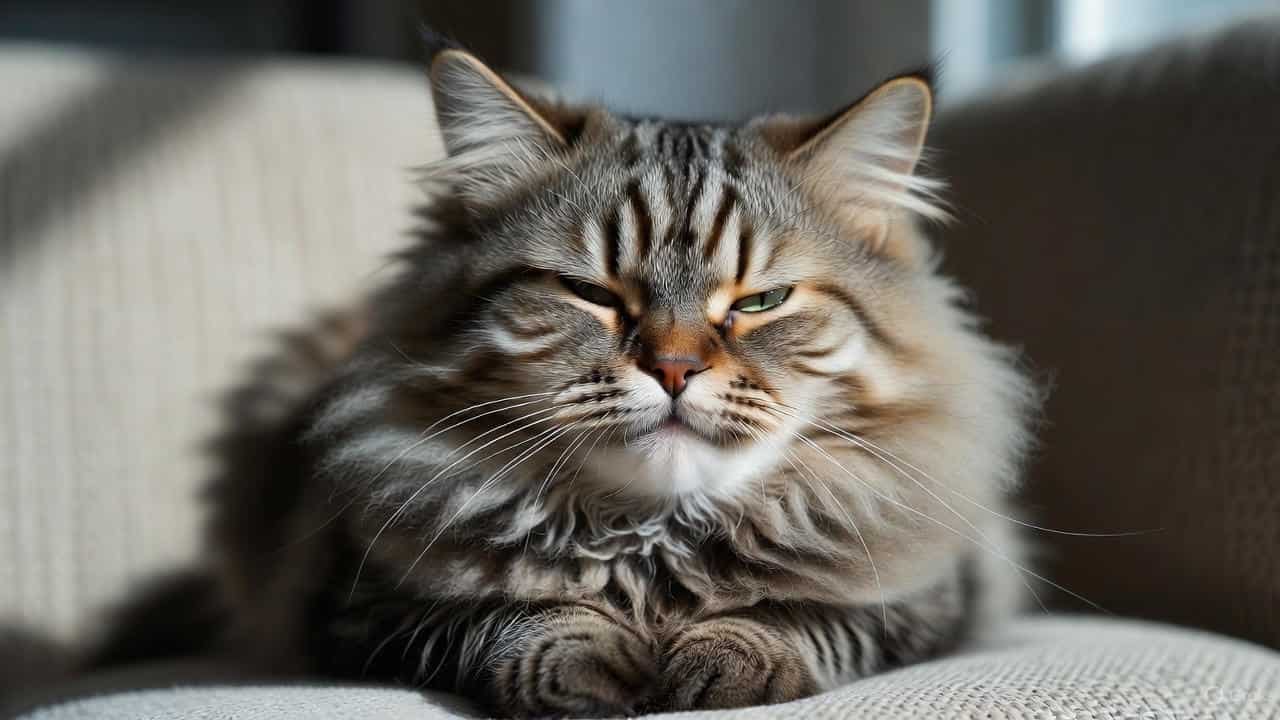
Is Your Cat Happy or Hurting? What Purring Actually Means
Is Your Cat Happy?Purring is one of the most soothing and mysterious sounds a cat makes—but it doesn’t always mean happiness. Cats purr to express comfort, reduce stress, communicate needs, and even cope with pain or illness. Learn what your cat’s purr truly means and how to tell the difference between contentment and distress.
Explanation
Do you Know”Is Your Cat Happy”As a cat owner for over a decade, I’ve lost count of the times I’ve curled up on the couch with my fluffy tabby, listening to that rhythmic rumble vibrating through her chest. It’s one of those sounds that instantly melts away the stress of the day, right? But then there was that one evening when she started purring louder than usual after a minor tumble off the windowsill. At first, I thought she was just being her affectionate self, but something felt off. Her eyes weren’t that usual half-closed bliss; they were wide and alert. That got me wondering: is purring always a sign of contentment, or could it mean something else entirely? If you’re like me, you’ve probably assumed a purring cat is a happy cat. However, the truth is far more nuanced—and fascinating.
In this in-depth exploration, we’ll dive into the world of feline purring, unpacking its meanings, the science behind it, and how you can tell if your furry friend is truly relaxed or perhaps signaling distress. Whether you’re a new cat parent or a seasoned one, understanding this subtle form of communication can strengthen your bond and even help spot health issues early. Plus, we’ll bust some common myths along the way and share practical tips to interpret your cat’s vibes. By the end, you’ll be equipped to decode that soothing sound like a pro.
Before we jump in, a quick note: cats are masters of mystery, and purring is one of their most intriguing behaviors. It’s not just about happiness; it can be a tool for self-soothing, healing, or even manipulation. So, let’s start at the beginning.
The Basics: What Exactly Is Purring?
Purring is that low, continuous vibration you feel and hear when your cat is close by. But how does it happen? Scientifically speaking, it’s produced by the rapid contraction and relaxation of the muscles in the larynx (that’s the voice box) combined with the movement of the diaphragm. These muscles twitch at a rate of about 25 to 150 times per second, creating that signature rumble. Interestingly, recent research challenges the long-held belief that it’s all about active muscle control. A 2023 study published in Current Biology suggests that connective tissue pads in the vocal cords might allow for a more passive purring mechanism, similar to how humans produce sounds without constant effort. This could explain why cats can purr for hours on end without tiring.
Now, not all cats purr the same way. Domestic cats, along with some wild felines like cheetahs and bobcats, are the purr-masters of the animal kingdom. Big cats like lions and tigers? They roar instead, thanks to differences in their throat anatomy. But for our house cats, purring starts early—kittens begin purring just days after birth to communicate with their mothers during nursing. It’s a built-in survival tool.
Transitioning to why this matters: if purring is so fundamental, it must serve multiple purposes. And indeed, it does. While many of us associate it with joy, experts like those from the Library of Congress note that cats purr in various contexts, from pleasure to pain. This versatility is what makes it so tricky to interpret at face value.
Busting the Myths: Purring Isn’t Always About Happiness
One of the biggest misconceptions out there is that a purring cat is always a content cat. Sure, that’s often the case, but let’s debunk this myth right away. For instance, cats have been observed purring during stressful situations, like vet visits or even while giving birth. In fact, a BBC article highlights how purring might act as a self-healing mechanism, with vibrations potentially aiding in pain relief or bone repair. The frequencies involved—typically between 25 and 150 Hz—align with those used in therapeutic treatments for humans, like promoting tissue regeneration. 11
Another myth? That all purrs sound the same. Actually, researchers have identified subtle differences. A “solicitation purr,” for example, embeds a high-pitched cry-like sound to grab human attention—think of it as your cat’s way of saying, “Feed me now!” This was detailed in a study by bioacoustics expert Karen McComb, who found that these purrs are harder for us to ignore because they tap into our nurturing instincts, similar to a baby’s cry.
Moreover, purring isn’t exclusive to positive emotions. Cats in pain or fear might purr to comfort themselves, much like how we might hum a tune when nervous. A Reddit thread from cat owners shares stories of pets purring right up until their final moments, suggesting it’s a coping strategy rather than a sign of bliss.
So, if not always happiness, what else could it mean? Let’s break it down.
Also Read:
Ultimate Guide to Dog and Cat Foods
Reason 1: Pure Contentment and Relaxation(Is Your Cat Happy)
This is the classic scenario we all love. When your cat is lounging in a sunny spot, kneading your lap, or snuggling up after a meal, that deep, steady purr usually signals all is right in their world. In these moments, purring acts as a social signal, reinforcing bonds with you or other cats. According to PetMD, it’s a way for cats to express satisfaction and security, often accompanied by relaxed body language like slow blinking or a loose tail. 0
From an evolutionary standpoint, this makes sense. In the wild, a content purr might help maintain harmony in a group, signaling “I’m no threat.” For domestic cats, it’s evolved into a love language with humans. My own cat, Whiskers, purrs like a motorboat when I scratch behind her ears—it’s her way of saying, “Keep going!”
But here’s a fun fact: some cats purr more than others due to breed or personality. Siamese cats, for example, are known for their vocal nature, including louder purrs. If your cat’s purring in these happy contexts, enjoy it—it’s a compliment!
Reason 2: Stress and Anxiety Relief
On the flip side, purring can be a stress-buster. Imagine your cat at the vet: they’re purring, but their ears are flattened, and their pupils are dilated. This isn’t joy; it’s self-soothing. Scientific American explains that the low-frequency vibrations might release endorphins, helping cats calm down in tense situations. 19
Veterinarians often report cats purring during examinations, even when scared. It’s similar to how humans might fidget or breathe deeply to manage anxiety. In multi-cat households, a new arrival might trigger purring as a way to de-escalate potential conflicts. If you’ve ever noticed your cat purring during a thunderstorm or car ride, this could be why.
Furthermore, chronic stress—like from environmental changes—might lead to increased purring. A study from NC State University’s College of Veterinary Medicine suggests purring helps maintain contact and reduce tension in social settings.
To differentiate, look at the context. Is the environment new or noisy? That purr might be a plea for reassurance.
Reason 3: Pain and Healing(Is Your Cat Happy)
This is where things get serious. Cats are stoic creatures, often hiding pain to avoid appearing vulnerable—a holdover from their wild ancestors. But purring can be a clue. The Spruce Pets notes that injured or ill cats purr to promote healing, as the vibrations stimulate bone growth and reduce swelling. 1
Elizabeth von Muggenthaler, a bioacoustics researcher, theorizes that purring evolved as a low-energy way to maintain health during periods of inactivity, like when hunting is scarce. Frequencies in the 20-50 Hz range have been shown to increase bone density in studies on animals and humans alike.
In practice, if your cat is purring but also limping, hiding, or refusing food, it could indicate pain. One owner shared on Quora how their cat purred loudly while dealing with a urinary issue—turns out, it was a sign of discomfort.
Always consult a vet if you suspect pain. Early detection can make all the difference.
Reason 4: Communication with Kittens and Humans
Purring starts in the nursery. Mother cats purr to guide blind kittens to her for feeding, and the vibrations provide comfort. As adults, cats use purring to communicate needs. Elanco’s pet health site describes how cats might purr to solicit food or attention from us. 2
Domestic cats are unique among felines for purring at humans, as per EL PAÍS. It’s a form of manipulation—those solicitation purrs are irresistible! 9
In multi-pet homes, purring can signal submission or friendship to dogs or other cats.
Reason 5: Hunger and Solicitation
Ever hear a purr that sounds almost whiny? That’s the hunger purr. Research from Science Focus reveals cats mix in a cry to prompt feeding, exploiting our parental instincts. 22
Volume matters too—louder purrs often mean urgency, like mealtime.
How to Tell the Difference: Happy vs. Hurting Purrs
Decoding requires observation. For happy purrs: relaxed posture, slow blinks, kneading. For hurting: tense body, avoidance, rapid breathing. Preventive Vet advises watching for changes in breathing or third eyelid visibility. 36
Listen to the pitch—pain purrs might be lower or irregular. Context is key: post-play happy, post-accident? Check for issues.
Scientific Studies and Expert Insights(Is Your Cat Happy)
A Reddit discussion on biology highlights purring’s healing potential, with devices mimicking it for therapy.
Vet experts from Heineke Veterinary Hospital emphasize body language.
Wikipedia notes purring for fear or defense.
Tips for Cat Owners
- Monitor daily: Note normal purr patterns.
- Provide enrichment: Reduce stress with toys.
- Vet check-ups: Annual exams catch issues.
- Comfort zones: Safe spaces help.
- Bond through play: Strengthens trust.
For more, visit ASPCA’s cat care guide.
Conclusion(Is Your Cat Happy)
Purring is a multifaceted language—happiness, healing, or hurt. By paying attention, you’ll better understand your cat. Next time that rumble starts, ask: happy or hurting? It could deepen your connection immensely.