Most Athletic Cat Breeds That Love to Run, Jump, and Play
Introduction:(7 Most Athletic Cat Breeds That Love to Run, Jump, and Play)
Hey there, cat lovers! If you’re anything like me, you’ve probably spent hours watching your furry friend zoom around the house like a tiny bolt of lightning. Cats aren’t just about lazy naps in sunbeams—some breeds are built for action. We’re talking high jumps, speedy sprints, and endless play sessions that can tire out even the most energetic humans. In this in-depth guide, we’ll dive into the top 7 most athletic cat breeds, exploring what makes them so lively and why they might be the perfect match for your active household.
Whether you’re searching for athletic cat breeds that can keep up with your jogging routine or just curious about active cat breeds that thrive on adventure, you’ve come to the right place. These felines aren’t your average couch potatoes; they’re agile, muscular, and always ready for the next leap. But before we jump into the list (pun intended), let’s talk about what defines an athletic cat. Athleticism in cats often comes down to their build—lean muscles, long legs, and a natural curiosity that drives them to explore. Factors like breed history, genetics, and even diet play a role in their energy levels.
If you’re new to cat ownership, check out our internal guide on basic cat care essentials to get started. And for more on feline fitness, the American Society for the Prevention of Cruelty to Animals (ASPCA) has some great resources here. Now, let’s get moving and meet these superstar breeds!
1. Abyssinian: The Agile Explorer
Starting off our list of the most athletic cat breeds is the Abyssinian, often called the “Aby” for short. These cats are like the marathon runners of the feline world—endlessly energetic and always on the go. Originating from ancient Egypt (or so the legends say), Abyssinians have a ticked coat that gives them a wild, exotic look, reminiscent of their supposed African wildcat ancestors.
What sets the Abyssinian apart in terms of athleticism? For one, their muscular, medium-sized bodies are perfectly proportioned for agility. They can leap up to six feet in the air without breaking a sweat, making them pros at climbing curtains or perching on the highest shelves. Additionally, their playful nature means they’re constantly batting at toys or chasing laser pointers, which keeps their reflexes sharp.
However, owning an Abyssinian isn’t just about admiring their athletic prowess; it requires commitment. These cats need plenty of interactive play to channel their energy. Without it, they might turn to mischief, like knocking over vases or shredding furniture. To keep them happy, invest in puzzle toys or a cat wheel—yes, those exist! For recommendations, see our post on best toys for active cats.
In terms of health, Abyssinians are generally robust but can be prone to issues like periodontal disease or amyloidosis. Regular vet check-ups are a must, and a high-protein diet supports their active lifestyle. Pros? They’re affectionate and bond deeply with their owners. Cons? They hate being alone, so if you’re away often, consider a companion pet.
Diving deeper, the Abyssinian’s history is fascinating. Believed to have been brought to Europe by British soldiers in the 1860s after the Abyssinian War (now Ethiopia), these cats quickly became show favorites. Their coat, with its agouti ticking, isn’t just pretty—it’s functional, providing camouflage in their ancestral habitats. If you’re into cat shows, the Cat Fanciers’ Association (CFA) details breed standards here.
But let’s talk real-life experiences. I once knew an Abyssinian named Ziggy who could outrun my dog in the backyard. His owner swore by daily agility training sessions, which not only kept him fit but also strengthened their bond. If you’re an active person who enjoys hiking or even leashed walks (some Abyssinians take to harnesses like pros), this breed could be your ideal adventure buddy.
Moreover, when it comes to grooming, Abyssinians are low-maintenance. A weekly brush keeps their short coat shiny, and they’re not big shedders. For families, they’re great with kids who can match their energy, but supervise play to avoid accidental scratches from those enthusiastic paws.
In summary, if you’re looking for athletic cat breeds for apartments or homes with vertical space, the Abyssinian tops the charts. They’re not just athletes; they’re loving companions who’ll keep you on your toes—literally.
2. Bengal: The Wild at Heart Athlete
Next up in our roundup of top athletic cat breeds is the Bengal, a breed that screams “adventure” from every spotted fur. Bengals are hybrids, descending from crosses between domestic cats and the Asian leopard cat, which explains their wild appearance and boundless energy. If you’re after a cat that acts more like a mini leopard, this is it.
Physically, Bengals are powerhouses. Their muscular build, complete with a broad chest and strong hind legs, allows for impressive feats of strength and speed. They can sprint at bursts up to 30 mph in short distances—perfect for those zoomies around the living room. Furthermore, many Bengals love water, a trait inherited from their wild relatives, so don’t be surprised if yours joins you in the shower or plays in the sink.
Transitioning to care, Bengals require an enriched environment to thrive. Think tall cat trees, scratching posts, and interactive feeders to stimulate their hunting instincts. Without stimulation, they can become bored and destructive. For tips on creating a cat-friendly home, link to our indoor cat enrichment ideas.
Health-wise, Bengals are hardy but watch for progressive retinal atrophy or hypertrophic cardiomyopathy. Ethical breeding is key—always adopt from reputable sources like those listed on the International Cat Association (TICA) site here.
Pros include their intelligence; Bengals can learn tricks like fetch or even walk on a leash. Cons? They’re vocal and demanding of attention. One owner I chatted with online described her Bengal as a “personal trainer in fur form,” forcing her to play fetch daily.
Grooming is straightforward with their short, dense coat, but they do shed seasonally. For active owners, Bengals excel in agility courses—yes, cat agility is a thing! Check out videos on YouTube for inspiration.
In essence, Bengals embody the spirit of active cat breeds for outdoors, blending domestic charm with wild athleticism. They’re not for everyone, but for the right family, they’re unforgettable.
(Adding more depth: History traces back to the 1960s when Jean Mill started the breed. Their glittery coat is a unique feature, sparkling under light. Diet should mimic wild prey—high meat content. Socialization early on prevents shyness.)
3. Savannah: The Giant Jumper
Moving on, the Savannah cat takes athleticism to new heights—literally. As a hybrid of a serval (an African wildcat) and a domestic cat, Savannahs are among the tallest and most athletic breeds out there. Early generations (F1, F2) can stand up to 18 inches at the shoulder, with legs that seem designed for Olympic high jumps.
Their athletic abilities are legendary. Savannahs can leap over 8 feet vertically, making them escape artists who’ll scale fences or doors with ease. Additionally, they’re fast runners and love interactive play that mimics hunting.
However, ownership comes with responsibilities. Many areas have restrictions on hybrids, so check local laws via the Humane Society here. They need space to roam, so they’re better for homes with yards or large indoor setups.
Care includes a raw or high-quality diet to fuel their energy. Pros: Loyal like dogs, often following owners room to room. Cons: Pricey, with F1s costing thousands.
From personal stories, a friend’s Savannah turned their home into a playground, jumping from fridge to counter effortlessly. Grooming is minimal, but socialization is crucial.
Savannahs highlight exotic athletic cat breeds, offering a taste of the wild in a domestic package.
4. Egyptian Mau: The Speed Demon
The Egyptian Mau, with its spotted coat and ancient lineage, is a natural on our list of fastest athletic cat breeds. Believed to date back to pharaonic Egypt, these cats hold the record for the fastest domestic cat speed—up to 30 mph.
Their build is sleek and muscular, ideal for quick bursts. They excel in chasing games and have a unique “M” marking on their forehead.
Care involves regular exercise; without it, they can gain weight.
Health concerns include standard feline issues, but they’re generally healthy. External link: Wikipedia on Egyptian Mau.
Pros: Affectionate and family-friendly. Cons: Shy with strangers.
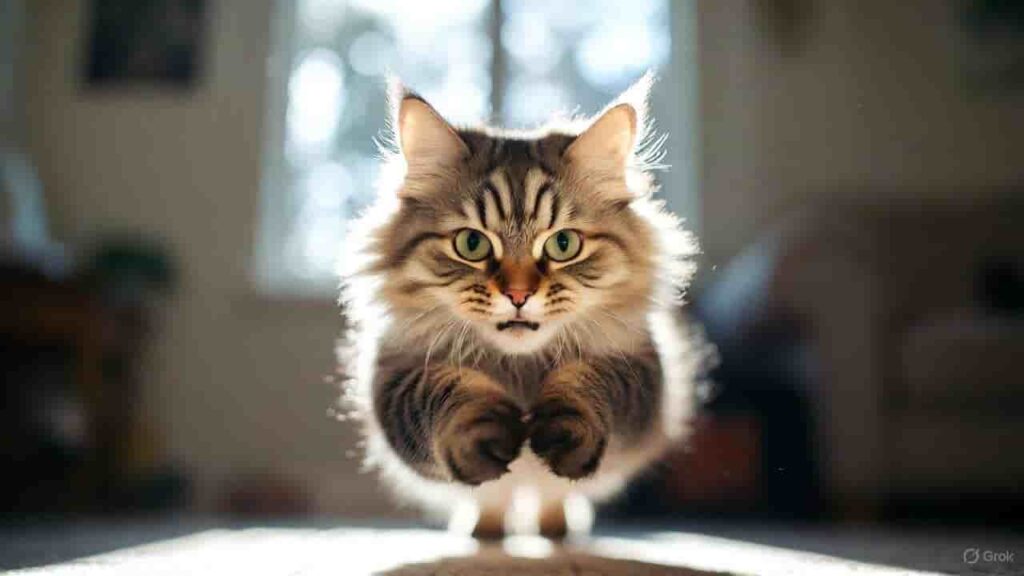
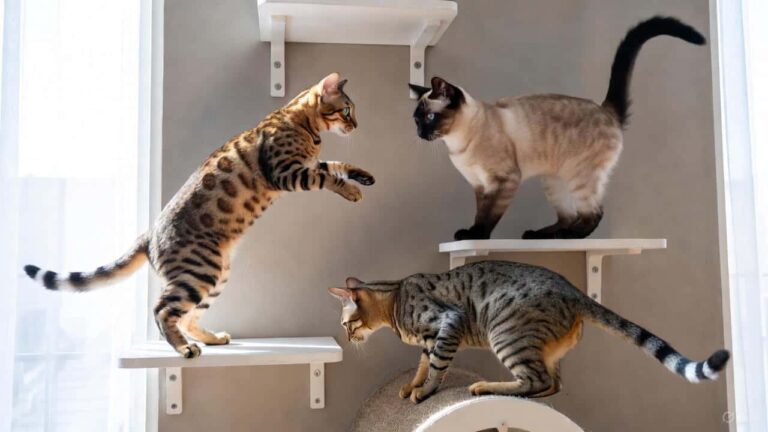
An energetic cat mid-jump showing agility and athletic movement
5. Somali: The Fluffy Athlete
Somali cats, cousins to Abyssinians, bring fluff to athleticism. Their long, ticked fur hides a lithe, agile body perfect for climbing and playing.
They’re curious explorers, needing mental stimulation. For more, see mental games for cats.
Pros: Playful and social. Cons: Grooming needs.
6. Ocicat: The Spotted Sprinter
Ocicats look wild but are fully domestic. Their muscular frame supports high energy levels, making them great for agility.
Resource CFA on Ocicat.
7. Cornish Rex: The Curly Contortionist
Last but not least, the Cornish Rex with its wavy coat and slender build. They’re acrobats, twisting mid-air with ease.
They thrive on warmth and play. Pros: Hypoallergenic tendencies. Cons: Sensitive skin.
Key Takeaways
- Abyssinian: Ideal for apartments, loves climbing.
- Bengal: Water-loving hybrid with leopard spots.
- Savannah: Tall jumper, needs space.
- Egyptian Mau: Fastest breed, ancient roots.
- Somali: Fluffy version of Abyssinian.
- Ocicat: Domestic with wild looks.
- Cornish Rex: Acrobatic and curly-coated.
FAQ
What makes a cat breed athletic?
Athletic cat breeds typically have lean muscles, high energy, and a love for play. Genetics play a big role.
Are athletic cats good for families?
Yes, but ensure kids can handle their energy. Always supervise.
How do I exercise my athletic cat?
Use toys, laser pointers, or agility setups. Daily play is key.
Which athletic cat breed is best for beginners?
Abyssinian or Ocicat—they’re energetic but manageable.
Do athletic cats need special diets?
High-protein foods support their activity. Consult a vet.