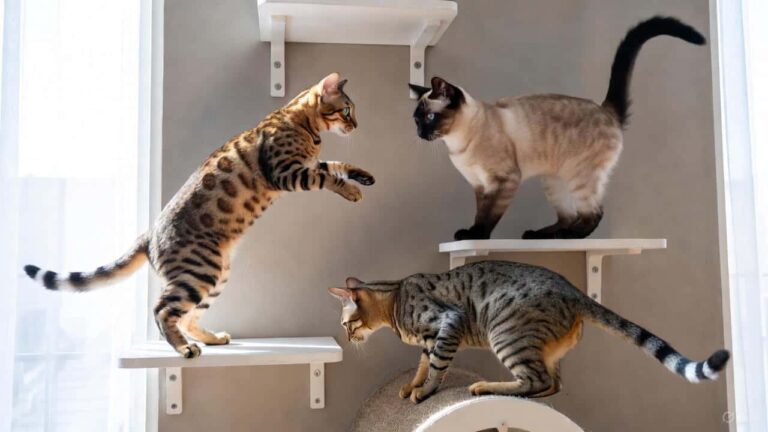

This Quiz Reveals If You Can Actually Speak “Cat” — Try It Now!
Introduction: Can Humans Really “Speak Cat”?
Scientists have developed a new cat communication quiz that helps you discover how well you understand feline emotions and behavior. The test shows short videos of cats expressing different moods — such as happiness, fear, or curiosity — and asks you to interpret them. According to research, people who spend more time observing cats or own multiple cats score higher, proving that humans can learn to “speak cat” by recognizing subtle cues like tail position, ear movement, and meow tone.
Every cat owner has wondered what their furry companion is trying to say.
Is that meow a greeting, a complaint, or a demand for food?
Now, scientists believe they may have found a way to measure how well we understand our feline friends. A new research-based quiz, created by animal behavior experts, claims to reveal just how fluent you are in the mysterious language of cats.
But can a quiz really tell how well we “speak cat”? Let’s explore what the science says — and how you can use these insights to strengthen your bond with your feline companion.
The Science Behind Cat Communication
Cats are famously independent creatures. Unlike dogs, who evolved to respond to human cues, cats retained more of their natural instincts from their wild ancestors. Yet, that doesn’t mean they don’t communicate — in fact, cats are constantly talking to us.
According to animal behavior researchers, cats use a complex mix of vocalizations, body language, and scent marking to express themselves. The problem is that humans often misunderstand these signals.
Common Ways Cats Communicate:
- Meows: Unlike wild cats, domestic cats meow primarily to humans — not to other cats. Each meow can carry a different meaning depending on pitch and duration.
- Purring: Usually a sign of contentment, but sometimes also a self-soothing behavior when your cat is in pain or anxious.
- Tail Movements: A high, upright tail signals friendliness; a swishing tail can mean irritation.
- Ear Position: Forward ears indicate curiosity or happiness; flattened ears mean “back off!”
Understanding these signs isn’t just cute trivia — it’s essential for improving your relationship with your cat.
The Feline Understanding Quiz: What Is It?
Scientists at several universities collaborated to create what they call a “Feline Communication Comprehension Test.” The quiz uses short video clips of cats showing different emotions and asks participants to identify what the cat is expressing.
The Purpose Behind the Quiz
The idea is simple yet powerful:
Can humans accurately interpret feline emotional cues just by watching their behavior?
Researchers discovered that some people have a “cat sense” — an almost intuitive ability to recognize feline emotions — while others misread even basic signs. Interestingly, women and people who have owned multiple cats tend to score higher on the test.
What the Quiz Measures
The quiz looks at your ability to recognize:
- Happiness and relaxation
- Fear or stress
- Irritation or aggression
- Playfulness
- Curiosity or alertness
In short, it’s a scientific way to measure your “cat communication IQ.”
Why Understanding Cats Matters More Than You Think
Understanding your cat isn’t just fun — it’s crucial for their health and happiness. Misinterpreting their signals can lead to stress, behavioral issues, and even health problems.
When you learn to read your cat’s cues correctly:
- You’ll notice when they’re anxious or in pain earlier.
- You’ll strengthen your bond through better trust.
- You’ll reduce unwanted behaviors like scratching or biting.
- You’ll make your home a calmer, safer place for both of you.
Common Misunderstandings About Cat Behavior
Even experienced cat owners can make mistakes when reading feline signals. Here are a few of the most common myths — and what science actually says.
Myth 1: A Purring Cat Is Always Happy
Truth: Cats also purr when they’re nervous or hurt. Purring releases endorphins, which helps them calm down.
Myth 2: Cats Scratch Furniture Out of Spite
Truth: Scratching is a natural way to stretch muscles and mark territory. Providing scratching posts helps redirect that instinct.
Myth 3: A Cat Wagging Its Tail Is Excited
Truth: Unlike dogs, a cat’s wagging tail usually signals irritation or agitation.
Myth 4: Cats Don’t Need Much Attention
Truth: Cats are social animals! They may not demand it like dogs, but they thrive on routine affection and interaction.
How the Quiz Can Improve Cat-Human Relationships
Taking the feline understanding quiz isn’t just about getting a score — it’s a fun way to learn how to listen to your cat more closely.
Once you know your strengths and weaknesses in interpreting cat behavior, you can start adjusting your approach at home.
Example:
If your cat often hides when guests arrive, the quiz may help you recognize signs of fear earlier — letting you create a quiet, safe space before stress escalates.
Over time, this awareness builds trust, which leads to a more affectionate and confident cat.
What Scientists Found: Can We Really “Speak Cat”?
When researchers analyzed the quiz results, they made some fascinating discoveries:
- People who watch cat videos regularly perform better at identifying feline emotions.
- Those who own multiple cats tend to recognize subtle cues, like changes in whisker position or ear angle.
- Cat shelter workers and veterinarians were among the highest scorers.
Interestingly, people who grew up with dogs only often scored lower — proving that cat communication is an entirely different skill set.
The Evolutionary Side of Feline Communication
Why do cats meow to humans in the first place?
Scientists believe that over thousands of years of cohabitation, cats learned that certain sounds and gestures trigger human responses — like feeding or petting.
This means your cat has trained you just as much as you’ve trained them!
Some researchers even describe meowing as a form of “cross-species communication.” It’s not that cats evolved a universal language, but rather that they’ve adapted to communicate in ways that humans find hard to ignore — soft, high-pitched sounds that mimic a baby’s cry.
Cats vs Dogs: The Communication Gap
Dogs are open books — tail wagging, ears perked, eyes expressive. Cats, on the other hand, are more subtle.
While dogs evolved to cooperate with humans in hunting and working, cats evolved as solitary predators. Their communication style reflects this independence.
But that doesn’t mean cats are cold. In fact, once you learn to “speak cat,” you’ll realize they’re constantly expressing themselves — just more quietly.
How to Practice “Speaking Cat” at Home
Here are some practical ways to put your new knowledge into action:
1. Watch Their Tail
A cat’s tail is like an emotional barometer. Pay attention to its position and movement before you approach.
2. Notice the Ears
Flattened ears are a clear “no” — stop what you’re doing and give your cat space.
3. Listen to the Meows
Over time, you’ll notice your cat uses different tones for different needs — food, attention, or complaint.
4. Respect Their Space
Cats appreciate affection, but on their own terms. Let them come to you.
5. Reinforce Positively
When your cat communicates calmly, respond gently — it teaches them that their signals work.
The Bigger Picture: Building Empathy Through Animal Communication
Understanding animals teaches us empathy and patience. The feline communication quiz is more than a fun experiment — it’s a reminder that every species has a voice, even if we don’t always understand it.
As we learn to listen better, we become more compassionate pet parents — and more aware humans.
FAQs About Understanding Cat Communication
Q1: Is the cat communication quiz available online?
Yes, many versions are available on pet science and animal behavior websites. Look for research-backed quizzes from universities or veterinary groups.
Q2: Can I improve my cat communication skills over time?
Absolutely! The more time you spend observing your cat, the better you’ll understand their signals.
Q3: Do all cats communicate the same way?
No. Each cat has its own personality and “vocabulary.” Some are very vocal; others use mostly body language.
Q4: Why does my cat meow differently at different times?
Because each sound has meaning — hunger, greeting, complaint, or affection. Cats modulate tone based on what they want.
Q5: Can cats understand human emotions?
Studies show cats can sense our mood through tone and body posture. They often respond with matching behavior — cuddling when we’re sad or avoiding when we’re tense.
Q6: How can I tell if my cat is stressed?
Look for signs like hiding, over-grooming, or flattened ears. These cues often appear before major behavioral issues arise.
Conclusion: Becoming Fluent in “Cat”
So — can you speak cat?
Maybe not fluently yet, but with science (and a little practice), you can learn to understand your feline friend’s subtle signals.
Remember: every tail flick, ear twitch, and meow is your cat’s way of talking to you.
When you start listening, your bond deepens — and life with your cat becomes even more rewarding.