Your Cat and Cold Temperatures: Warning Signs to Watch For
Learn the signs your cat is cold, from shivering and curling up tightly to seeking warm spots, and discover simple ways to keep your cat warm and safe.
Introduction: Do Cats Get Cold Too?
Many cat owners assume that because cats have fur, they are naturally protected from cold temperatures. However, this is a common misconception. Just like humans, cats can feel uncomfortable, stressed, and even sick when exposed to cold environments for long periods. The difference is that cats cannot tell us directly when they are feeling cold. Instead, they communicate through subtle behavioral and physical changes.
Understanding the signs your cat is cold can help you protect your pet from discomfort and potential health risks. Whether you live in a cold climate, experience seasonal temperature drops, or keep your home heavily air-conditioned, recognizing these warning signs is essential for every cat owner.
In this comprehensive guide, we will explore all the major signs, explain why cats get cold, discuss which cats are most vulnerable, and share practical steps you can take to keep your cat warm and safe.
Can Cats Really Feel Cold?
Yes, cats absolutely feel cold. In fact, most cats are comfortable at temperatures between 18°C and 24°C (65°F to 75°F). When temperatures fall below this range, many cats begin to experience discomfort.
Domestic cats originally evolved in warm climates. While their fur provides insulation, it is not enough to protect them from prolonged exposure to cold air, cold floors, or chilly drafts—especially indoors.
Therefore, learning the signs your cat is cold is not just helpful; it is necessary for responsible pet ownership.
RELATED
Signs Your Cat Is Cold (Complete Breakdown)
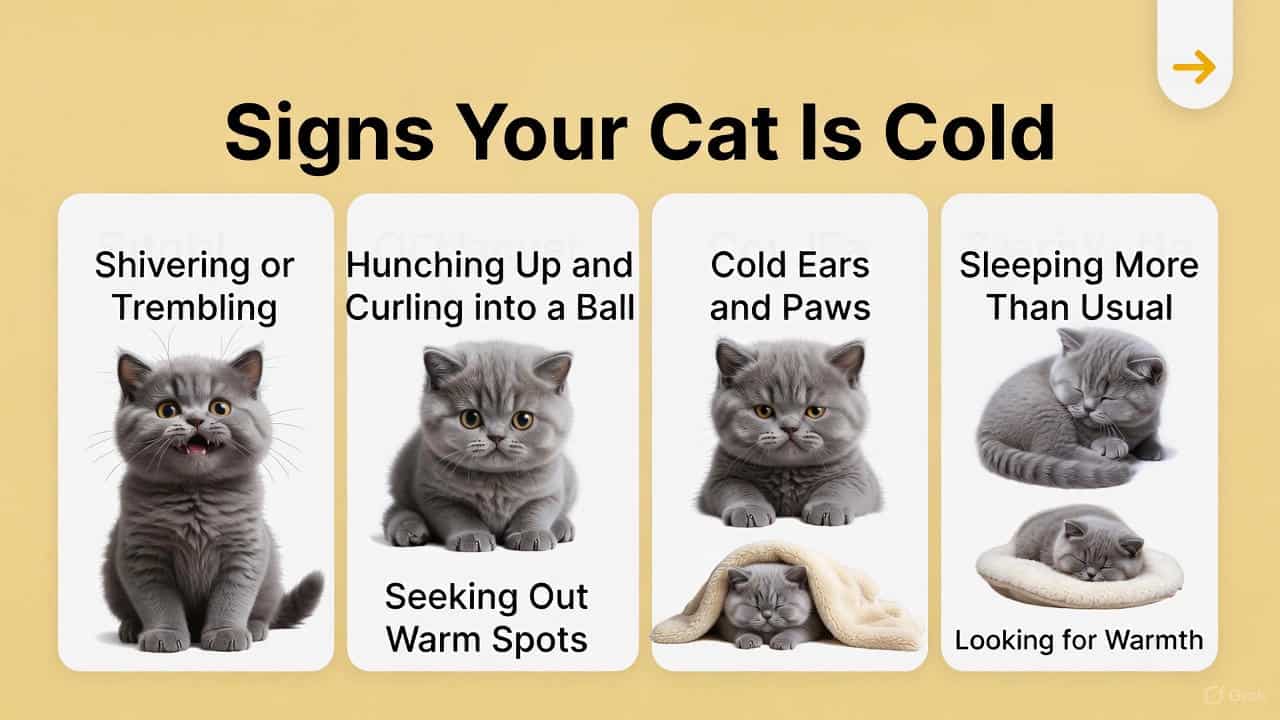
Below are the most common and scientifically recognized signs that indicate your cat may be feeling cold. Many of these signs align closely with what you can observe in the reference image.
1. Shivering or Trembling
Shivering is one of the most obvious signs your cat is cold. If you notice your cat shaking slightly, especially when resting or sleeping, this is their body’s natural attempt to generate heat.
Unlike playful excitement or fear-based trembling, cold-related shivering often occurs when your cat is stationary and quiet.
What to do:
Immediately move your cat to a warmer area and provide a blanket or soft bedding.
2. Cold Ears, Nose, or Paw Pads
Touch your cat’s ears, nose, or paw pads gently. If they feel unusually cold to the touch, this is a strong indicator that your cat’s body temperature is dropping.
Cats lose heat most quickly through exposed areas, making this one of the clearest physical signs your cat is cold.
3. Curling Up Tightly
Cats naturally curl up while sleeping, but when they are cold, this behavior becomes more extreme. A cold cat will tuck its paws tightly under its body and wrap its tail around itself to conserve heat.
This posture minimizes heat loss and is a clear signal that your cat is trying to stay warm.
4. Hunched Posture
A hunched or crouched posture while sitting or lying down can indicate discomfort caused by cold temperatures. Your cat may appear tense, with shoulders raised and head lowered.
This behavior often appears alongside other signs your cat is cold, such as reduced movement or seeking warmth.
5. Less Active or Sleeping More
Cold temperatures can reduce your cat’s energy levels. If your normally active cat suddenly becomes lethargic, sleeps more than usual, or avoids playtime, cold exposure may be the cause.
While sleeping conserves energy, excessive inactivity combined with cold conditions should not be ignored.
6. Seeking Warm Spots
One of the most noticeable signs your cat is cold is their constant search for warmth. You may find your cat:
- Sitting near heaters or radiators
- Sleeping in sunlight
- Crawling under blankets
- Sitting on electronics like laptops
These behaviors are instinctive responses to cold stress.
7. Burrowing Under Blankets or Clothes
If your cat suddenly starts burrowing into blankets, laundry piles, or your bed more than usual, it is likely trying to escape the cold.
This is particularly common during winter nights or in homes with tiled or marble floors.
8. Increased Vocalization
Some cats express discomfort by meowing more than usual. If your cat becomes unusually vocal during cold weather, it may be attempting to communicate discomfort.
Although subtle, this can be one of the emotional signs your cat is cold.
Which Cats Are More Sensitive to Cold?
Not all cats tolerate cold equally. Certain cats are more vulnerable and require extra care.
Senior Cats
Older cats have slower metabolisms and reduced muscle mass, making it harder for them to regulate body temperature.
Kittens
Kittens cannot maintain body heat effectively and are at high risk of hypothermia.
Hairless or Short-Haired Breeds
Breeds like the Sphynx or Cornish Rex lack sufficient fur insulation.
Sick or Underweight Cats
Illness and low body fat reduce heat retention.
Health Risks of Cold Exposure in Cats
Ignoring the signs your cat is cold can lead to serious health problems, including:
- Hypothermia
- Weakened immune system
- Joint pain and arthritis flare-ups
- Respiratory infections
According to veterinary guidance from the American Veterinary Medical Association, prolonged cold exposure can significantly impact a cat’s health.
Helpful Resources:
https://www.avma.org/resources-tools/pet-owners/petcare/cold-weather-animal-safety
How to Keep Your Cat Warm (Practical Tips)
Provide Warm Bedding
Use thick blankets, fleece beds, or insulated cat beds.
Block Drafts
Seal windows and doors to prevent cold air from entering.
Maintain Indoor Temperature
Avoid letting indoor temperatures drop too low, especially at night.
Use Heated Cat Beds (Safely)
Choose low-voltage, pet-approved heating pads.
Dress When Necessary
For hairless or elderly cats, soft cat sweaters can help.
Indoor vs Outdoor Cats in Cold Weather
Outdoor cats face higher risks during cold seasons. If possible, keep your cat indoors during winter or ensure access to insulated shelters.
Never assume outdoor cats are “used to the cold.” Even feral cats can suffer from cold stress.
RELATED

When to See a Vet
Seek immediate veterinary care if your cat shows:
- Continuous shivering
- Weakness
- Pale gums
- Disorientation
These may indicate hypothermia, which is a medical emergency.
Frequently Asked Questions
What are the most common signs your cat is cold?
How can I tell if my indoor cat is feeling cold?
Why does my cat curl up tightly when it is cold?
Can cold weather make cats sick?
Do cats shiver when they are cold?
Are short-haired or hairless cats more sensitive to cold?
What temperature is too cold for cats?
Why does my cat sleep more during cold weather?
How can I keep my cat warm in winter?
Is air conditioning bad for cats?
When should I worry about hypothermia in cats?
Final Thoughts
Recognizing the signs your cat is cold allows you to act early and prevent discomfort or illness. Cats rely on their owners to provide a safe, warm environment—especially during colder months.
By observing your cat’s behavior, adjusting their living conditions, and responding quickly to warning signs, you ensure a healthier, happier life for your feline companion.